


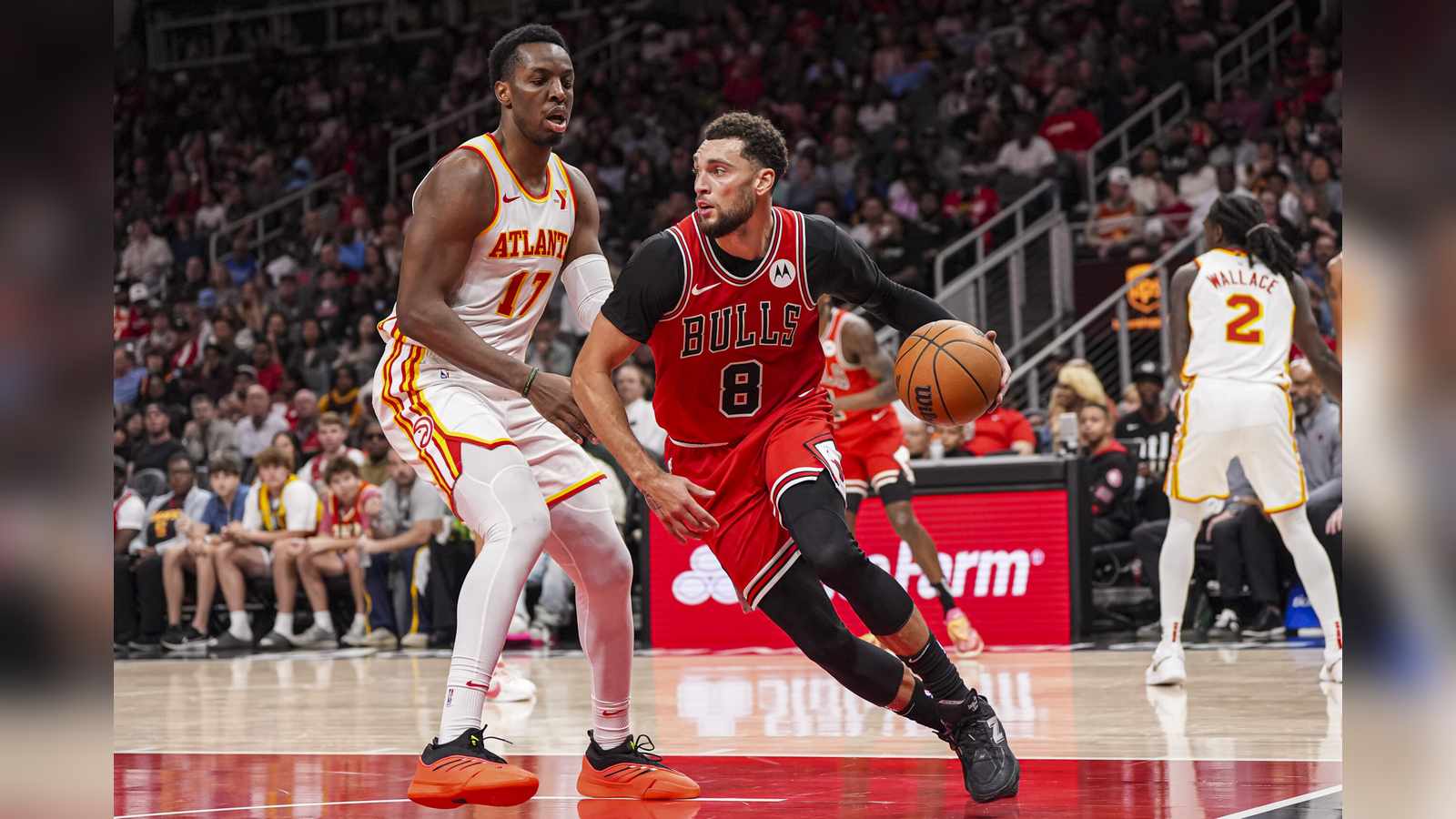
The Atlanta Hawks have opened the 2026-27 NBA season with a 7-5 record, prompting internal evaluations of their roster depth as the team seeks to bolster its competitive standing Yahoo Sports reported on November 13, 2026. While the franchise possesses tradeable assets and draft capital, the early-season performance has highlighted distinct needs in half-court scoring efficiency and interior rim protection.
Simultaneously, the Chicago Bulls have stumbled to a 1-9 start, positioning themselves as a potential partner for talent redistribution. Analysts evaluating potential trade scenarios have pointed to Chicago’s Norman Powell and Jalen Smith as complementary pieces that directly address Atlanta’s tactical shortcomings Yahoo Sports reported.
Evaluating Roster Fit: Scoring and Defense
Norman Powell has experienced a challenging start offensively in Chicago. Despite maintaining an average of 19.3 points per contest, his shooting splits sit at 39.8 percent from the field and 30.9 percent from beyond the arc, culminating in a 57.7 percent true shooting percentage. Observers note, however, that Powell’s production has likely been hindered by the Bulls’ broader offensive struggles. Throughout his career, Powell has shot 39.4 percent from three-point range, suggesting a potential statistical rebound if placed within a more established offensive system like Atlanta’s.
Jalen Smith offers a different profile as a frontcourt contributor. Known for his stout rim-protection capabilities and defensive versatility on the wings, Smith has also stretched the floor by converting 36.7 percent of his three-point attempts this season. For the Hawks, acquiring Smith would provide interior defense without sacrificing floor spacing.
Let us examine the broader context surrounding both organizations as the league approaches the winter months. The Atlanta Hawks entered the campaign with high expectations following roster adjustments in prior cycles, yet their 7-5 record suggests that additional fine-tuning is necessary to break through in a congested Eastern Conference. Analysts tracking the franchise note that while individual performances have flashed moments of brilliance, the team lacks consistent secondary shot-creation when opponent defenses lock in during half-court settings. This specific limitation places an outsized burden on primary ball-handlers and diminishes overall offensive efficiency.
On the opposing side of the trade ledger, the Chicago Bulls find themselves entrenched in a difficult rebuilding phase. A 1-9 record forces front offices to weigh long-term asset accumulation against current roster construction. Trading veterans who command significant salaries or occupy valuable minutes can accelerate asset gathering, particularly when acquiring younger players on manageable contracts or future draft selections. In this environment, evaluating the market for players like Norman Powell and Jalen Smith becomes a central priority for Chicago leadership.
Proposed Financial Mechanics and Draft Capital
A hypothetical transaction framework has emerged that aligns financially under league rules. Under this proposed structure, the Chicago Bulls would receive forward Dorian Finney-Smith, guard-forward Corey Kispert, and a 2028 first-round draft pick belonging to Atlanta. In return, the Atlanta Hawks would acquire Norman Powell alongside Jalen Smith.
While some team supporters may express hesitation regarding the surrender of a future first-round selection without acquiring an established superstar, proponents argue that Atlanta retains flexibility. The franchise holds an alternative 2028 first-round pick via pick-swap mechanisms involving either the Utah Jazz or the Cleveland Cavaliers. Furthermore, given Atlanta’s aspirations to contend in the Eastern Conference, that draft choice is projected to land in the latter portion of the first round.
From a financial standpoint, matching salaries under the collective bargaining agreement requires careful coordination. The inclusion of players such as Dorian Finney-Smith and Corey Kispert provides Chicago with functional rotation pieces or secondary assets that can be flipped later in separate deals, while the 2028 first-round pick serves as the primary incentive for parting ways with two productive rotational assets. Analysts monitoring front-office strategies emphasize that draft capital of this nature is precisely what contending teams leverage to bridge the gap between playoff participants and championship contenders.
Impact on Rotation Depth and Outlook
Integrating both players would alter Atlanta’s rotation dynamics. Powell could potentially assume a significant backcourt role, while Smith would slide into the primary backup center position behind Onyeka Okongwu. Such moves would elevate the Hawks’ overall roster depth, transforming them into more formidable contenders in a competitive conference.
Whether front-office executives ultimately pursue a formal agreement remains dependent on ongoing evaluations leading up to the midseason trade window. For now, the combination of Chicago’s rebuilding trajectory and Atlanta’s asset surplus keeps the discussion active.
As the schedule progresses toward December and January, front offices across the league will intensify their scouting efforts and preliminary discussions. For the Atlanta Hawks, deciding whether to pull the trigger on a substantial package involving Powell and Smith will test the front office’s appetite for calculated risk. Securing two players who directly target specific vulnerabilities could reshape the team’s trajectory for the remainder of the 2026-27 campaign and beyond.