


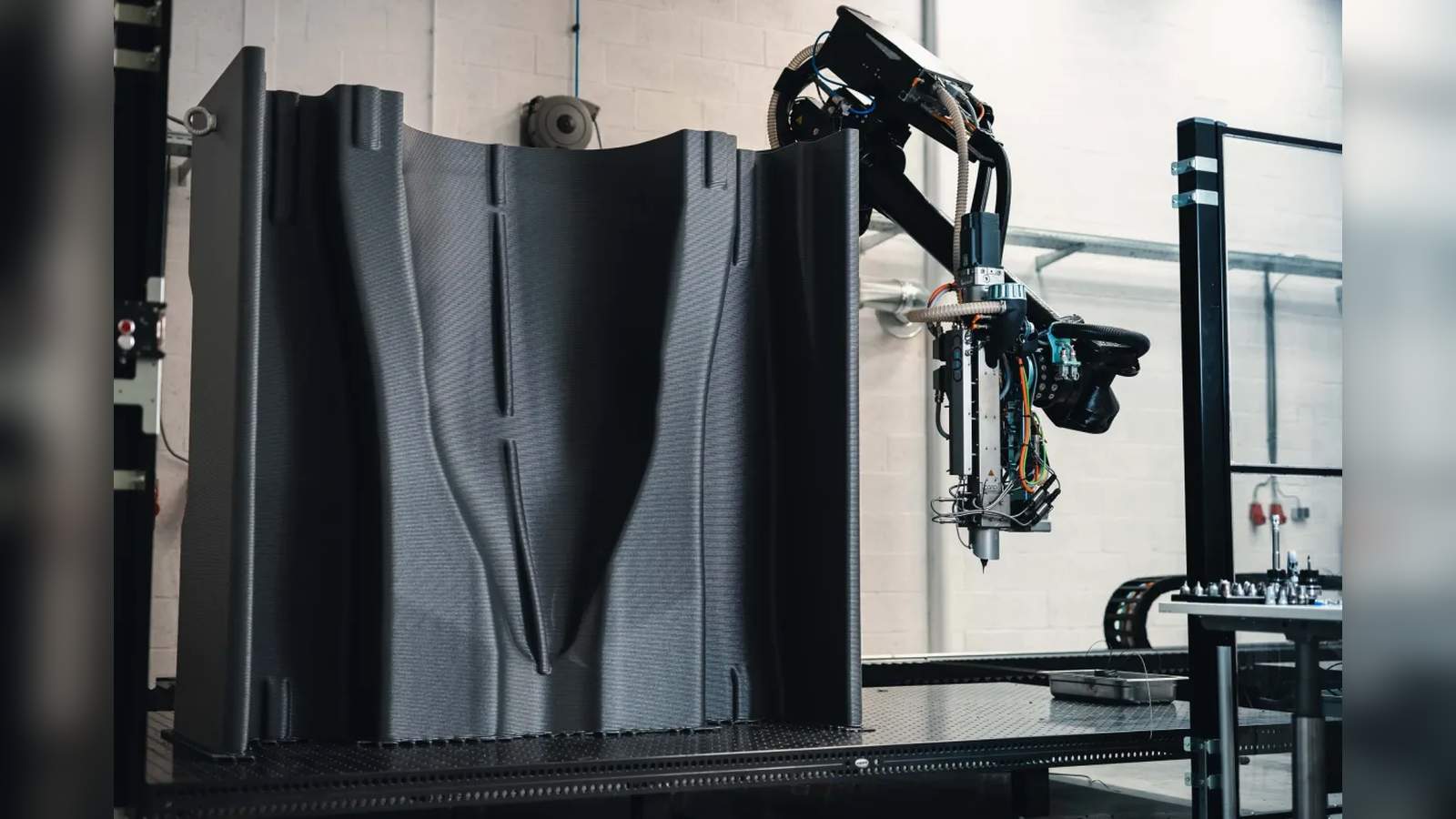
DETROIT (Azat TV) – Major US automakers, including Ford Motor, Rivian Automotive, and General Motors, are aggressively scaling additive manufacturing operations to fabricate vehicle components, assembly line instruments, and research testing units, according to reporting published on October 31, 2026, by CNBC. The technological shift moves 3D printing from a prototyping novelty into core production floors across suburban Detroit and nationwide manufacturing facilities, fundamentally altering logistics and reducing traditional supplier dependency.
Rivian Expands Plant Access and Investment
Rivian Automotive has committed over $5 million directly to advanced 3D-printing machinery, while its annual material costs have risen to approximately $1.7 million, as reported by CNBC. Jared Beck, who leads additive manufacturing at Rivian, stated during a facility tour that the company is actively democratizing the technology across all operational factions. The electric vehicle maker recently installed a dedicated bank of machines at its Normal, Illinois factory to allow workers to print components on demand. Rivian deploys the systems to manufacture flexible silicone parts, fluid-testing electric-motor models, screw guides, stamping press inserts, and select production trim pieces.
Ford Deploys Plant Vending Machines and Labs
Ford Motor is executing a parallel plant-level integration strategy, utilizing more than 200 machines across its official program alongside additional distributed units. The company plans to establish operational 3D-printing laboratories inside more than 23 plants by the close of 2026. Gregory Foresi, a Ford mechanical engineer who directed the automaker’s plant lab until October 2026, described to CNBC how the company installed an automated parts vending machine near its Dearborn, Michigan headquarters. Team leaders use a digital application to order and retrieve printed tools such as torque bit sockets, hand tools for smoothing adhesive, and hood jackers. Ford also leverages printed temporary parts, such as machining wheels, to maintain active assembly line operations while awaiting traditional supplier replacements.
GM Targets Low-Volume and Bespoke Production
General Motors integrates industrial-grade Stratasys equipment for low-volume specialty vehicles, research operations, and assembly plants. The Detroit manufacturer utilizes 135 individual 3D-printed components for its high-end custom Cadillac Celestiq, alongside specific interior features for Cadillac Blackwing performance sedans, including shifter knob medallions. Fadi Abro, senior global director of automotive and mobility at Stratasys, noted that material advancements have significantly improved structural properties and expanded industrial use cases across major automotive companies.
Logistical Stakes and Industry Challenges
While additive manufacturing bypasses standard multi-week supply chain delays, executives caution that printer operational expenditures and specialized material requirements remain substantial financial factors. Rivian maintains that its equipment investments pay for themselves within a single year through reduced supplier tooling expenses. However, engineering teams continue to evaluate where printed parts serve as permanent functional replacements versus emergency stopgaps designed purely to prevent costly assembly line shutdowns.