


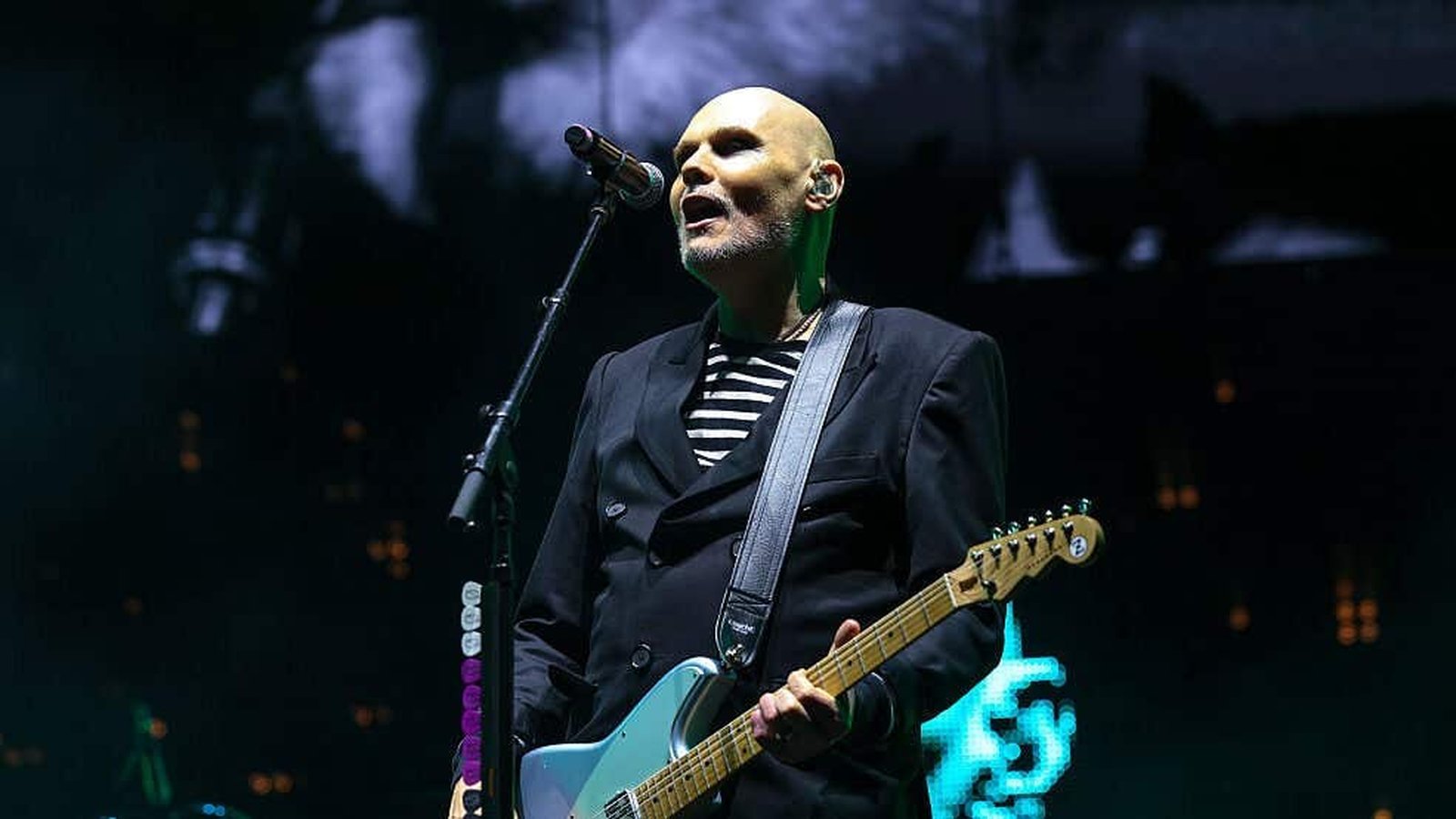
The Convergence of Grunge and Classical Grandeur
In a move that signifies the increasing institutionalization of 1990s alternative rock, Billy Corgan, the primary architect of The Smashing Pumpkins, has officially announced the European expansion of his ambitious orchestral project, “A Night of Mellon Collie and Infinite Sadness.” The tour is set to commence on September 1, 2026, at London’s iconic Royal Festival Hall, marking a pivotal moment where the raw emotionality of the Diamond-certified 1995 album meets the rigorous structures of a 60-piece ensemble and professional operatic vocalists.
This transition from the feedback-heavy stages of Lollapalooza to the acoustically refined halls of Europe’s premier cultural institutions represents more than a mere nostalgia trip. According to Corgan, the project aims to bridge the gap between high-art operatic traditions and the visceral storytelling found in rock music. The production, which saw a triumphant seven-night sold-out run at the Lyric Opera of Chicago in 2025, is now scaling for an international audience, underscoring the enduring cultural capital of the 1995 opus that defined a generation.
Institutional Stakes and the Royal Festival Hall Debut
The choice of the Royal Festival Hall as the European launchpad is significant. As a cornerstone of the Southbank Centre, the venue demands a level of technical and sonic precision that challenges even the most seasoned rock performers. Corgan’s production features a full 60-piece orchestra and a professional chorus, transforming tracks like “Tonight, Tonight,” “Bullet with Butterfly Wings,” and “1979” into complex movements. The London engagement, spanning September 1 and 2, serves as the litmus test for the production’s viability in the European market.
Citations from the official announcement highlight that the vocal weight of the production will be carried by acclaimed soprano Sydney Mancasola, mezzo-soprano Zoie Reams, and tenor Dominick Valdes Chenes. For the London, Antwerp, and Paris legs, baritone Ed Parks will join the ensemble, while Dean Murphy is slated for the Madrid finale. This casting reflects a commitment to operatic standards rather than a hybrid “rock-opera” gimmick, positioning Corgan’s work within the lineage of contemporary classical composition.
Logistical Framework and European Tour Trajectory
Following the London residency, the tour will navigate through several major European cultural hubs, reflecting a strategic selection of venues known for their architectural and acoustic excellence. On September 6, the ensemble moves to the Queen Elisabeth Hall in Antwerp for two performances in a single day. This is followed by a two-night engagement at the Salle Pleyel in Paris on September 8 and 9, before concluding at the Palacio Vistalegre in Madrid on September 11.
The scale of this production—involving a 60-piece orchestra and a rotating cast of world-class soloists—represents a massive logistical undertaking. It mirrors a broader trend in the music industry where legacy artists seek to recontextualize their catalogs through high-culture mediums. Corgan’s assertion that the Chicago run was one of the “most satisfying experiences” of his life suggests that this orchestral tour is as much a personal artistic evolution as it is a commercial venture. The financial stakes are equally high, with pre-sale tickets launching immediately and general sales for London and Madrid opening on May 14.
The Cultural Legacy of ‘Mellon Collie’
Released in 1995, “Mellon Collie and the Infinite Sadness” remains one of the few albums of the alternative era to achieve Diamond certification, selling over 10 million units in the United States alone. Its sprawling 28-track narrative was inherently theatrical, often described by critics at the time as a “Wall of Sound” for the Gen-X demographic. By stripping away the distorted guitars and replacing them with a full orchestral palette, Corgan is effectively testing the structural integrity of his compositions. If the melodies and themes can survive the transition to a 60-piece orchestra without losing their emotional resonance, it reinforces the argument for the Smashing Pumpkins’ catalog as a permanent fixture in the modern musical canon.
Furthermore, this tour coincides with a period of intense activity for the band, including a 35th-anniversary reissue of their debut album “Gish” and a headline spot at Lollapalooza. However, the “Mellon Collie” orchestral tour stands apart as a distinct intellectual property, one that targets a demographic that may have outgrown the mosh pits of the 1990s but retains a deep psychological connection to the music.
The institutionalization of rock through orchestral adaptation is a double-edged sword; it risks sanitizing the grit that defined the genre, yet it offers a pathway to longevity that traditional touring cannot sustain. Corgan’s venture into the Royal Festival Hall is a calculated risk that seeks to prove that the ‘Infinite Sadness’ of 1995 has matured into a sophisticated, permanent contribution to the global arts landscape.