


Anatomy and Taxonomy of the Mysterious Bearcat
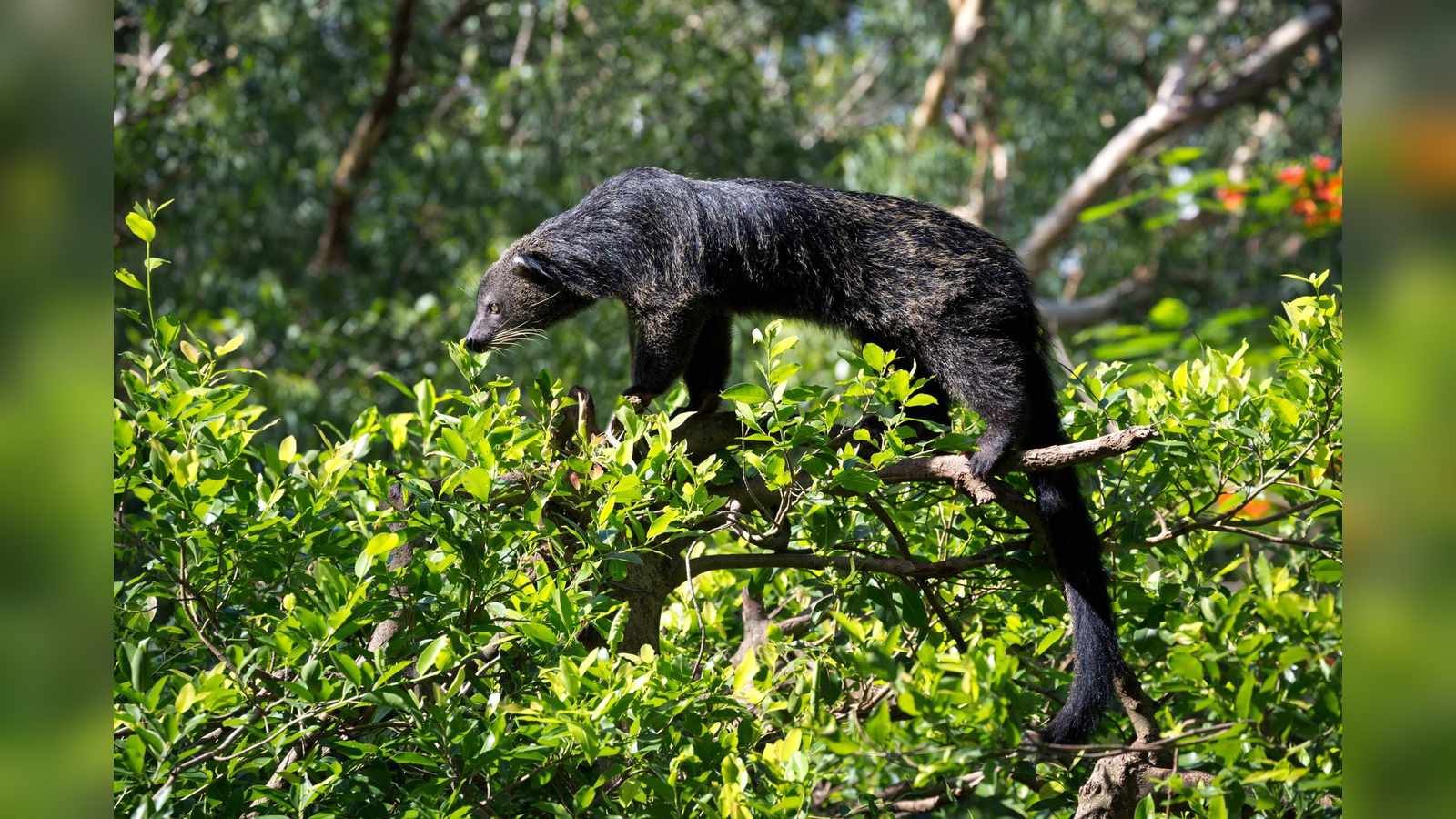
The binturong (Arctictis binturong), examined in an analysis published by Our Planet, is a secretive mammal native to the dense rainforests of South and Southeast Asia. Frequently mistaken for a bear-cat hybrid due to its shaggy appearance, it belongs to the Viverridae family, sharing ancestry with civets and genets while standing as the sole species in its genus. Adult binturongs typically measure 60 to 96 centimetres in body length, accompanied by a prehensile tail of comparable size that can support their full weight, a rare adaptation among Old World carnivores.
Weighing between 9 and 20 kilograms, these solitary and nocturnal animals exhibit reverse sexual dimorphism where females generally outgrow males. Their physical profile includes coarse black or dark grey fur with grizzled silver tips, rounded faces featuring long white whiskers, and short tufted ears. Beyond physical characteristics, their biology incorporates delayed implantation during reproduction and a unique polygynous mating system, allowing litters of one to six young following a gestation period of approximately 90 to 92 days.
The developmental trajectory of newborn binturongs requires sustained maternal care within hidden canopy nests. Born entirely blind and helpless, the young remain sheltered for the first several weeks of life before gradual weaning occurs around six to eight weeks of age. By two to three months, juvenile binturongs achieve full independence, though they continue to navigate complex arboreal environments using innate agility. In controlled environments such as international zoos and wildlife parks, these mammals have demonstrated a capacity to live up to 25 years, whereas their lifespan in wild, uninterrupted habitats is estimated to be substantially shorter due to environmental hazards and ecological pressures.
Ecological Role and the Origins of the Popcorn Scent
One of the most striking biological attributes of the binturong is its distinctive scent, which closely resembles buttered popcorn. According to Our Planet, this aroma originates from a chemical compound named 2-acetyl-1-pyrroline present in their urine. Binturongs deposit this compound by dragging their hindquarters and tails across branches, functioning as a territorial marker, reproductive signal, and communication tool across dense forest canopies. This exact compound is similarly produced during the Maillard reaction that gives baked bread, toasted foods, and fresh popcorn their appetizing aroma, making the binturong a uniquely fragrant inhabitant of the jungle.
Despite belonging to the order Carnivora, binturongs maintain a largely frugivorous diet centered heavily on figs. This dietary habit establishes them as vital ecosystem architects. By consuming fruit and excreting intact seeds across the forest floor, they act as primary seed dispersers that facilitate forest regeneration. Furthermore, they forage opportunistically for small mammals, insects, birds, and plant matter, navigating primary and secondary tropical forests with specialized agility.
Rather than actively pursuing evasive prey across the jungle floor, binturongs utilize an opportunistic foraging strategy. They systematically inspect branches for fallen fruit, eggs, insects, and small vertebrates. This dietary flexibility allows them to sustain themselves across diverse forest structures, ranging from pristine primary canopies to heavily disturbed secondary growth areas. Their movement through these canopies is aided by a specialized vocalization repertoire, which includes deep growls, hisses, wails, and human-like chuckles that help signal contentment, distress, or territorial boundaries to neighboring individuals within the same habitat range.
Conservation Status and Human Pressures Across Southeast Asia
Wild binturong populations face mounting pressures throughout their expansive geographic range, which spans India, Nepal, Bhutan, Bangladesh, Myanmar, Thailand, Malaysia, Indonesia, the Philippines, Cambodia, Laos, Vietnam, and southern China. Because of persistent environmental threats, the International Union for Conservation of Nature classifies the species as Vulnerable on the IUCN Red List, as detailed by Our Planet.
Primary drivers of this population decline include extensive habitat loss stemming from commercial logging, agricultural expansion, and palm oil plantations. Additionally, individuals are targeted by the illegal wildlife trade for exotic pet markets and traditional medicine, hunted for meat and fur, and subjected to road mortality when descending to the forest floor. Ongoing conservation measures center on legal habitat protection, enforcement against wildlife trafficking, public education outreach, and managed captive breeding programs in international zoos.
Addressing these multi-layered threats requires coordinated policy interventions and rigorous field enforcement across international borders. Conservation organizations emphasize the importance of safeguarding remaining primary and secondary forest tracts against unchecked agricultural conversion. Furthermore, public awareness campaigns aimed at curbing the demand for exotic pets and traditional medicine derivatives remain critical components of long-term species preservation strategies designed to protect the binturong across its native range.