


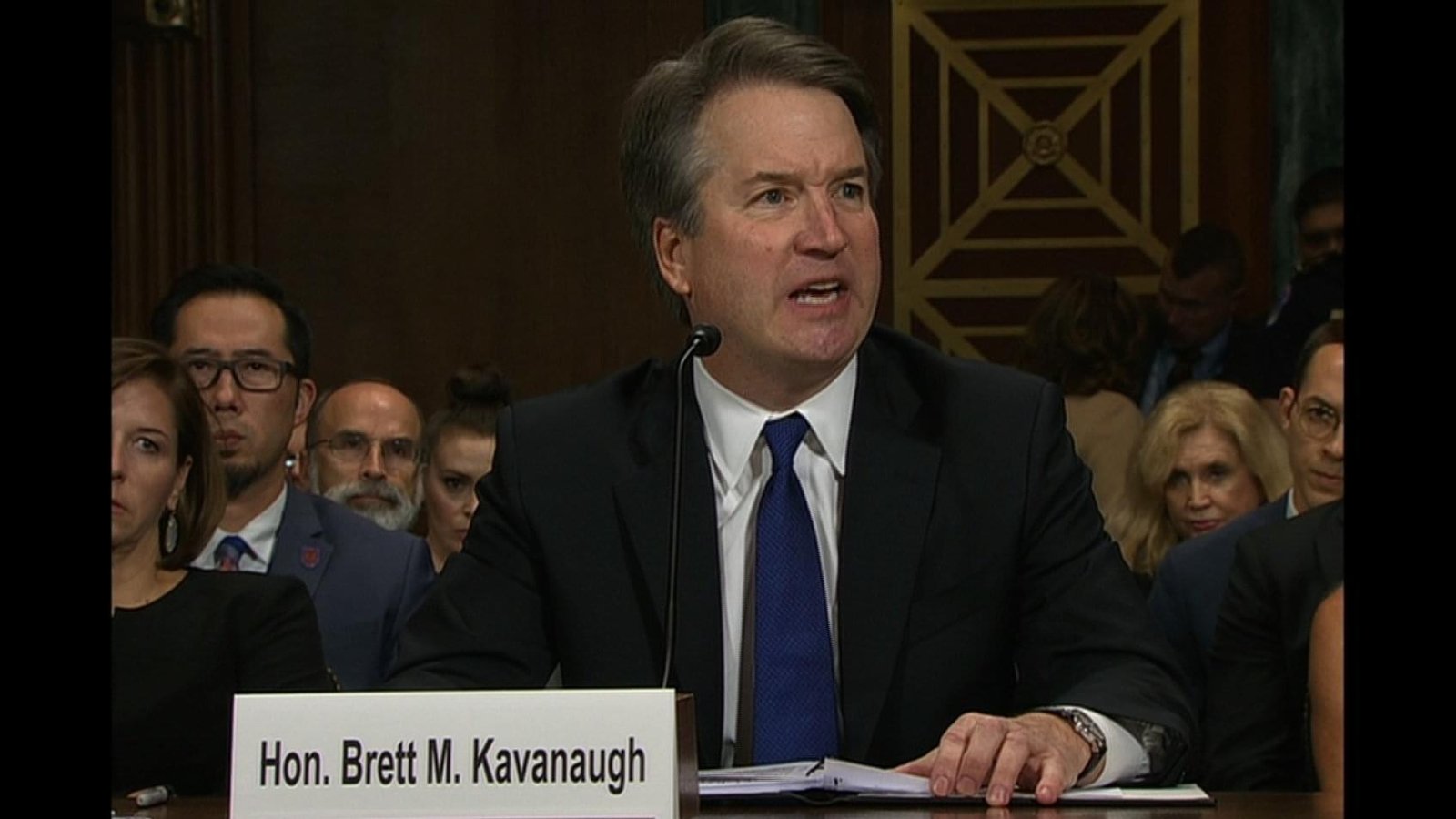
WACO, Texas — At an event commemorating his former mentor, Kenneth Starr, U.S. Supreme Court Justice Brett Kavanaugh delivered a speech that was as much a reflection on history as it was a commentary on the present state of governance. Speaking to a gathering of legal professionals, academics, and students, Kavanaugh underscored a fundamental principle of the American Constitution: the deliberate diffusion of power across branches of government.
“No one person or group of people should have too much power in our system,” Kavanaugh stated, echoing the intentions of the framers of the Constitution. His words come at a time when the Supreme Court, and Kavanaugh in particular, face increased scrutiny for decisions perceived as favoring executive authority, particularly during the Trump administration.
A Reflection on Constitutional Design
Justice Kavanaugh’s remarks were framed around the brilliance of the constitutional framework laid out by the Founding Fathers. He described their intent to avoid the concentration of power as a “genius” move that has safeguarded American democracy for over two centuries. By dispersing authority among the executive, legislative, and judicial branches, the framers aimed to create a system of checks and balances that prevents tyranny and ensures accountability.
This vision, according to Kavanaugh, remains relevant today. He argued that the distribution of power is not just a theoretical construct but a practical necessity for maintaining freedom and order. “The framers didn’t want any one person or group to dominate,” he said. “That’s the genius of our system.”
Yet, Kavanaugh’s words also invite reflection on the current dynamics within the federal government. Critics have pointed out that the Supreme Court, particularly its conservative majority, has often sided with executive power in recent years. These decisions have raised questions about whether the Court is upholding the balance of power it is meant to protect.
A Legacy of Influence: Kenneth Starr
The event also served as a tribute to Kenneth Starr, a legal luminary who played a significant role in shaping conservative jurisprudence in the United States. Starr, who passed away in 2022, was perhaps best known for his role as the independent counsel in the investigation that led to President Bill Clinton’s impeachment in the late 1990s. However, his influence extended far beyond that singular chapter in American history.
Kavanaugh, who once clerked for Starr, spoke fondly of his former boss, describing him as a mentor who instilled in him a deep respect for the rule of law. “Kenneth Starr was a giant in the legal field,” Kavanaugh said. “His dedication to justice and his commitment to the Constitution were unparalleled.”
The event highlighted Starr’s enduring impact on American legal thought and his mentorship of a generation of lawyers, including Kavanaugh. It was a poignant moment that underscored the interconnectedness of personal relationships and professional legacies in the world of law.
The Court and the Critics
Justice Kavanaugh’s tenure on the Supreme Court has been marked by controversy since his contentious confirmation process in 2018. As a member of the Court’s conservative bloc, he has been involved in several landmark decisions that have shaped the nation’s legal landscape. From issues of reproductive rights to executive authority, Kavanaugh’s votes have often aligned with those of his conservative colleagues, drawing both praise and criticism.
In recent years, the Court has faced accusations of partisanship, with critics arguing that its decisions reflect ideological leanings rather than impartial interpretations of the law. Kavanaugh’s remarks on the importance of preventing concentrated power can be seen as a response to these critiques, emphasizing the Court’s role in maintaining the balance envisioned by the Constitution.
However, the absence of any mention of President $1 Trump’s efforts to reshape the federal government during the event did not go unnoticed. Some commentators have suggested that Kavanaugh’s silence on this topic reflects a reluctance to engage with the contentious political debates surrounding his own judicial philosophy and decisions.
The Ongoing Debate
Kavanaugh’s speech has reignited discussions about the role of the judiciary in American governance. While his emphasis on the distribution of power aligns with constitutional principles, it also highlights the tensions inherent in interpreting those principles in a modern context. As the nation grapples with issues ranging from executive overreach to judicial independence, the balance of power remains a central theme in the American political discourse.
For Kavanaugh, the challenge lies in navigating these complexities while staying true to the ideals he articulated in Waco. His remarks serve as a reminder of the enduring relevance of the Constitution’s design, even as the Court he serves on continues to shape its interpretation for future generations.
Kavanaugh’s reflections on the balance of power are a timely reminder of the Constitution’s enduring wisdom, but they also underscore the ongoing challenges of applying its principles in a polarized era.