


A Historic Win Amidst Technical Turmoil
The 2026 edition of Britain’s Got Talent concluded on May 30 with a landmark result: the victory of the Hawkstone Farmers’ Choir. Championed by television personality Jeremy Clarkson, the group secured the £250,000 prize and a coveted spot at the Royal Variety Performance. Their triumph—a poignant performance of their original song, “This Is Home”—was framed by the choir as a clarion call for awareness regarding mental health challenges within the agricultural sector.
However, the production was marred by immediate operational friction. The live broadcast faced significant criticism from viewers following a technical delay just five minutes into the show. Presenters Ant McPartlin and Dec Donnelly were forced to stall, turning to the judging panel to fill airtime as safety teams struggled to prepare the stage for the opening act, fire-eater Liwei Yang. Social media platforms, particularly X (formerly Twitter), became hubs for viewer frustration, with many labeling the production “amateur” and drawing unfavorable comparisons to previous years’ technical failures.
The Intersection of Celebrity Branding and Public Scrutiny
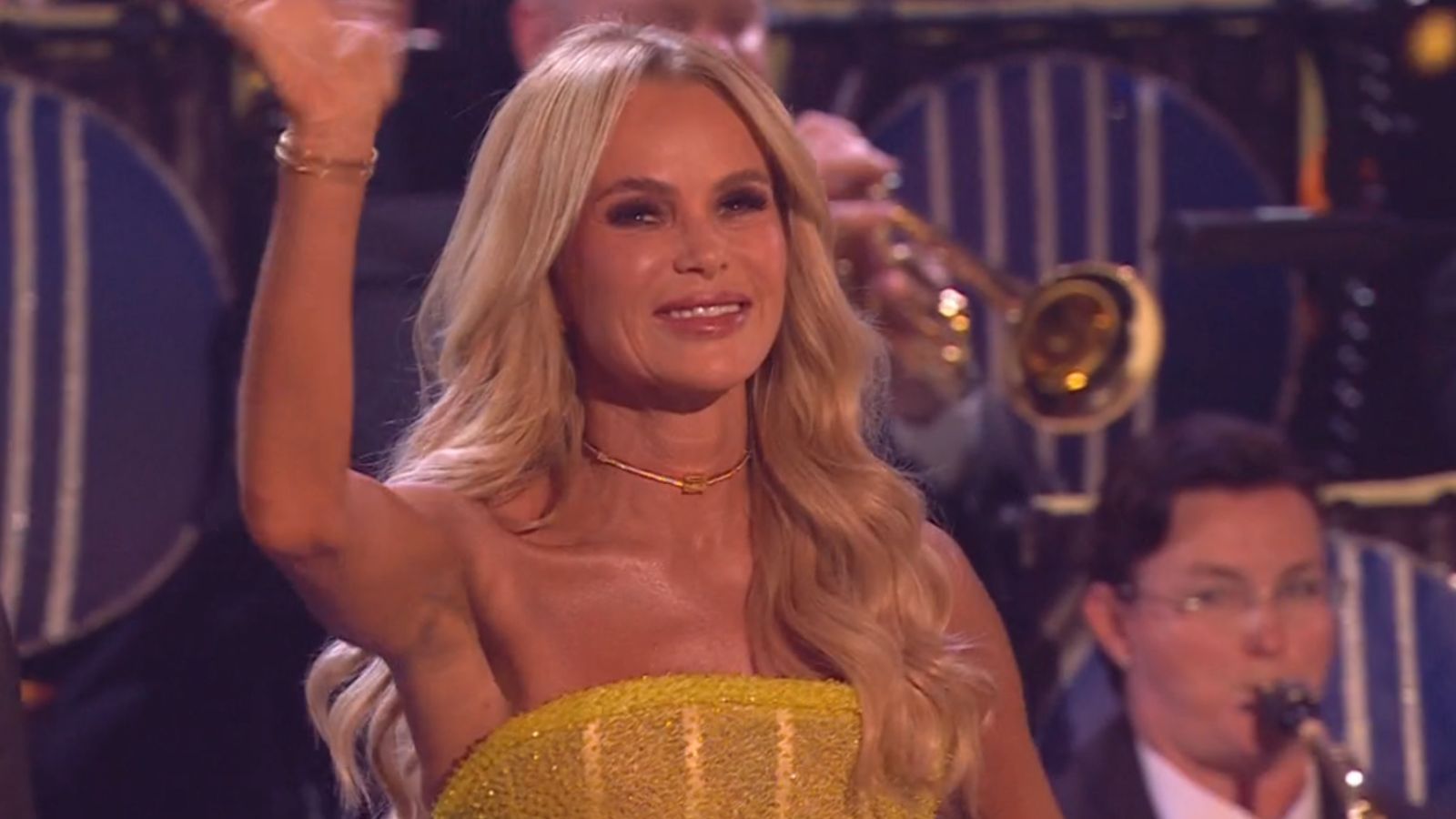
Beyond the competition itself, the evening served as a potent case study in the role of celebrity presentation within reality television. Judge Amanda Holden, who has long been a fixture of British tabloid discourse, dominated social media conversation with her choice of a lemon-yellow, sheer-detailed gown by Saint Hendrix. While the garment was intended to anchor her presence as a high-fashion arbiter, it triggered a polarized reaction from the audience.
Critics argued that the focus on Holden’s ensemble detracted from the contestants’ efforts, while supporters lauded her sartorial choices as a hallmark of her professional identity. This discourse reflects a broader trend in talent programming where the judges’ personal brands often compete with the narrative of the competition itself. Holden’s recent public image—frequently curated through high-profile vacation imagery and “sizzling” fashion features—creates a brand identity that often intersects with, and occasionally eclipses, the institutional focus of the program.
Analytical Perspective
The 2026 Britain’s Got Talent final underscores the precarious nature of live television, where the prestige of a national stage is increasingly susceptible to the volatility of production mishaps and the intensity of digital-age scrutiny. The victory of the Hawkstone Farmers’ Choir provides a necessary human-interest narrative, yet the overshadowing presence of administrative delays and the celebrity-centric discourse surrounding the judging panel highlights a shift in audience consumption. Viewers are no longer merely spectators of talent; they are active participants in a cycle of critique that scrutinizes everything from stage management to the personal style of the judges, ultimately suggesting that for modern reality franchises, the “show” is now a multifaceted entity where the spectacle of the judges is as consequential as the performance of the contestants.