


A Historic Start to the Season
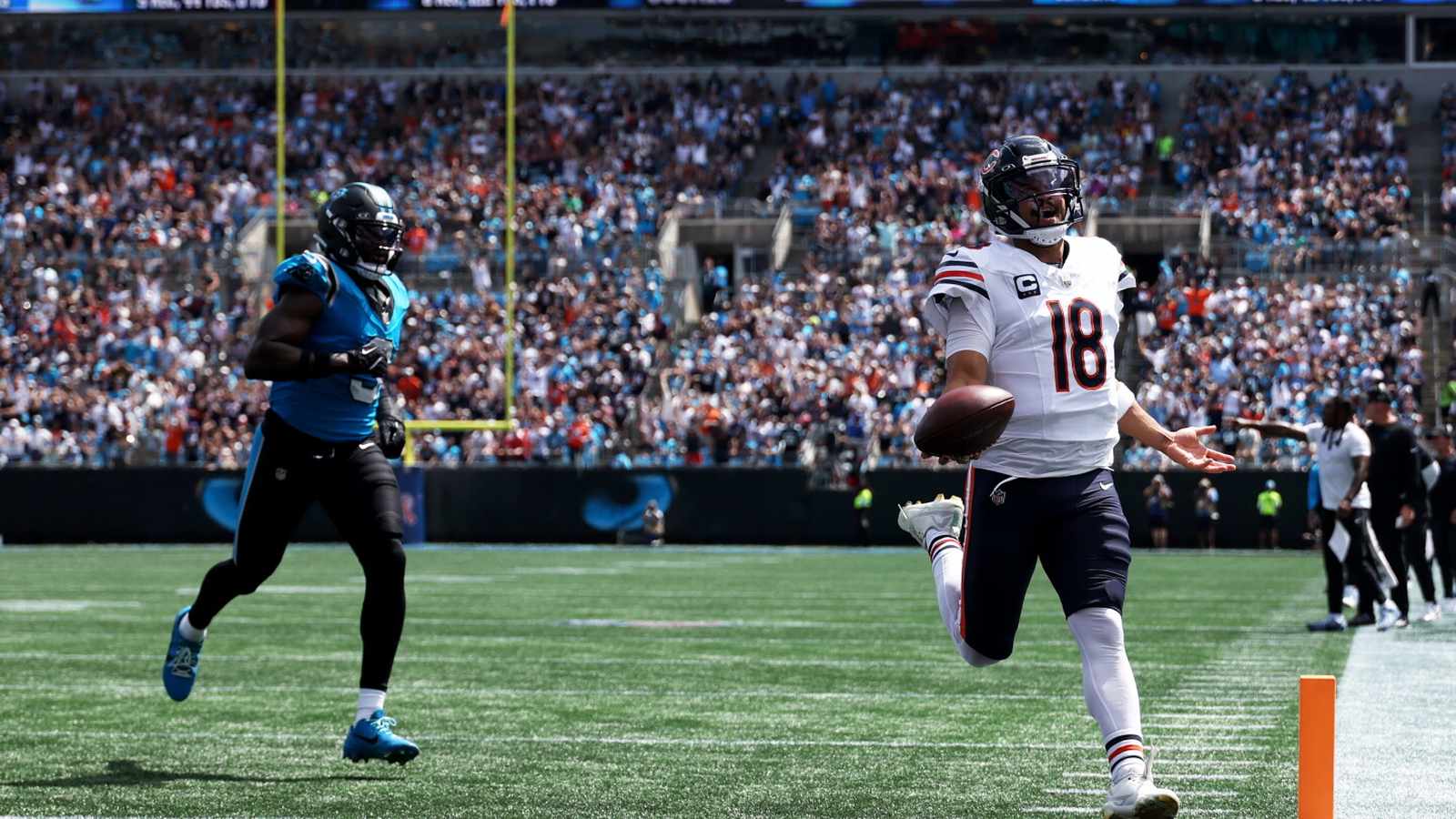
Chicago Bears quarterback Caleb Williams opened his third season with a performance that etched his name into the franchise’s record books. During the September 13, 2026, matchup against the Carolina Panthers, Williams dominated the first half, accumulating 248 total yards of offense and leading the Bears to a 31-24 halftime advantage, as reported by NBC Chicago.
Williams achieved a rare feat by recording two rushing touchdowns in a single game. According to franchise data, he is only the seventh Bears quarterback to accomplish this since the NFL-AFL merger in 1970. The performance places him in elite company, joining former Bears signal-callers like Steve Fuller, Jim McMahon, and Bobby Douglass, and marking the first time a Bears quarterback has reached this milestone since Justin Fields in 2022.
Dual-Threat Efficiency
The efficiency of the Bears’ offense was on full display in Charlotte. Beyond his rushing prowess—which included a 29-yard touchdown scamper—Williams demonstrated precision through the air. He finished the first half with 196 passing yards and a touchdown, maintaining a notable passer rating of 136.5. A highlight of his aerial attack was a 22-yard touchdown pass to tight end Cole Kmet, showcasing the chemistry currently developing within the team’s offensive scheme, as noted by the Chicago Bears official highlights.
The offensive success was not limited to Williams. Running back D’Andre Swift also contributed significantly, helping the team establish an early lead. By the first quarter alone, Swift had secured 65 yards on eight carries, complementing Williams’ two carries for 15 yards and his first rushing touchdown of the day, NBC Sports reported.
Looking Ahead
Following a 2025 season that saw the Bears reach the NFC Divisional Round, expectations for Williams have reached a new threshold. Analysts and fans are closely monitoring whether he can sustain this level of production as a legitimate franchise centerpiece. As the season progresses, the focus will remain on his ability to integrate into the team’s evolving offensive strategy and whether he can maintain his status as a top-tier quarterback in the league.