


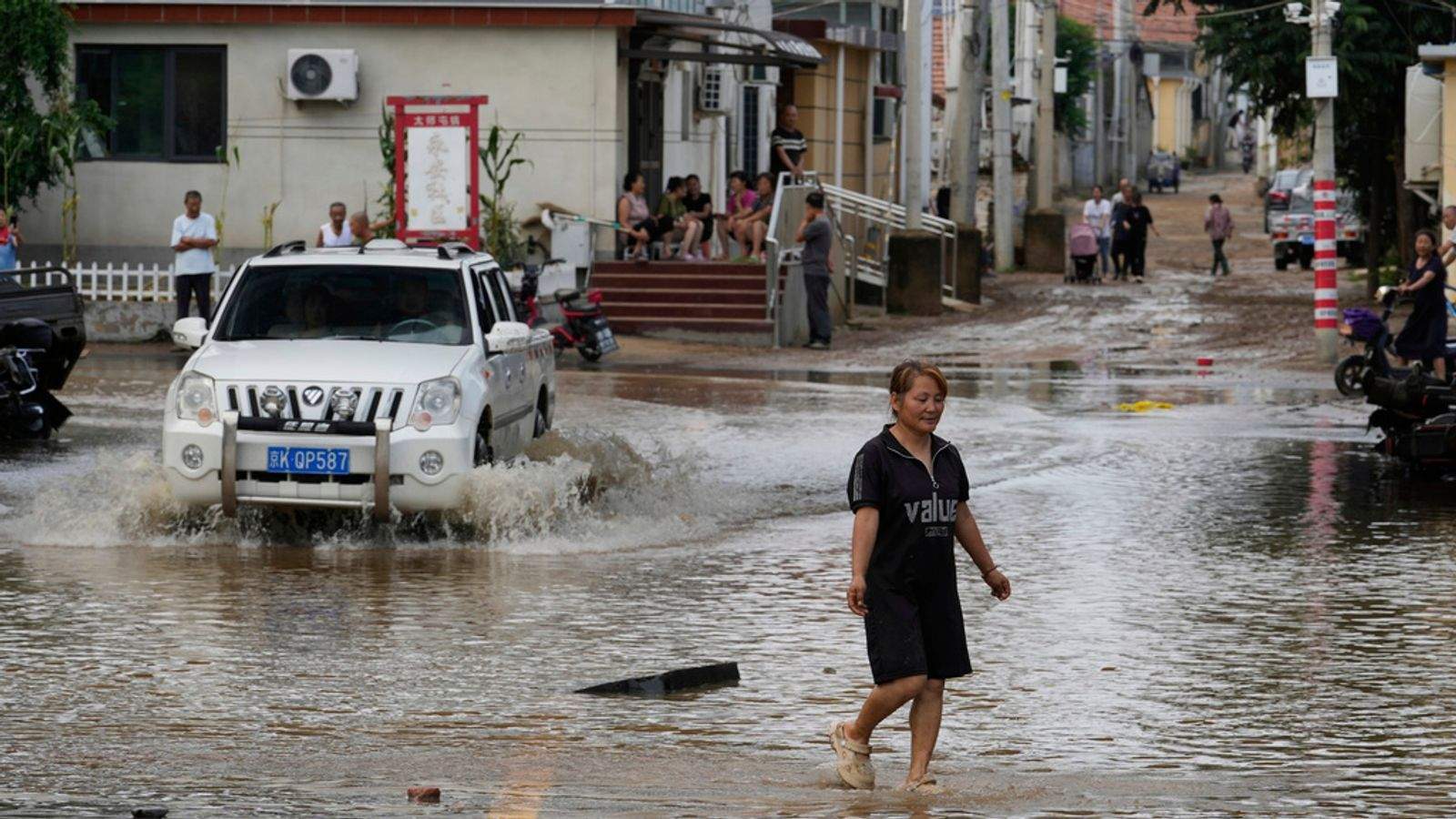
In a harrowing display of nature’s power, Beijing and its surrounding regions have been struck by catastrophic flooding caused by days of relentless rainfall. As of Tuesday, July 29, 2025, at least 38 lives have been lost, with tens of thousands displaced from their homes. The downpours, described as some of the heaviest in decades, have wreaked havoc across the Chinese capital and neighboring provinces, leaving a trail of destruction in their wake.
Unprecedented Rainfall Causes Chaos
The flooding began over the weekend when torrential rains battered Beijing and nearby areas, including Hebei and Tianjin. According to China’s official Xinhua news agency, the capital experienced an extraordinary 54 centimeters (21 inches) of rainfall in some locations, particularly in the mountainous district of Miyun. Other districts like Yanqing also bore the brunt of the storms. The deluge not only inundated streets but also caused landslides, washed away vehicles, and disrupted power and communication lines.
In Miyun alone, over 17,000 residents were evacuated, contributing to a total of more than 80,000 displaced people across Beijing. Neighboring Hebei province also reported casualties, with at least four people killed in Luanping county due to landslides. As of Tuesday, another eight individuals remain unaccounted for, heightening fears of further loss of life.
Government Declares Top-Level Emergency Response
Recognizing the gravity of the situation, Beijing authorities launched a top-level emergency response on Monday evening. The measures included shutting down schools, suspending construction activities, and halting outdoor tourism. Residents were instructed to stay indoors as emergency teams worked tirelessly to rescue those trapped by rising waters. According to Sky News, Chinese President Xi Jinping has called for “all-out search and rescue efforts” to minimize casualties and mitigate property damage. Premier Li Qiang echoed these sentiments, emphasizing the urgent need for coordinated disaster relief efforts.
Beijing’s city government reported widespread damage to infrastructure, with more than 30 sections of roads destroyed and over 130 villages experiencing power outages. The storms have left many rural areas isolated, with downed communication lines further complicating rescue operations. To aid in recovery efforts, China’s central government has allocated 50 million yuan (approximately £5.2 million) to Hebei province and dispatched emergency response teams to the most affected areas.
Personal Accounts Highlight the Human Toll
The devastation has left a profound impact on local communities. In the town of Taishitun, located about 100 kilometers northeast of central Beijing, residents recounted the terrifying speed of the flooding. “The flood came rushing in, just like that, so fast and suddenly,” said Zhuang Zhelin, who was clearing mud from his building materials shop. Another resident, Wei Zhengming, described the helplessness of the situation: “It was all water, front and back. I just ran upstairs and waited for rescue.”
Scenes of uprooted trees, submerged streets, and mud-caked buildings underscore the severity of the disaster. Rescue workers have been seen navigating damaged roads and wading through muddy waters to reach stranded residents. State media footage has shown rescuers carrying injured individuals on stretchers and providing much-needed relief supplies to affected communities.
More Rain on the Horizon
Unfortunately, the crisis may not yet be over. Weather forecasts predict additional heavy rainfall for Beijing and surrounding areas, with up to 30 centimeters (12 inches) expected in some locations. Authorities have warned of continued flood risks, particularly in regions already saturated by previous storms. Efforts to release water from overburdened reservoirs, such as the one in Miyun, have added to the complexity of the situation, as controlled releases could potentially exacerbate downstream flooding.
As China grapples with the aftermath of these unprecedented floods, questions arise about the country’s preparedness for extreme weather events. While the government’s swift response has undoubtedly saved lives, the scale of the disaster serves as a stark reminder of the challenges posed by climate change and rapid urbanization.
In the coming days, the focus will remain on rescue and recovery efforts, as authorities strive to bring relief to those affected and prevent further tragedies. The resilience of the people, coupled with coordinated government action, will be crucial in overcoming this devastating natural disaster.