


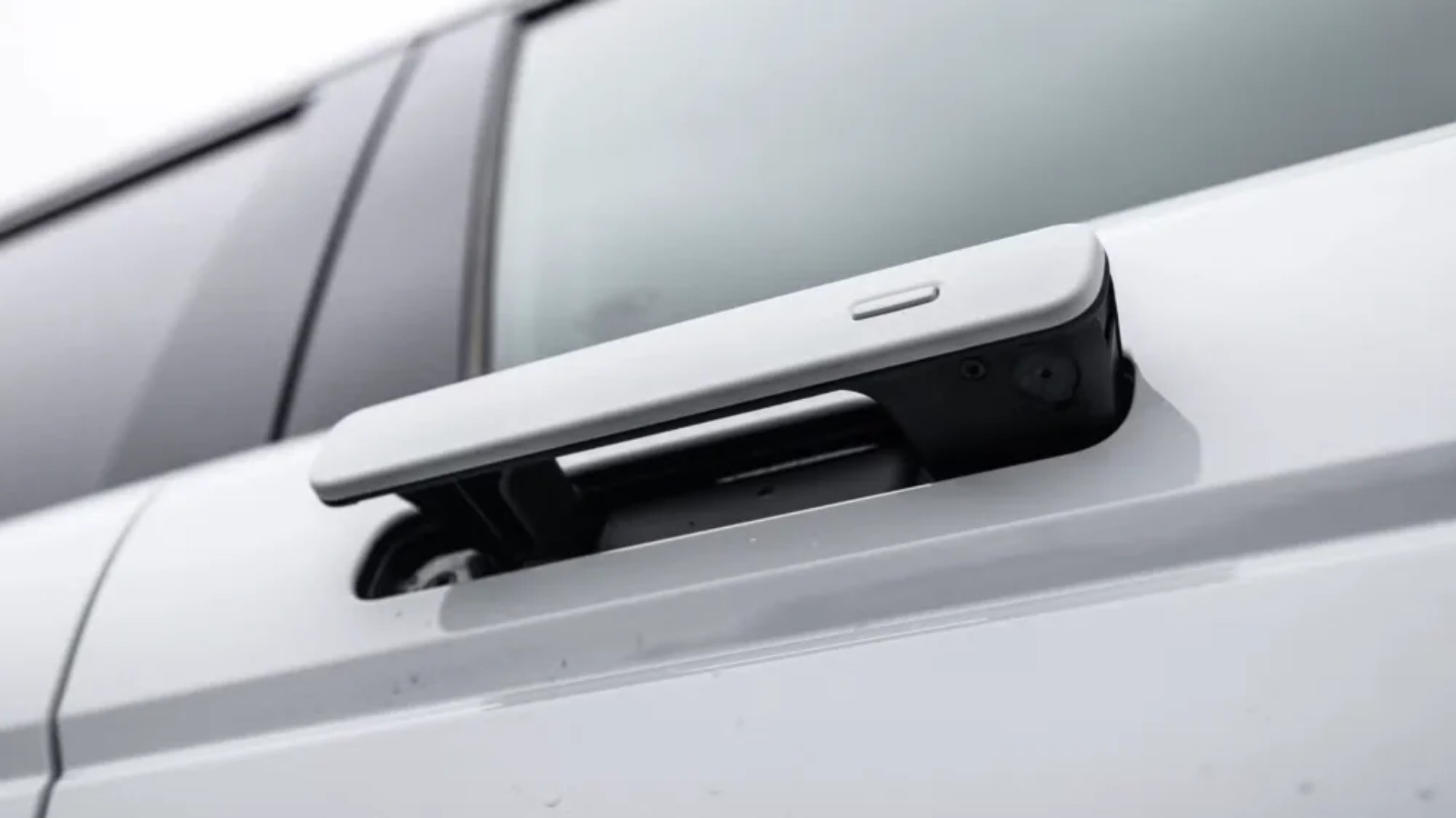
HONG KONG (Azat TV) – China’s Ministry of Industry and Information Technology has announced a nationwide ban on hidden car door handles, effective January 1, 2027, citing critical safety concerns following fatal electric vehicle (EV) accidents where electronic door mechanisms reportedly failed, trapping occupants inside. This landmark decision positions China as the first major automotive market to formalize such a restriction, potentially prompting a global reevaluation of vehicle safety standards and design.
Under the new regulations, all car doors, excluding the tailgate, must incorporate a mechanical release function for handles, accessible from both the inside and outside of the vehicle. For exterior handles, a recessed space no smaller than 6 centimeters by 2 centimeters by 2.5 centimeters will be required to ensure access. Inside the cabin, clear signs measuring at least 1 centimeter by 0.7 centimeters must indicate how to open the door. While the ban comes into full effect for new models on January 1, 2027, carmakers with models already approved for the Chinese market will have an extended grace period until January 1, 2029, to implement the necessary design modifications.
New Safety Mandate for Vehicle Design
The directive from China’s Ministry of Industry and Information Technology follows a draft of the proposed rules published for public comment in September 2025. The new requirements directly impact a significant portion of the country’s burgeoning new energy vehicle (NEV) market, which includes EVs and hybrid cars. Data cited by the government-controlled newspaper China Daily indicates that hidden handles feature in approximately 60% of the top 100 best-selling NEVs.
Vehicles such as Tesla’s popular Model Y and Model 3, BMW’s iX3, and numerous models from Chinese domestic brands currently utilize retractable or press-to-release hidden door handles. These designs, often favored for their aerodynamic benefits and sleek aesthetic, will now require substantial redesigns to comply with the new safety standards. The mechanical release mandate ensures that doors can be opened manually, even in the event of a power failure or electronic malfunction, directly addressing the reported safety risks.
Global Implications for Automakers
The global automotive industry is closely watching China’s pioneering move. Chris Liu, a Shanghai-based senior analyst at technology research and advisory group Omdia, emphasized the substantial global impact of these new rules. ‘China is the first major automotive market to explicitly ban electrical pop-out and press-to-release hidden door handles,’ Liu stated, noting that while other regions have flagged safety concerns, China is the first to formalize this into a national safety standard. He added that regulators in Europe and other jurisdictions are likely to reference or align with China’s approach, potentially leading to costly redesigns or retrofits for carmakers worldwide.
Premium EVs, in particular, are expected to feel a significant impact, as retractable door handles are often ‘treated as a design and aerodynamic statement,’ according to Liu. The sheer size of the Chinese market means that manufacturers are unlikely to produce separate door handle designs solely for China, making a global shift in design highly probable. This could accelerate the adoption of similar safety standards in other markets, which have been considering such measures.
Addressing Past Safety Concerns
The impetus for China’s new regulation stems directly from a series of safety incidents. Officials specifically cited fatal EV accidents in which electronic doors reportedly failed, trapping passengers inside. Notably, two fatal crashes in China involving Xiaomi EVs were mentioned, where power failures were suspected to have prevented doors from being opened. These incidents underscored the critical need for reliable mechanical door access, especially in emergency situations.
Beyond China, similar concerns have been raised by safety watchdogs globally. In November 2025, the U.S. National Highway Traffic Safety Administration (NHTSA) opened an investigation into cases where Tesla’s electronic door handles reportedly failed to work. The NHTSA probe focused on Tesla’s 2021 Model Y cars, responding to nine complaints, with four of those cases requiring owners to break a window to exit the vehicle after the handles became inoperable. These international investigations highlight a broader industry challenge that China is now directly confronting through regulation.
The implementation of China’s ban on hidden car door handles marks a significant regulatory intervention, prioritizing occupant safety over design aesthetics and aerodynamic efficiency, and setting a precedent that could redefine automotive safety expectations across the global market.