
Quick Read
- The DOJ is citing urgent ‘life-safety’ and ‘national security’ concerns to bypass court orders blocking the $400M White House ballroom project.
- The legislative push follows a shooting at the White House Correspondents’ dinner, which exposed significant security risks at off-campus presidential events.
- Republican senators are divided over funding, with some pushing for a taxpayer-funded bill while others insist on private financing.
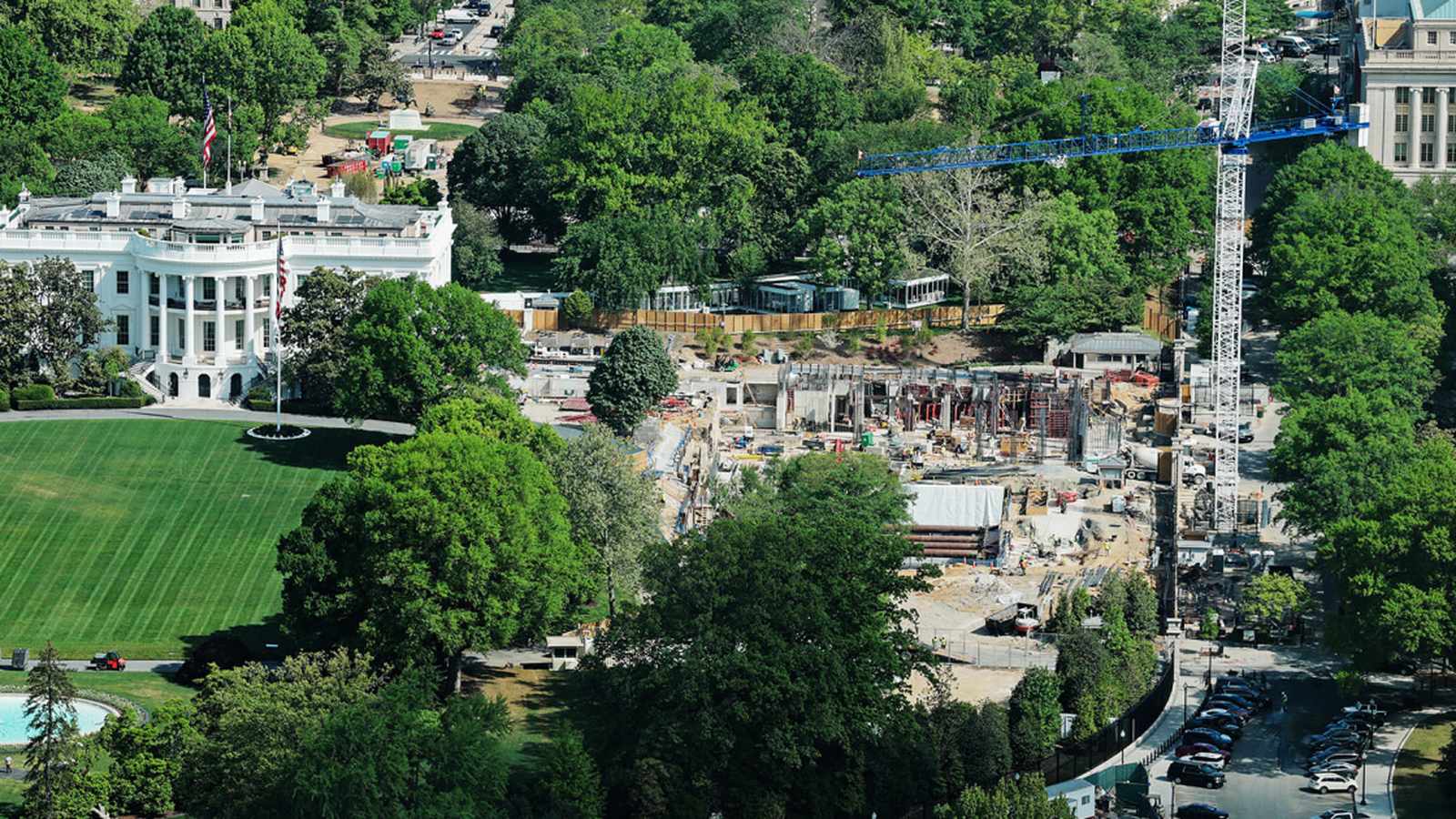
WASHINGTON (Azat TV) – The Department of Justice filed a pivotal legal motion on April 28, 2026, urging a federal court to immediately lift a construction injunction on the proposed White House ballroom. The filing comes just days after an assassination attempt against President Donald Trump at a Washington hotel, a violent incident that officials now cite as proof of critical security vulnerabilities inherent in hosting high-level government events at non-fortified venues.
National Security and the White House Ballroom Mandate
The $400 million expansion project, which has been mired in litigation brought by the National Trust for Historic Preservation, is being reframed by the administration as a life-safety necessity. Acting Attorney General Todd Blanche argued in the filing that the current legal challenges to the project threaten the physical safety of the entire presidential line of succession. According to the DOJ, the proposed facility would feature advanced protective measures, including drone detection systems and projectile-resistant structural materials, which were absent during the security breach at the Washington Hilton on April 25.
Legislative Push and Internal GOP Divisions
In response to the shooting, a group of Republican senators, led by Lindsey Graham of South Carolina, Katie Britt of Alabama, and Eric Schmitt of Missouri, introduced legislation to authorize the $400 million federal expenditure. Senator Graham characterized the project as a national security imperative, stating that the presidency should not be reliant on the security parameters of private hotels. However, the proposal has exposed deep fissures within the Republican Party. Fiscal hawks, including Senator Rick Scott of Florida, have expressed strong opposition to using taxpayer funds for the project, arguing that the president should rely on private financing.
Shifting Political Alignments
The debate has also generated unusual political alliances. Senator John Fetterman of Pennsylvania has publicly broken with the Democratic caucus, advocating for the ballroom’s construction as a common-sense security measure. Conversely, Democratic leadership, including House Minority Leader Hakeem Jeffries, has maintained firm opposition, labeling the project a vanity initiative and continuing to emphasize the legal concerns regarding the unauthorized demolition of the White House East Wing. As the DOJ seeks to bypass the court-ordered construction halt, the administration faces the dual challenge of securing legislative funding and overcoming persistent institutional opposition to the structural changes on the White House grounds.
The DOJ’s transition from arguing for the project’s utility to framing it as a non-negotiable national security requirement suggests that the administration will leverage the recent assassination attempt to bypass environmental and historical preservation hurdles, effectively forcing a choice between traditional preservation and the modern hardening of executive infrastructure.