


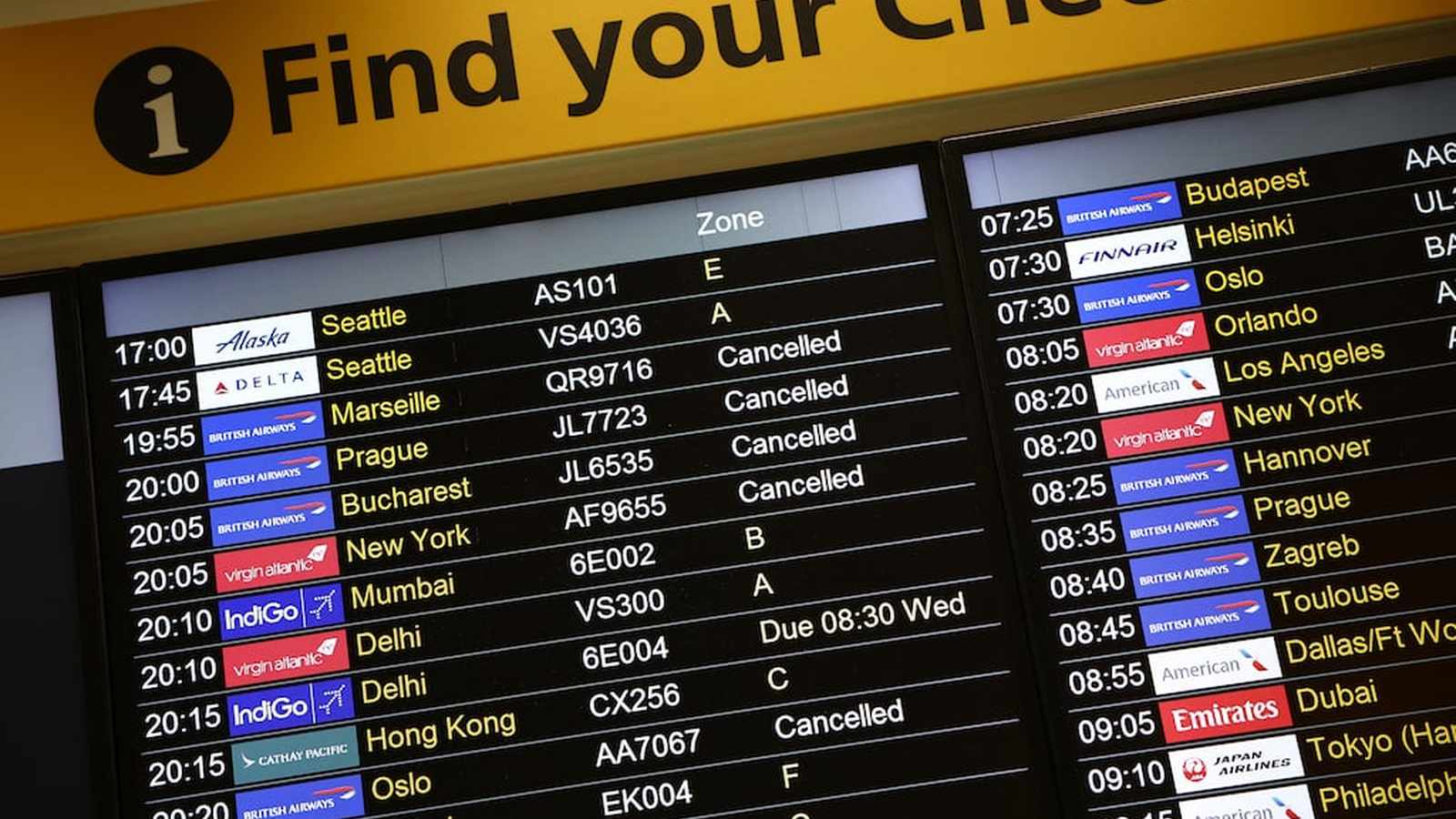
Dublin Airport continues to grapple with significant flight disruptions following a major technical failure in the UK’s air traffic control system, managed by the National Air Traffic Services (NATS). While the primary technical issue has been resolved, the ripple effects of the outage—which saw hundreds of flights grounded across the UK and Ireland—are expected to persist for days as airlines struggle to clear the backlog.
The Scope of the Disruption
The incident, which began on September 8, 2026, forced the cancellation of over 1,100 flights across the region. In Ireland, the DAA, the operator of Dublin Airport, reported that 43 outbound and 30 inbound flights were cancelled on Tuesday alone. Across the UK, major hubs including Heathrow, Gatwick, Edinburgh, and Stansted faced similar paralysis. British Airways confirmed that it had to cancel or divert more than 100 flights, impacting tens of thousands of passengers.
NATS chief executive Martin Rolfe, who has faced intense scrutiny and calls for his resignation, confirmed that the issue originated in the organization’s flight processing system. Despite the severity of the chaos, Rolfe stated to The Standard that NATS has “at this point ruled out cyber” as a potential cause, emphasizing that the focus remains on recovery and internal investigation.
Institutional Accountability
The failure has triggered a high-level government response. British Transport Secretary Heidi Alexander has summoned Rolfe to a formal meeting to seek assurances regarding the reliability of aviation support systems. Alexander stated via social media that the government is demanding a clear explanation of how these systems will be reinforced to prevent a repeat of the 2023 meltdown, which affected over 700,000 passengers.
Critics, including Neal McMahon, chief operations officer at Ryanair, have been vocal in their condemnation. McMahon accused NATS leadership of “repeated mismanagement,” citing the fact that major system failures continue to occur three years after the 2023 incident. Ryanair reported that more than 65,000 of its passengers were disrupted by the latest technical failure.
Operational Recovery
While NATS declared the system “resolved” on Tuesday evening, the recovery process is proving protracted. Travel journalist Simon Calder noted that the knock-on effects were inevitable, as aircraft were left out of position across the continent. Travelers have been advised to check their flight status with individual airlines before attempting to travel to the airport, as airlines continue to consolidate schedules and rebook affected passengers.