


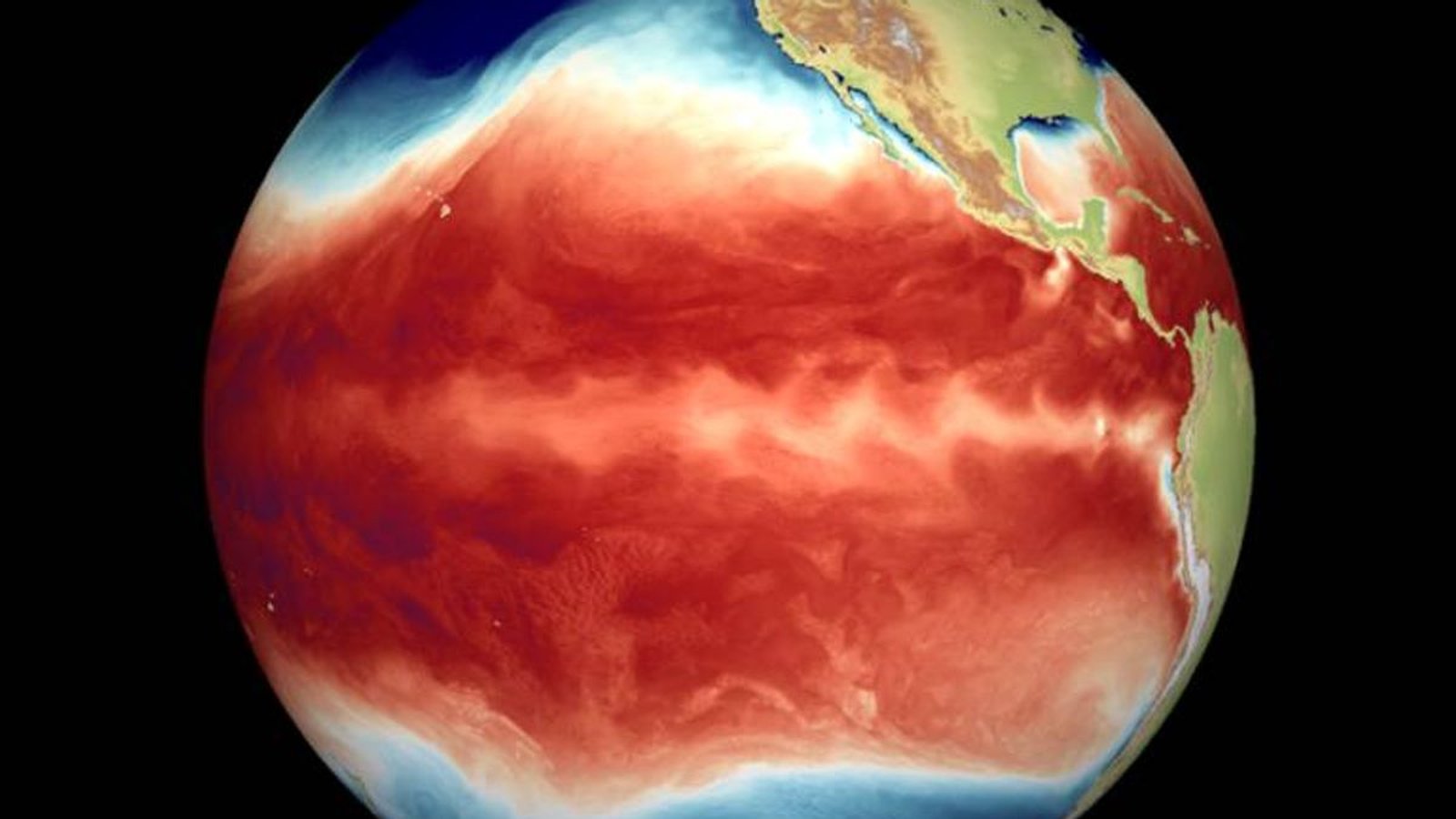
A Climate Phenomenon in ‘Uncharted Waters’
The world is entering a period of unprecedented meteorological volatility as a rapidly intensifying El Niño event approaches “super” status. According to the United Nations and the World Meteorological Organization (WMO), there is an “exceptionally high likelihood of nearly 100%” that this climate phenomenon will persist through February 2027. U.N. Secretary-General António Guterres stated that the planet is currently in “uncharted waters,” warning that rising sea surface temperatures have placed the globe in a “danger zone of extreme weather.”
Data from the National Climate Center in China indicates that the sea surface temperature index in the monitoring region reached 2.09°C in July, averaging 2.59°C in August—the highest levels recorded since data collection began in 1951. Forecasters expect the event to reach its peak intensity between November and December 2026, with some models suggesting it could become the strongest El Niño in 70 years.
This report draws on information published by dw.com and chinadaily.com.cn.
Agricultural Stress and the Risk of Conflict
Beyond the immediate weather impacts, researchers are sounding alarms over the link between climate-driven agricultural decline and geopolitical instability. A new study using the Climate-Driven Agricultural Decline Index (CADI) highlights that while climate change is creating new “winners and losers” in food production, the instability often stems from the rapid pace of change rather than just scarcity itself.
“The heaviest losses are in the tropical regions,” said Hannes Mueller of the Institute for Economic Analysis. Countries such as Bangladesh, Nigeria, and El Salvador are already experiencing significant agricultural losses. As food insecurity deepens, the pressure on land and water resources can become a catalyst for social unrest. Abdullah Fahimi of the German Council on Foreign Relations (DGAP) emphasized that in regions like South Asia and the Sahel, where population growth is rapid and dependence on food imports is high, these stresses could trigger major humanitarian crises and displace millions.
Regional Impacts: Floods, Droughts, and Institutional Resilience
The impact of this “supersized” El Niño is expected to vary significantly by region. In the United States, NOAA projects an increased likelihood of wetter conditions in the southern tier and milder temperatures in the North throughout the fall and winter. Conversely, China’s National Climate Center warns that the summer of 2027 may bring heavy precipitation and flooding to the Yangtze River basin, while parts of Northwest China face increased drought risks.
Experts suggest that the ability of a society to withstand these shocks often depends on its institutional framework. Research indicates that democracies often possess better platforms for negotiating competing resource interests, whereas in less stable regimes, resource scarcity can be exploited by armed groups or lead to a collapse in government legitimacy. As the world navigates the coming months, the focus remains on whether existing institutions can manage the transition as land productivity shifts and supply chains face further disruptions from global conflicts.