


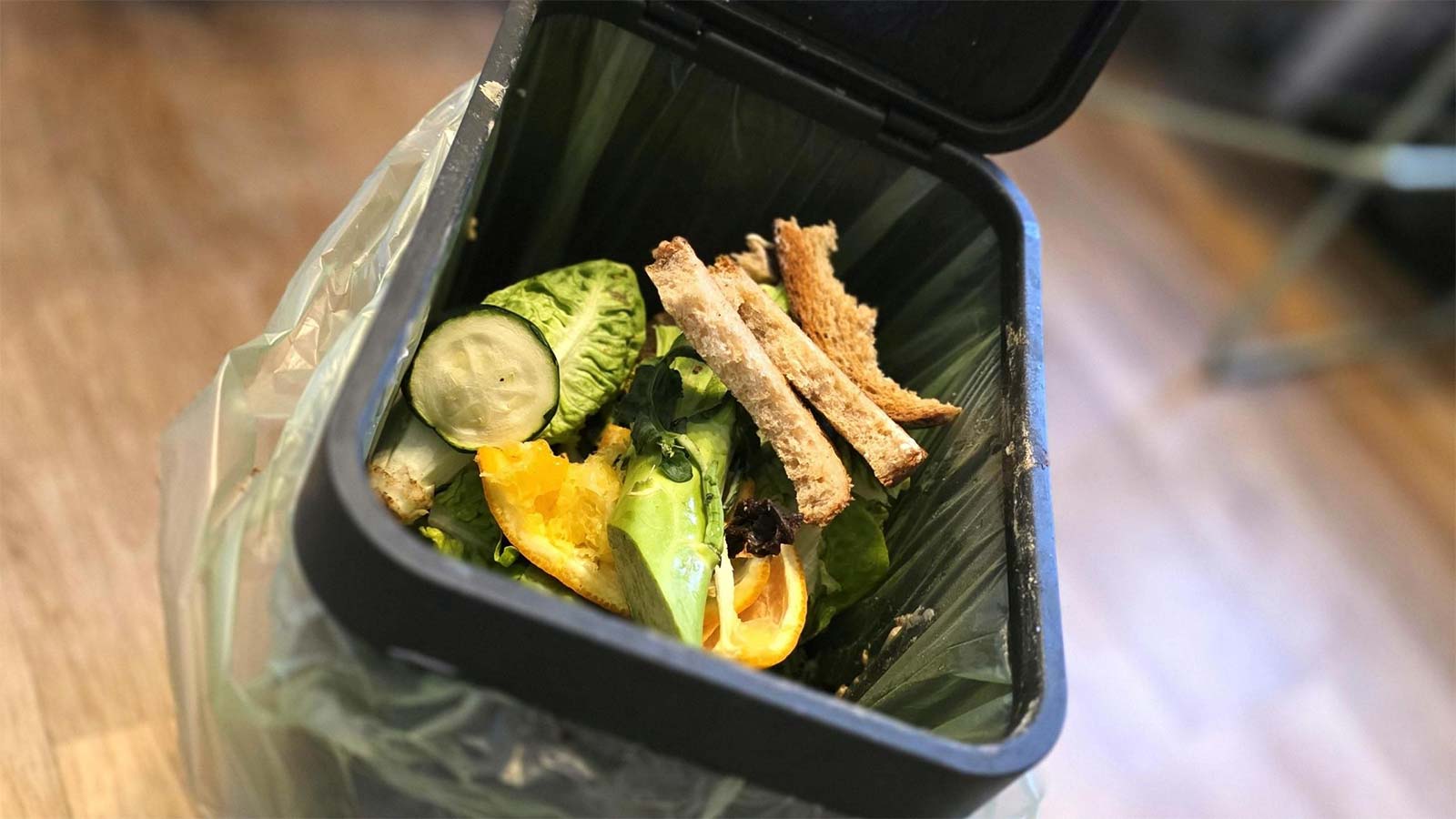
LONDON (Azat TV) – More than a quarter of English councils are set to miss a crucial official deadline in March 2026 for introducing weekly food waste collections to all homes, a recent *BBC* investigation has revealed. This widespread delay undermines new legislation aimed at standardizing recycling practices across England and raises questions about the nation’s commitment to reducing landfill waste and greenhouse gas emissions.
The Department for Environment, Food & Rural Affairs (Defra) had stated that ‘every household in England’ would benefit from weekly food waste collections starting this month under its new ‘Simpler Recycling’ policy. However, 79 councils confirmed to the *BBC* that they would not meet this deadline. The reasons cited for the delays include exceptionally high demand for new specialist collection vehicles and ongoing issues with funding, despite Defra providing over £340 million in grants.
Delays in Food Waste Collection Rollout
Environment Minister Mary Creagh acknowledged the challenges but emphasized the importance of the initiative, stating that councils had received a ‘significant uplift in this year’s budget’ to ensure the policy’s success. She urged councils to ‘do it slowly, do it right but let’s get on with it,’ highlighting the country’s stagnant recycling rates. While some councils have offered weekly food waste collections for over a decade, roughly half were not doing so before the new legislation, meaning many needed to make substantial changes.
Of the councils that will miss the March deadline, at least 57 are targeting a full rollout by the end of 2026, while more than a dozen could not provide an approximate start date. An additional 31 councils have secured agreements for a later start, meaning they will not be officially deemed as having missed the deadline. Even with these agreements, more than a third of all English councils will still not be collecting food waste from all homes by the end of March.
Funding and Vehicle Shortages Impede Progress
Councils across England have voiced concerns about the practicalities of implementing the new weekly food waste collection service. Shropshire Council, for instance, indicated that an April launch would expose it to ‘significant financial risk,’ with Cabinet member David Vasmer noting that while funds were provided for vehicles and bins, the recent government financial settlement ‘failed to provide any revenue funding for a weekly food waste service.’
Vehicle availability has also emerged as a major hurdle. South Derbyshire District Council confirmed that suppliers of food waste collection vehicles are experiencing ‘exceptionally high demand,’ making it difficult to acquire them. East Hampshire District Council echoed these concerns, stating that the lack of bin lorries was behind its delay, with no firm start date yet established for its food waste collections. Residents like Patricia Jepheson in Worcester, where collections are delayed until spring 2027, expressed frustration, questioning why areas with fewer resources managed to implement such services years ago.
The ‘Simpler Recycling’ Policy and its Benefits
The ‘Simpler Recycling’ policy aims to eliminate the ‘postcode lottery’ of waste collection policies, which currently vary significantly across councils. Adam Herriott, a senior sector specialist for sustainability charity Wrap, explained that the goal is to enable consistent recycling of materials, including paper and card, food waste, and dry recyclables like plastic, metal, and glass, ‘no matter where in England you are.’ A Defra spokesperson asserted that the initiative will ‘end the postcode lottery of bin collection,’ making recycling clearer and more accessible for all households.
Recycling food waste separately offers substantial environmental benefits. Food waste diverted from landfills undergoes anaerobic digestion, a process where it is pulverized, mixed with liquids, and left to digest in tanks for months. This process generates biomethane, which can be injected into the gas grid or converted into electricity, as explained by Mark Barnfield, commercial director at Severn Trent Green Power. The remaining material, digestate, can be used as fertilizer on nearby farms. This method significantly reduces the amount of waste rotting in landfill, which releases potent greenhouse gases, and can also improve national recycling rates due to food waste’s high water content and weight.
Rosemary Brotchie, Wrap’s senior specialist for food waste, highlighted that separate collections also encourage residents to reduce overall food waste by making them more aware of what they are discarding. She believes that seeing food collected in a caddy can ‘prompt some rethinking’ about consumption habits. Industry experts like Barnfield also suggest that a phased rollout, rather than an immediate ‘light switch’ approach, benefits processing plants by preventing the system from being overwhelmed and ensures a more natural transition.
The widespread delays in implementing weekly food waste collections across English councils highlight the complex interplay of funding, logistical challenges, and existing infrastructure in national environmental policy rollouts. While the ‘Simpler Recycling’ initiative aims to standardize practices and improve sustainability, its staggered implementation risks prolonging inconsistencies and delaying the full realization of its environmental benefits for several years.