


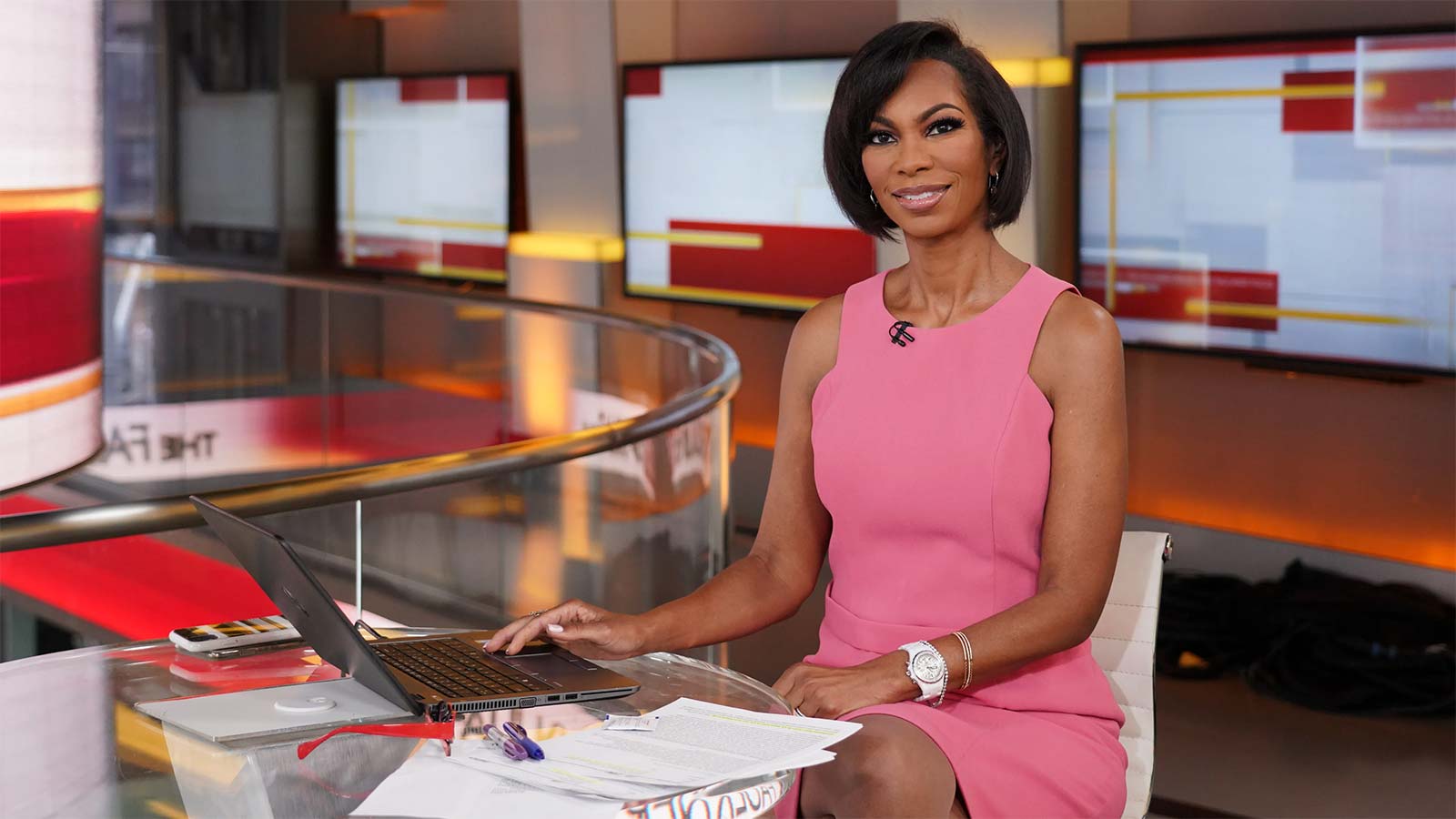
Harris Faulkner’s Influence in the Media Landscape
In 2025, Harris Faulkner stands out as one of Fox News’ most recognizable and influential anchors. Known for her incisive interview style and willingness to tackle controversial topics, Faulkner has become a focal point in America’s ongoing political and cultural debates. Her role as host of “The Faulkner Focus” places her at the heart of fast-moving news cycles, where her commentary often shapes public perceptions and triggers responses from across the political spectrum.
Controversy Over Military Orders: Treason or Lawful Dissent?
Faulkner recently ignited heated discussions with her on-air remarks regarding military obedience and the definition of treason. During a segment on Fox News, she responded to Democrat lawmakers who encouraged military members to refuse illegal orders, stating, “Refusing military orders; that would be treason.” The comment followed a video clip featuring Senators Mark Kelly and Elissa Slotkin, along with Representatives Jason Crow and Chrissy Houlahan, who argued that service members are obliged to reject unlawful commands.
Faulkner’s framing of the issue drew swift reactions. Critics accused her of misunderstanding the distinction between illegal and lawful orders, while conservative commentators echoed her sentiment, warning that calls to defy presidential directives—especially those from Donald Trump—were “subversive to democracy.” The exchange highlighted the persistent tension between executive authority and individual conscience, a debate that has only intensified in recent years amid shifting political allegiances and concerns about the rule of law.
Media watchdog Media Matters documented the controversy, noting how Faulkner’s statement was picked up and amplified by partisan outlets and social media commentators. Her role in the discussion underscores the power—and the risk—of live news anchors to influence public understanding of constitutional norms.
Intersection with Celebrity and Pop Culture
Faulkner’s visibility extends beyond political news into the realm of pop culture, as seen in her recent interaction with rapper Nicki Minaj. Following Minaj’s controversial speech at the United Nations regarding religious extremism in Nigeria and her alignment with Donald Trump, the rapper posted a photo on X (formerly Twitter) alongside Faulkner. Minaj praised Faulkner, calling her “flawless in person” and “very smart, genuine.” The post was notable not only for its celebrity endorsement but also for the way it linked Faulkner to ongoing debates about U.S. foreign policy, religious freedom, and the use of celebrity influence in political discourse.
Minaj’s U.N. appearance itself sparked outrage among activists and commentators, with figures like Tamika Mallory and Tammy Rivera warning that the rapper’s support for Trump’s policies could have dire consequences for Nigeria. Their criticisms focused on the potential for resource exploitation and violence, framing Minaj’s involvement as part of a larger geopolitical strategy. Faulkner’s proximity to these events—both as a media personality and as a public figure referenced by Minaj—reflects the increasingly porous boundaries between news, politics, and entertainment.
Media Strategy and Public Perception
Faulkner’s career has thrived on her ability to blend hard news with personal connection. Her interviews often elicit candid responses from guests, as seen in her conversation with Texas Senator Ted Cruz. During a recent episode of “The Faulkner Focus,” Cruz sidestepped questions about a potential 2028 presidential run, emphasizing his current responsibilities while refusing to confirm or deny future ambitions. Faulkner’s probing style helped bring out Cruz’s nuanced positioning within the Republican Party, highlighting his efforts to appeal to pro-Israel donors and position himself as a traditional, interventionist Republican.
By consistently engaging with high-profile political figures and cultural icons, Faulkner has built a reputation as a journalist who is both accessible and authoritative. Her presence in major media moments—whether addressing constitutional questions or appearing alongside celebrities—demonstrates the evolving role of television news anchors in shaping national conversations.
The Challenge of Neutrality in Polarized Times
Faulkner’s experience in 2025 encapsulates the challenges faced by journalists in a deeply polarized media environment. Her remarks on treason and military orders were interpreted through partisan lenses, with supporters praising her patriotism and critics accusing her of conflating legal concepts. Similarly, her connection to Nicki Minaj’s U.N. appearance brought both admiration and criticism, illustrating how media personalities can become lightning rods for broader societal debates.
What makes Faulkner’s situation unique is her ability to remain relevant amid shifting cultural and political landscapes. She is not simply a commentator; she is an active participant in the stories that define the year. Her interviews, social media presence, and coverage of contentious issues ensure that she remains at the center of the action, even as the boundaries between news and entertainment blur.
In a year marked by political upheaval and celebrity activism, Harris Faulkner’s role as a Fox News anchor has never been more consequential. Her capacity to provoke, inform, and connect underscores the enduring influence of broadcast journalism, but also the risks of becoming a central figure in America’s most divisive debates. As the media landscape continues to evolve, Faulkner’s journey offers a compelling case study in the power—and the pitfalls—of being both a storyteller and a story subject.