


A New Landscape in State Capitals
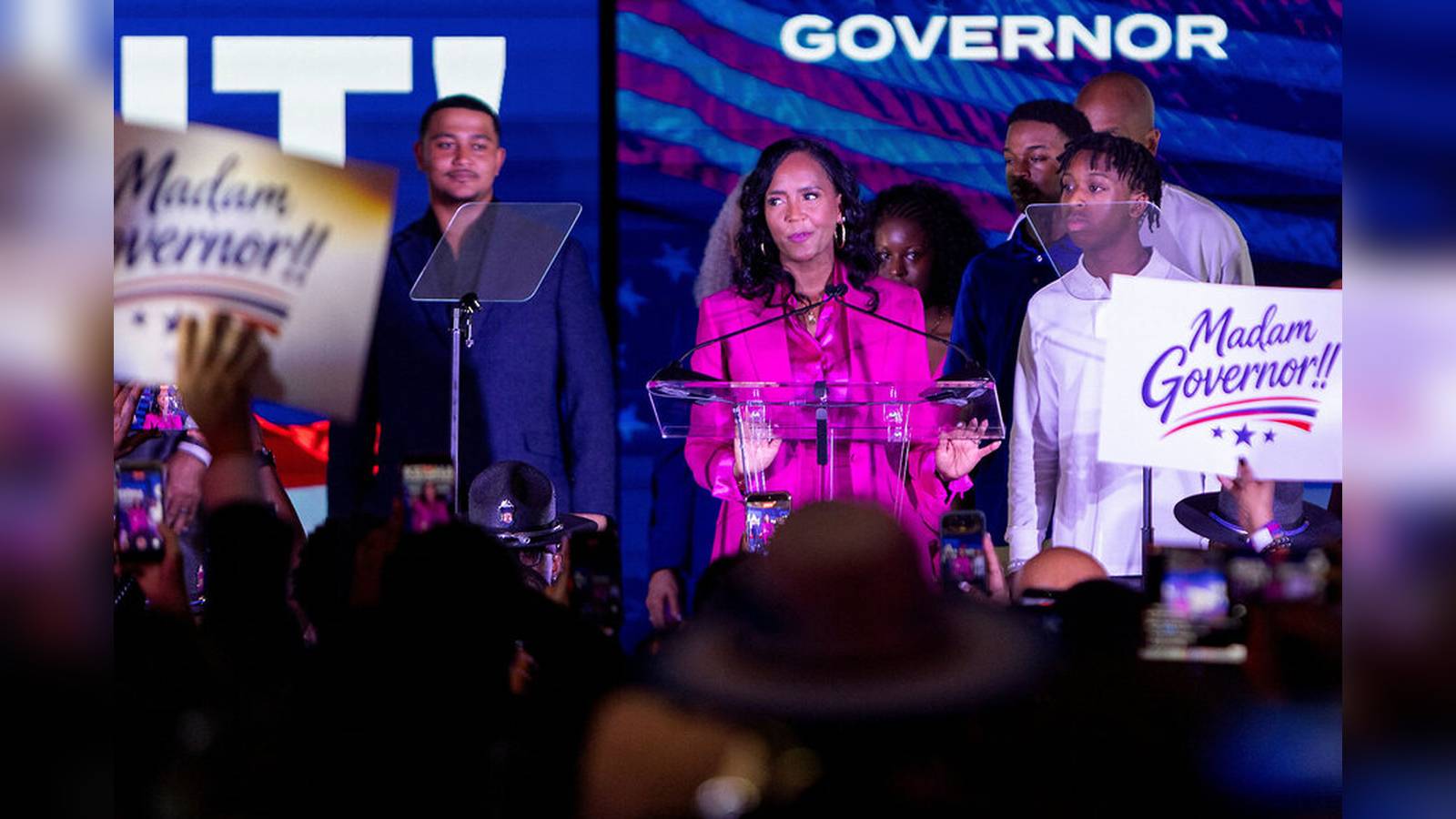
Following the 2026 midterm elections that concluded on November 3, 2026, the Democratic Party has achieved a significant milestone by securing control of at least 28 state governorships across the United States. This result, widely described by political observers as a “blue tsunami” or a “blue wave,” marks the first time in several decades that the Democratic Party has held a clear majority of the nation’s governor’s mansions. According to detailed reporting by the Christian Science Monitor, this seismic shift in executive power includes critical victories in states that were previously considered Republican strongholds or reliable battlegrounds. The list of states flipping from red to blue includes Georgia, Iowa, Texas, Ohio, and Nevada, fundamentally altering the existing power dynamic between state executives and the federal government in Washington.
The election outcomes are interpreted by political analysts as a definitive and sweeping rebuke of President Donald Trump’s administration. Entering the midterm cycle, President Trump faced a challenging political environment, characterized by a 36% approval rating. While the President’s name was not explicitly on the ballot, voters expressed deep-seated dissatisfaction with the current federal trajectory, punishing the Republican Party even in areas that historically leaned conservative. As noted in the Christian Science Monitor, these results suggest that while the Democratic brand may not be universally strong in every corner of the country, it proved significantly more effective than the Republican alternative amidst a potent anti-incumbent sentiment. The results have effectively turned state capitals into primary battlegrounds for policy resistance and future political strategy.
Asserting State Independence and Policy Friction
The transition to a Democratic majority in state houses is expected to trigger a period of increased friction between state governors and federal authorities. Saladin Ambar, a political scientist at Rutgers University and senior scholar at the Eagleton Institute’s Center on the American Governor, suggests that state leaders will likely move toward greater assertiveness regarding states’ rights. This shift is anticipated to manifest in policies that refuse cooperation with federal immigration and deportation initiatives led by Immigration and Customs Enforcement (ICE). The current political climate is driving a profound re-evaluation of institutional roles, as state capitals emerge as primary centers for policy resistance against what many Democratic leaders characterize as federal intrusion into state affairs.
Dr. Ambar emphasizes that this trend is not limited to one side of the aisle, noting that both Democratic and Republican governors may seek to assert more independence from Washington. However, the sheer scale of the Democratic gain provides the party with a platform to offer an alternative vision of governance. Beyond the immediate concerns of public safety, infrastructure, and immigration, governors are now positioned as key architects of future national political strategies. The governor’s mansion historically serves as a “nursery” for presidential aspirants, and the 2026 class includes several figures likely to influence the 2028 election cycle significantly. Among the prominent names mentioned are Pennsylvania’s Governor Josh Shapiro, Kentucky’s Andy Beshear, and California’s Gavin Newsom. These leaders are expected to use their positions to differentiate their platforms from federal mandates, offering a distinct vision that could define the next stage of the national Democratic agenda.
The Republican Re-alignment and Existential Challenges
For the Republican Party, the midterms present a severe existential challenge. The loss of key states—most notably Texas, which elected Gina Hinojosa as its first Latina governor—has sparked intense internal debate regarding the future of the “MAGA” platform. Analysts like Greg Love of the University of Mississippi emphasize that the current political environment is defined by a deep-seated frustration with the status quo. Republicans are now faced with the arduous task of redefining their core identity, much as the Democratic Party had to reinvent its approach to social welfare and government intervention during the late 1990s under the influence of Bill Clinton. The question remains whether the Republican Party will pivot toward a new conservative identity or continue to struggle with the electoral consequences of the current administration’s unpopularity.
The 2026 midterm cycle also brought historic diversity to the executive landscape. The number of Black governors has reached a record five, alongside historic milestones for Latina and Native American leadership in state government. For instance, New Mexico elected its first Native American governor, and the victory of Gina Hinojosa in Texas represents a historic shift in a state that had not elected a Democrat to a statewide office since 1994. These results reflect a broader demographic and political shift that the two major parties must now navigate. As state legislatures and executive offices prepare for the upcoming legislative sessions in 2027, the focus will shift from the heat of electoral campaigning to the practicalities of governing. The ability of these Democratic governors to deliver on constituent concerns—such as public safety, road and bridge maintenance, public health, and education—will likely determine whether this shift represents a durable realignment or a temporary reaction to the current federal administration.
The Path to 2028
With the dust settling on the midterms, the Democratic Party is already looking toward the 2028 presidential cycle with renewed confidence. According to reporting from Time magazine, the midterm victories have emboldened the party, though it still lacks a singular, clear leader. The “blue wave” has not only reshaped governorships but also resulted in the Democratic Party taking control of both the House and Senate, as seen in historic victories like James Talarico’s senatorial win in Texas and Adam Hamilton’s victory in Kansas. This momentum suggests that the next two years will be defined by a concerted effort to demonstrate effective governance at the state level to prepare for a national run. Democratic National Committee Chair Ken Martin has already vowed that the party will work to address rising costs and present a compelling alternative to the current administration. As the country moves into 2027, the political focus will remain on whether these new Democratic governors can successfully translate their electoral victories into consistent policy wins that resonate with a divided American electorate.
Reporting source: csmonitor.com.