
Quick Read
- Israel launched a broad wave of strikes against Tehran, targeting regime infrastructure and residential areas.
- The conflict entered its seventh day, following the reported killing of Iran’s former Supreme Leader on Day 1.
- Israel also intensified strikes on Hezbollah strongholds in southern Beirut, prompting mass evacuations.
- Iran-backed militias continued attacks across the region, with Gulf states intercepting retaliatory strikes.
- The US ramped up its campaign, sinking Iranian naval vessels and stating there are “no time limits” on the war.
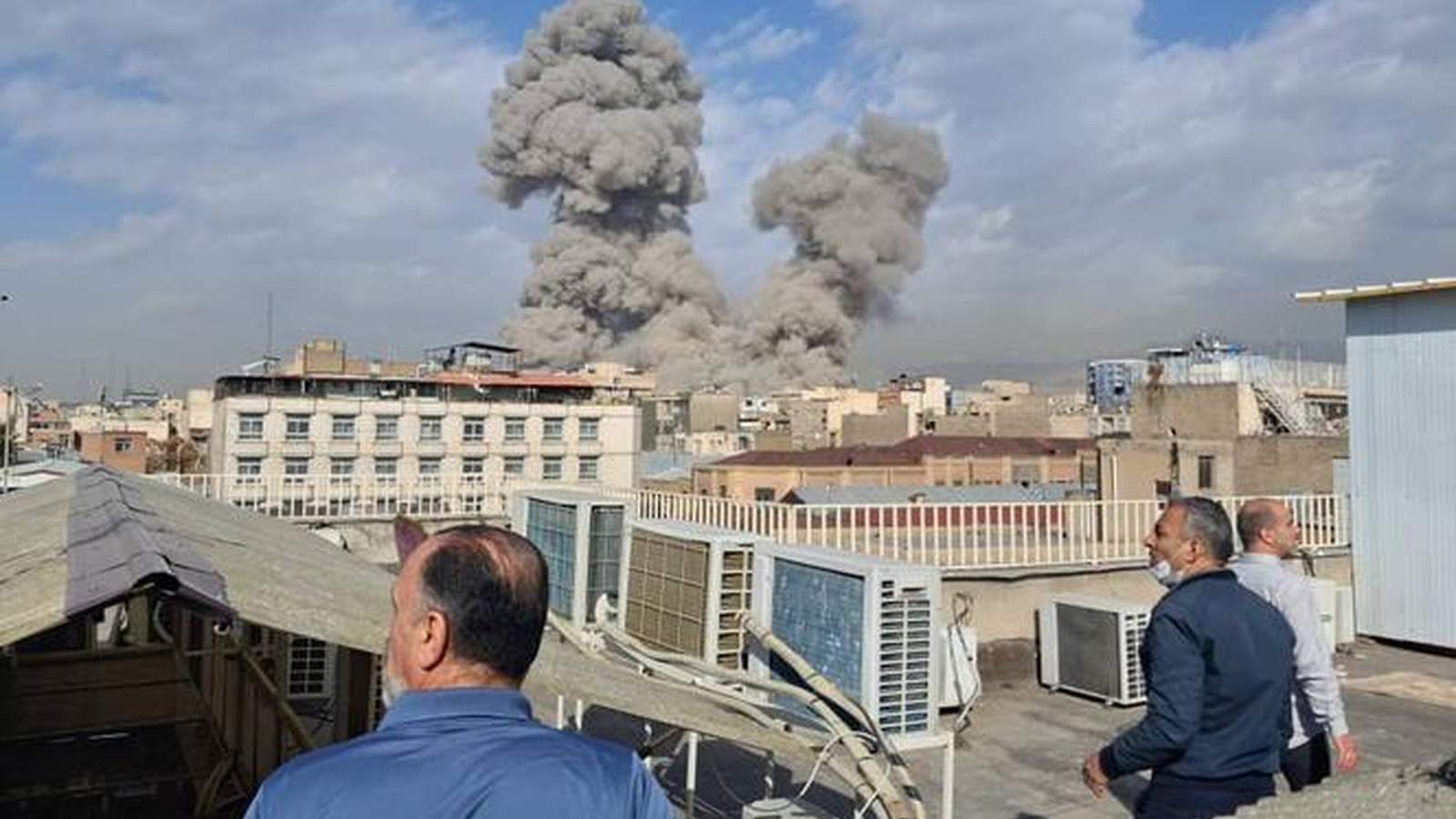
TEHRAN (Azat TV) – Israel launched a broad-scale wave of strikes against Tehran on Friday, marking a significant escalation as the conflict with Iran entered its seventh day. The intensified bombardment targeted critical regime infrastructure and residential areas across the Iranian capital, drawing widespread international attention to the widening war in the Middle East.
The latest offensive comes after a week of escalating hostilities that began with joint US-Israeli strikes on Saturday, February 28, which reportedly killed Iran’s former Supreme Leader Ayatollah Ali Khamenei in Tehran. Since then, the conflict has seen continuous strikes across Iran, Lebanon, and other Gulf states, with both sides trading blows and raising fears of broader regional instability.
Israel’s Intensified Strikes on Tehran and Beirut
On Friday, residents in Tehran reported hearing waves of sustained jet noise and loud explosions across central, eastern, and western areas of the capital, according to CNN staff on the ground and Iran’s semi-official Mehr news agency. Israel’s military confirmed it had begun a “broad-scale wave of strikes” against Tehran, targeting what it called “regime infrastructure.” Iranian state media reported that Jomhuri Avenue, a major street in the capital, was hit, alongside residential buildings, a military academy, and an elementary school in Niloufar Square, as reported by Iran’s Noor News and Al Jazeera. UNICEF stated that at least 181 children are among the more than 1,300 civilians killed in Iran since February 28.
Simultaneously, Israel expanded its operations into Lebanon, announcing it was targeting Hezbollah, an Iran-backed militant group. This followed Thursday’s evacuation order for nearly all of southern Beirut, believed to house over half a million people, which triggered scenes of chaos and panic as residents attempted to flee. Israel carried out more strikes overnight in Dahieh, a southern suburb of Beirut considered a Hezbollah stronghold. Lebanon’s National News Agency reported 123 people killed and 683 wounded from Israeli strikes in Lebanon. In response, Hezbollah warned Israeli residents to evacuate towns within 5km of the border, stating that Israeli aggression “will not pass without a response.”
Wider Regional Conflict and US Involvement
The conflict’s seventh day saw Iran-backed militias intensifying attacks across the region. Countries in the Gulf continued to fend off retaliatory strikes from Iran. Qatar’s Ministry of Defense announced that air defenses successfully intercepted a drone attack targeting the Al-Udeid Air Base, the largest US military installation in the Middle East. Bahrain’s Interior Ministry reported that Iranian strikes targeted a hotel and two residential buildings in the capital Manama, causing a fire, though no loss of life was recorded. Saudi Arabia intercepted three ballistic missiles targeting Prince Sultan Air Base, a site known to have housed US military aircraft.
The United States has ramped up its campaign against Iran. US Central Command (CENTCOM) announced Thursday that it struck an Iranian drone carrier, which was subsequently on fire. Admiral Brad Cooper, commander of CENTCOM, stated that over the last 24 hours, US strikes against the Iranian Navy had intensified, sinking 30 ships. He also revealed that US B-2 stealth bombers dropped dozens of 2,000lb “penetrator” bombs on deeply buried ballistic missile launchers inside Iran early Friday. Defense Secretary Pete Hegseth signaled further escalation, stating, “If you think you’ve seen something, just wait,” and confirmed the US is fielding “a number of new capabilities” in the war. Hegseth also declared that the US has “no time limits” on how long the war could go on, a sentiment echoed by President Donald Trump in an interview with Time.
International Response and Asymmetric Warfare
As the conflict widens, international concern is growing. Japan’s Foreign Minister Toshimitsu Motegi called for the release of two Japanese citizens detained in Iran since January. Canada’s Chief of the Defence Staff Jennie Carignan stated that Canada could consider helping to defend Persian Gulf partners but would not participate in Operation Epic Fury against Iran. CNN military analyst Cedric Leighton explained that Iran is employing asymmetric warfare strategies to counter the superior military power of the United States and Israel, given its more limited conventional arsenal.
Meanwhile, Iranian-backed militias in Iraq have launched dozens of attacks targeting Israel and US bases in Jordan and Iraq, and have also struck infrastructure of Iranian-Kurdish opposition groups in northern Iraq. Reports have emerged of the CIA working to arm Iranian Kurdish forces, ahead of a potential ground offensive in Western Iran, adding another layer of complexity to the multifaceted conflict.
The broad-scale Israeli strikes on Tehran, coupled with the US’s explicit commitment to an open-ended conflict, signify a dangerous new phase in the Middle East, moving beyond targeted retaliations to a sustained campaign with significant civilian impact and high potential for further regional destabilization.