

Quick Read
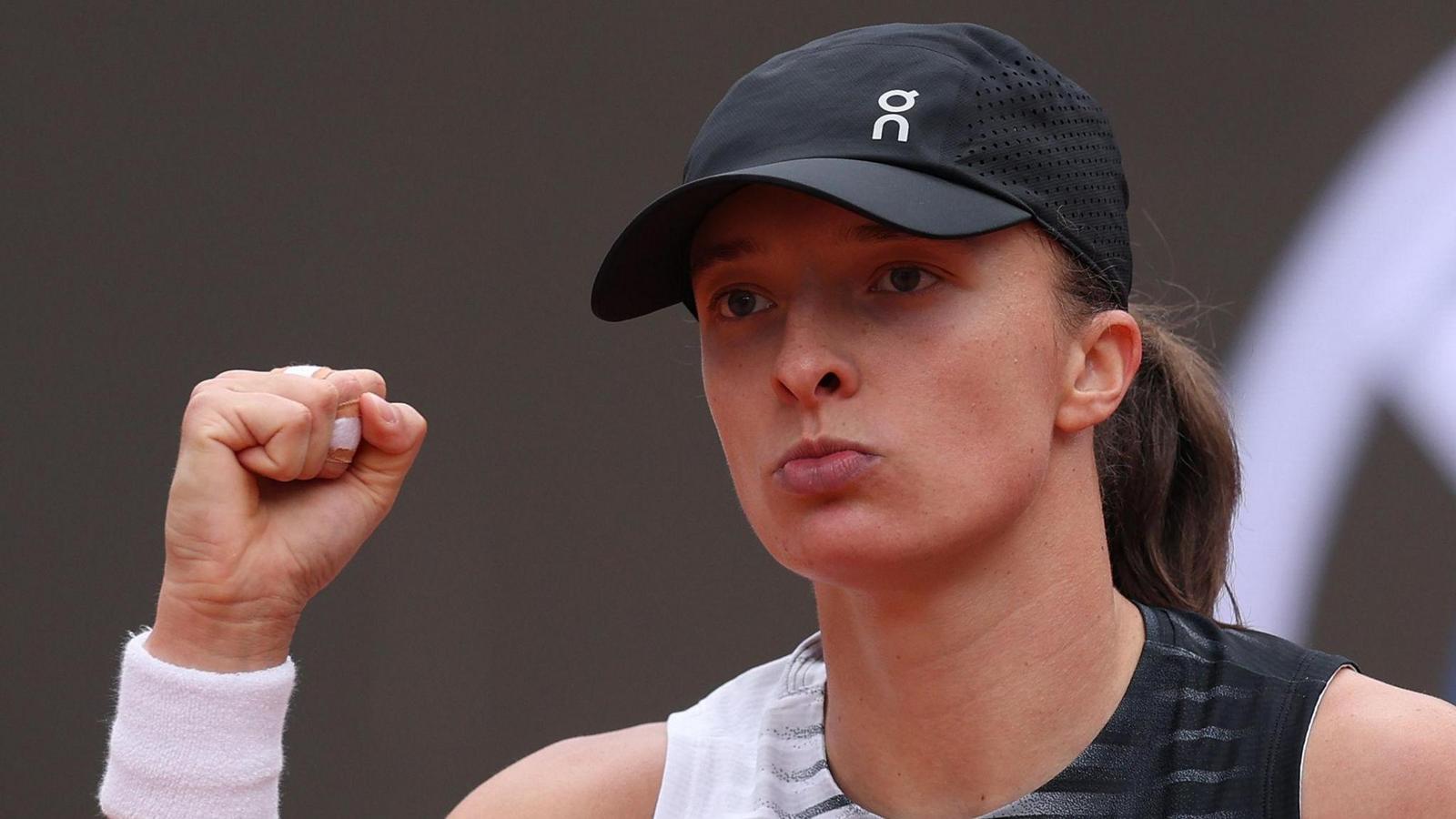
- Iga Swiatek defeated Jessica Pegula 6-1, 6-2 in 67 minutes to reach the Rome semi-finals.
- Lorenzo Musetti (World No. 10) withdrew from the French Open due to a thigh injury.
- Casper Ruud advanced to the semi-finals after beating Karen Khachanov in three sets.
- Swiatek’s resurgence is credited to new coach Francisco Roig, formerly with Rafael Nadal.
The Resurgence of the ‘Queen of Clay’
In a performance that served as both a tactical masterclass and a psychological warning to the field, world number four Iga Swiatek dismantled fifth seed Jessica Pegula 6-1, 6-2 on Wednesday to reach the Italian Open semi-finals. The victory, achieved in a mere 67 minutes, marks a definitive shift in Swiatek’s trajectory as she prepares for the French Open next month. After a 2025 season where she appeared uncharacteristically vulnerable on the red dirt, Swiatek’s recent adjustments under the tutelage of Francisco Roig—Rafael Nadal’s former long-term coach—have yielded immediate dividends. The Pole’s return to a more stable, patient style of play, characterized by higher margins for error and relentless intensity, suggests that the ‘Queen of Clay’ has successfully recalibrated her game.
Tactical Evolution and the Roig Influence
The appointment of Francisco Roig last month appears to be the catalyst for Swiatek’s renewed confidence. Following a period of experimentation under previous coach Wim Fissette, which focused on a more aggressive baseline approach, Swiatek had reportedly lost confidence in her shot-making when matches turned into wars of attrition. According to reporting from the BBC, the return to ‘basics’—prioritizing depth and stability over raw power—was evident in her dismissal of Pegula. Swiatek’s ability to swamp Pegula’s second serve and maintain high intensity throughout the match highlights a physical and mental conditioning that had been missing in the previous year. Swiatek herself noted after the match that the work done in recent weeks has reinforced her confidence in her shots, a sentiment echoed by analysts who now view her as the clear favorite for the Roland Garros title.
Men’s Bracket: Ruud Progresses as Injuries Mount
On the men’s side, Casper Ruud of Norway demonstrated his own clay-court credentials by overcoming Russia’s Karen Khachanov in a three-set quarter-final battle. Ruud, ranked 23rd but possessing a pedigree that includes multiple Grand Slam finals, secured a 6-1, 1-6, 6-2 victory. Despite a second-set lapse, Ruud’s clinical efficiency in the decider, where he broke Khachanov’s serve twice in the opening games, sets up a semi-final clash against either Spanish teenager Rafael Jodar or Italy’s Luciano Darderi. Ruud’s progression is a significant narrative for the ATP, especially as the top tier of the rankings continues to be decimated by physical setbacks.
The Attrition Crisis: Musetti Joins the Sidelines
The most consequential news of the day for the broader tennis landscape was the withdrawal of world number 10 Lorenzo Musetti from the upcoming French Open. The Italian, who reached the semi-finals in Paris last year, confirmed that a thigh injury sustained during his Rome loss to Ruud would require several weeks of recovery. “Unfortunately, this means I won’t be able to compete in Hamburg and Roland Garros—news that is incredibly hard to take,” Musetti stated via social media. His absence is a major blow to the tournament and the ATP tour, as he joins a growing list of high-profile casualties including defending champion Carlos Alcaraz and Britain’s Jack Draper. This trend of injuries among the top seeds raises institutional questions regarding the length and intensity of the modern tennis calendar, particularly on demanding surfaces like clay.
Looking Ahead: The Road to Roland Garros
As the Italian Open heads into its final stages, the focus shifts to the semi-final matchups. Swiatek will face either second seed Elena Rybakina or seventh seed Elina Svitolina, both of whom are former champions in Rome. These matchups will serve as the ultimate litmus test for Swiatek’s revised tactical framework. For the men, the draw has opened up significantly following the exit of several top seeds, providing a rare opportunity for mid-tier players or rising stars to claim a prestigious Masters 1000 title before the circus moves to Paris. The contrast between Swiatek’s ascending form and the physical breakdown of her male counterparts defines the current state of professional tennis heading into the second Grand Slam of the year.
The 2026 Italian Open has clarified the hierarchy of the WTA while simultaneously exposing the fragile physical state of the ATP’s elite. Swiatek’s return to her foundational strengths suggests a period of renewed dominance, whereas the mounting injury list for the French Open threatens to overshadow the competitive integrity of the upcoming major.