


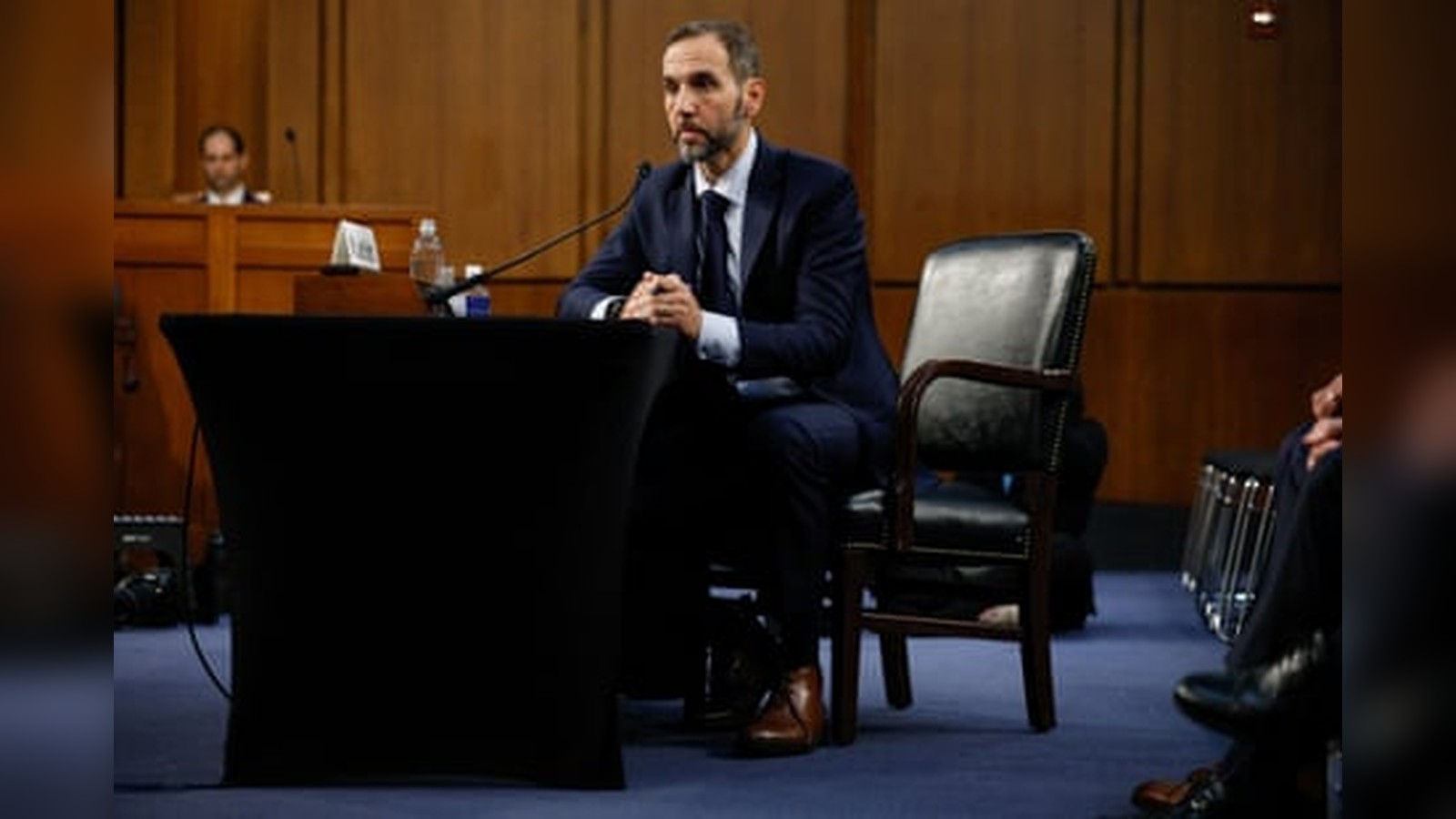
The hearing provided a forum for Republicans to try to paint Smith as a partisan operative and assail him anew for what they contend were politicized prosecutions that unfolded during the 2024 presidential race. Both federal cases—accusing Trump of conspiring to overturn the 2020 election results and of retaining classified documents at his Mar-a-Lago estate—were abandoned after Trump’s 2024 election win, in line with Justice Department policies protecting sitting presidents from criminal indictment.
“Anybody who has worked with me and knows me during the course of my career knows that I would not let politics play a role. And I would just add that if you knew the people I worked with, they would not either,” Smith testified.
The Basketball Mix-Up and Perjury Accusations
The hearing’s most memorable moment arrived when Republican Sen. Eric Schmitt of Missouri attempted to accuse Smith of perjury regarding a professional basketball game. Schmitt asked Smith whether he recalled attending an Atlanta Hawks game in February 2024 around the time a local district attorney prosecuting Trump in Georgia faced scrutiny over a romantic relationship with a special prosecutor.
Smith appeared perplexed and denied visiting Atlanta or attending a Hawks game. Staffers then displayed posterboard text messages purporting to show communications about Smith’s attendance at an NBA game, leading Schmitt to declare, “I think you’ve already perjured yourself.”
Minutes later, the confusion dissolved when Smith clarified that he had indeed attended a basketball game in February 2024—a University of Iowa Hawkeyes women’s matchup in Maryland to watch star player Caitlin Clark, completely unrelated to the Atlanta Hawks. Democratic Sen. Amy Klobuchar chided Schmitt for the error, noting that a simple check of the team names would have prevented the public mishap. Schmitt, however, remained unbowed, telling Smith during the proceedings, “You will go down as a total dirtbag,” as reported by Valley News Live.
Subpoenas for Lawmakers’ Phone Records
Beyond the partisan clashes, Republican senators pressed Smith over his team’s acquisition of toll records for numerous Republican members of Congress contacted by Trump or his aides on Jan. 6, 2021. Smith defended the subpoenas as a standard and necessary investigative tool to understand the full scope of the conspiracy surrounding the U.S. Capitol riot.
“They were taking the fact that law enforcement officers had been brutally assaulted at this institution and using that to seek to delay the proceedings further in violation of the law,” Smith stated, adding that he consulted with and received approval from the Justice Department’s Public Integrity Section.
While toll records reveal only the date, time, and duration of phone calls rather than their content, the secret collection has drawn fierce criticism from GOP lawmakers. In July, House Judiciary Committee Chairman Jim Jordan referred Smith to the Justice Department for potential prosecution over alleged false statements regarding the records collection—an allegation Smith and his attorneys have vigorously rejected.
“I stand by my testimony before the House of Representatives,” Smith said. “I will not be silenced by the continued threats of prosecution from the president or others.”
Partisan Stalemate and Broad Institutional Stakes
Throughout the session, the committee broke sharply along familiar partisan lines. Republican Chairman Chuck Grassley of Iowa asserted that the election case was ultimately about partisan agents mapping out a political apparatus against Republicans. Meanwhile, GOP Sen. John Kennedy grew exasperated during questioning, asking Smith whether he believed in the tooth fairy and the Easter Bunny before remarking, “You make me want to throw up in my mouth.”
Conversely, Democrats rallied in defense of Smith and the legitimacy of his findings. Senate Judiciary Committee top Democrat Dick Durbin of Illinois accused Republicans of spreading baseless conspiracy theories to whitewash the events of Jan. 6 and distract from unlawful conduct. Smith concluded by lamenting what he described as an unprecedented wave of terminations and political attacks against career prosecutors, warning that such measures deprive the government of crucial expertise and weaken the rule of law.