


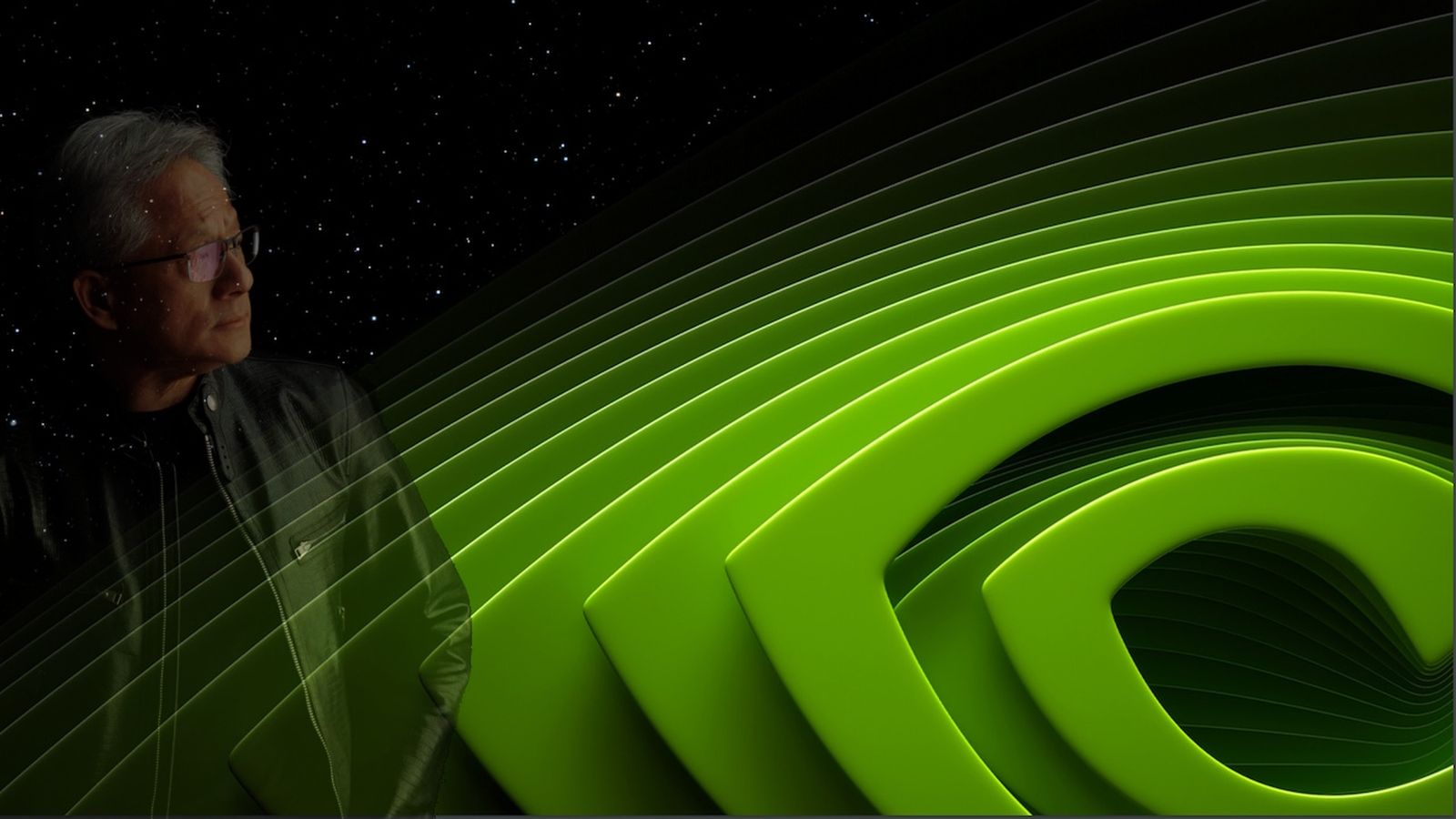
Nvidia’s Earnings Shatter Expectations as Jensen Huang Stays Center Stage
In the closing weeks of 2025, few names have captured Wall Street’s imagination quite like Jensen Huang. As the CEO of Nvidia, Huang presides over a company now seen as the beating heart of the artificial intelligence revolution—its quarterly earnings report a barometer for the entire tech sector. On November 19, Nvidia released its Q3 results, and the numbers were nothing short of stunning: revenue soared to $57 billion, outstripping analyst forecasts and reinforcing the company’s dominance in AI hardware.
Huang’s words, delivered in Nvidia’s official earnings release, echoed the sense of relentless momentum: “Blackwell sales are off the charts, and cloud GPUs are sold out. Compute demand keeps accelerating and compounding across training and inference—each growing exponentially. We’ve entered the virtuous cycle of AI. The AI ecosystem is scaling fast—across industries, across borders.”
Investors responded in kind. Nvidia’s stock jumped 3% in after-hours trading, capping a remarkable 39% rally for the year—nearly triple the gain of the S&P 500. The company’s data center division, pivotal for AI applications, brought in $51.2 billion, again beating consensus. Earnings-per-share landed at $1.30, above the expected $1.26. And perhaps most critically, Nvidia’s guidance for the coming quarter pointed to even higher sales: a projected $65 billion, well above Wall Street’s $62 billion estimate.
AI Bubble Worries and the Weight of Expectations
But as Nvidia’s star rises, so do the stakes. The company’s breathtaking growth has sparked debates about whether the AI sector is overheating. Prominent investors like SoftBank and Peter Thiel’s hedge fund have trimmed their Nvidia holdings, fueling speculation that valuations are inflated by “circular” deals—complex arrangements between chip makers, cloud providers, and AI startups that may not always reflect organic demand.
This skepticism is mirrored in market sentiment. The Cboe Volatility Index (“Fear Index”) spiked near its highest levels since spring, while CNN’s Fear & Greed Index flashed “Extreme Fear” across most metrics. Bank of America’s November survey found nearly half of fund managers now see an AI bubble as the biggest risk facing markets. Retail investor optimism has plummeted, with bearish sentiment jumping sharply.
Yet, as Business Insider and Investopedia report, the Nvidia earnings beat provided a temporary salve for these nerves. The company’s influence is so outsized—its market cap hovers around $4.5 trillion, making up 8% of the S&P 500—that any significant move in Nvidia’s shares ripples through portfolios and index funds everywhere.
Strategic Partnerships: Anthropic, OpenAI, and the Cloud Power Play
Jensen Huang’s strategy has gone far beyond simply selling chips. Nvidia has forged ambitious partnerships, most notably with AI startup Anthropic and OpenAI. In a landmark deal, Nvidia committed up to $10 billion in investment to Anthropic, enabling it to scale its Claude AI model on Microsoft’s Azure cloud platform, powered by Nvidia’s hardware. Microsoft itself is investing up to $5 billion in Anthropic, while Anthropic plans to spend $30 billion on compute resources.
Meanwhile, Nvidia’s collaboration with OpenAI is even more staggering: up to $100 billion will go into building AI data centers using Nvidia’s cutting-edge systems, with the first phase set to launch in late 2026. OpenAI aims to construct at least 10 gigawatts of AI data centers, underpinned by Nvidia’s Vera Rubin platform. These deals signal a shift in the industry, with Nvidia not just supplying hardware but actively shaping the infrastructure and ecosystem of AI development.
However, the web of interlocking investments and cloud capacity agreements has led analysts to question the true sustainability of demand. Are these “circular” deals artificially inflating the market, or do they reflect genuine, long-term need for AI compute?
Jensen Huang’s Vision and the Road Ahead
Huang has remained steadfast in his optimism. Speaking to analysts, he emphasized the “exponential” growth in compute demand and the rapid scaling of the AI ecosystem. Nvidia’s product pipeline remains robust, with new architectures like Blackwell, Blackwell Ultra, and Vera Rubin chips expected to drive further growth into 2026. Analysts at CFRA, DA Davidson, UBS, and Bank of America have largely maintained bullish outlooks, citing Nvidia’s ability to stay ahead of competitors and capitalize on the AI wave.
Yet, challenges remain. GPU depreciation—a concern raised by some prominent investors—has led to debate about whether the pace of innovation will leave expensive hardware obsolete too quickly. Business Insider’s Ali Barr pushes back on this narrative, arguing that GPUs retain value longer than feared, and that Wall Street’s consensus may be overstated.
For Huang, the balancing act is delicate. He must continue to deliver growth and innovation, justify the company’s massive capital commitments, and reassure investors that the AI boom is built on solid ground, not speculative excess.
Market Impact and Investor Sentiment: The Ripple Effect
The significance of Nvidia’s results goes far beyond one company. With its heavy weighting in major stock indexes, Nvidia’s performance can sway the broader market, impacting millions of retirement accounts and mutual funds. Options pricing ahead of the earnings release suggested traders expected swings of up to 7% in Nvidia shares, with potential spillover into the S&P 500.
Recent quarters have shown a pattern: even strong results can lead to short-term volatility, as investors “sell the news.” But the longer-term trend has been positive, with Nvidia’s stock rebounding in the months following earnings. Most analysts still believe Nvidia has room to run, provided it continues to execute on its ambitious vision.
In the current climate, investors are split: some are willing to wait years for AI’s promised productivity gains, while others demand results now. As Investopedia notes, the time horizon for realizing AI’s benefits is as much a psychological challenge as a financial one.
Jensen Huang stands at the crossroads of technology, finance, and public expectation. His leadership has guided Nvidia to historic heights, but it’s the company’s ability to convert hype into lasting value—through genuine demand, sustainable partnerships, and relentless innovation—that will define both his legacy and the trajectory of the AI industry. In a market gripped by bubble fears and volatility, Huang’s next moves will be watched as closely as any in the business world.