


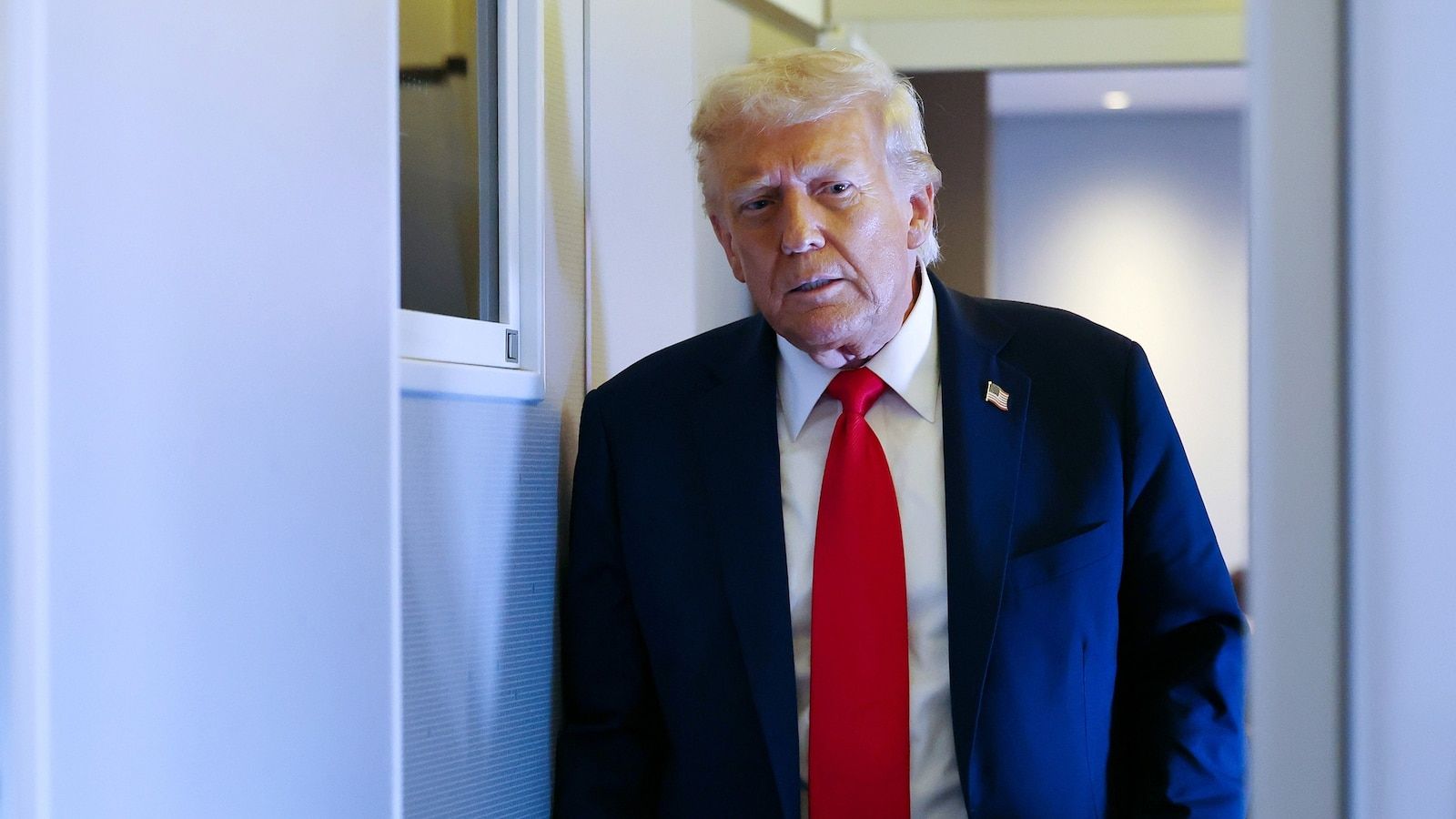
Federal Judge Steven Merryday Strikes Down Trump’s Defamation Lawsuit
In a ruling that reverberated across legal and political circles, U.S. District Judge Steven Merryday dismissed President $1 Trump’s ambitious $15 billion defamation lawsuit against The New York Times and Penguin Random House. The decision, handed down from the Middle District of Florida, was not just a legal blow—it was a pointed critique of the way Trump’s legal team presented their case.
Why Merryday Called Trump’s Complaint “Improper and Impermissible”
Judge Merryday did not mince words. In his four-page ruling, he described the complaint as “decidedly improper and impermissible,” highlighting its departure from the norms expected in federal court filings. Rather than a concise, fact-based argument, the lawsuit sprawled over eighty pages, packed with what Merryday called “repetitive claims and praise for President Trump.” The judge noted, with unmistakable frustration, that he was forced to “labor through” extensive passages lauding Trump’s business acumen, his television show ‘The Apprentice,’ and his “historic” 2024 election victory—none of which, in Merryday’s view, contributed to the core legal issues at hand.
“A complaint is not a megaphone for public relations or a podium for a passionate oration at a political rally,” Merryday wrote, driving home the point that federal courts are not arenas for political theater. Instead, he reminded, they are places for “short, plain, direct statements of allegations of fact.”
The Heart of the Defamation Allegations
Trump’s attorneys alleged that The New York Times had become a “leading, and unapologetic, purveyor of falsehoods,” pointing to a series of articles that painted the $1 in an unflattering light. Among the cited stories were reports of Trump’s former chief of staff John Kelly warning about dictatorial tendencies, an exposé on the making of ‘The Apprentice,’ and coverage of various controversies trailing Trump’s political career.
Also named in the suit were Times reporters Peter Baker, Russ Buettner, Susanne Craig, and Michael Schmidt, along with Penguin Random House, publisher of Craig and Buettner’s book “Lucky Loser: How Donald Trump Squandered His Father’s Fortune and Created the Illusion of Success.” The suit accused the defendants of attempting to undermine Trump’s “world-renowned reputation for business success” and damage his chances in the 2024 presidential race.
But Merryday’s ruling was clear: regardless of the allegations, the complaint’s form was fatally flawed. “Even assuming that each allegation in the complaint is true,” the judge wrote, “a complaint remains an improper and impermissible place for the tedious and burdensome aggregation of prospective evidence, for the rehearsal of tendentious arguments, or for the protracted recitation and explanation of legal authority.”
What Happens Next: The Door Is Still Open
While Merryday’s decision struck down the current lawsuit, he stopped short of closing the book entirely. Trump’s lawyers have been given 28 days to refile their complaint—but this time, they must do so in a “professional and dignified manner.” The judge did not weigh in on the merits of Trump’s defamation claims, instead focusing solely on the procedural failings. In other words, the legal battle may continue, but it will have to be fought on firmer, more disciplined ground.
Legal experts note that such a rebuke is unusual in cases involving high-profile plaintiffs and major media organizations. Merryday’s ruling sends a clear message: regardless of political stature, federal courts expect strict adherence to procedural norms. As he succinctly put it, “A complaint is not a public forum for vituperation and invective—not a protected platform to rage against an adversary.”
Responses from The New York Times and Penguin Random House
The New York Times, for its part, stood firm. “It lacks any legitimate legal claims and instead is an attempt to stifle and discourage independent reporting,” a spokesperson said, vowing that the newspaper would “continue to pursue the facts without fear or favor.” Penguin Random House echoed this sentiment, describing the suit as “meritless” and affirming its commitment to First Amendment principles.
This case is not Trump’s first foray into litigation against major news outlets. Earlier in July, he filed a $10 billion lawsuit against The Wall Street Journal following their report on a letter allegedly sent to Jeffrey Epstein. Both cases highlight Trump’s ongoing efforts to push back against media narratives he sees as damaging or inaccurate—a battle that, for now, remains largely fought in the court of public opinion as much as in the courtroom.
The Legal and Political Stakes
Judge Merryday, appointed by President George H. W. Bush, is known for his meticulous approach to legal standards. His ruling underscores a tension that lies at the heart of defamation law: the balance between protecting reputations and preserving free speech, especially for journalists and publishers. The case also raises questions about the limits of legal action as a tool for political figures to challenge press coverage—an issue that resonates far beyond Trump’s individual circumstances.
As the clock ticks on the 28-day window given to Trump’s legal team, observers are left wondering whether a revised complaint will surface—and, if so, whether it will meet the high procedural bar set by Merryday. For now, the dismissal stands as a reminder: in the courtroom, rhetoric must always yield to rule of law.
Judge Steven Merryday’s ruling is a sharp illustration of the boundaries between legal advocacy and political spectacle. By insisting on disciplined procedure, the court reinforced that even the most powerful individuals must play by the rules—a principle that ultimately serves both justice and the public interest.