


A High Mortgage and a Sudden Layoff
In November 2026, details emerged of the severe financial strain facing laid-off technology workers as high mortgage burdens collide with shrinking job markets. Lauren Patton, a 36-year-old former data science manager living in Central Texas, purchased a 1,000-square-foot bungalow for approximately $400,000 in 2022, according to an essay published by Business Insider. Taking out a 30-year mortgage with a small down payment, her monthly payment reached about $4,000. At the time, her tech salary supported the expense, but in early 2023, she was laid off following industry-wide cuts.
With only two months of severance and dwindling savings, Patton quickly found herself unable to service the debt. After exhausting her unemployment benefits, she resorted to renting out rooms across town, crashing on friends’ couches, driving for Lyft, and eventually returning to a lower-paying accounting role in 2024 to stay afloat. With her home’s value depreciating and finding herself about 30% underwater, selling was not a viable financial option. Facing potential foreclosure, she decided to construct a small living space on her property.
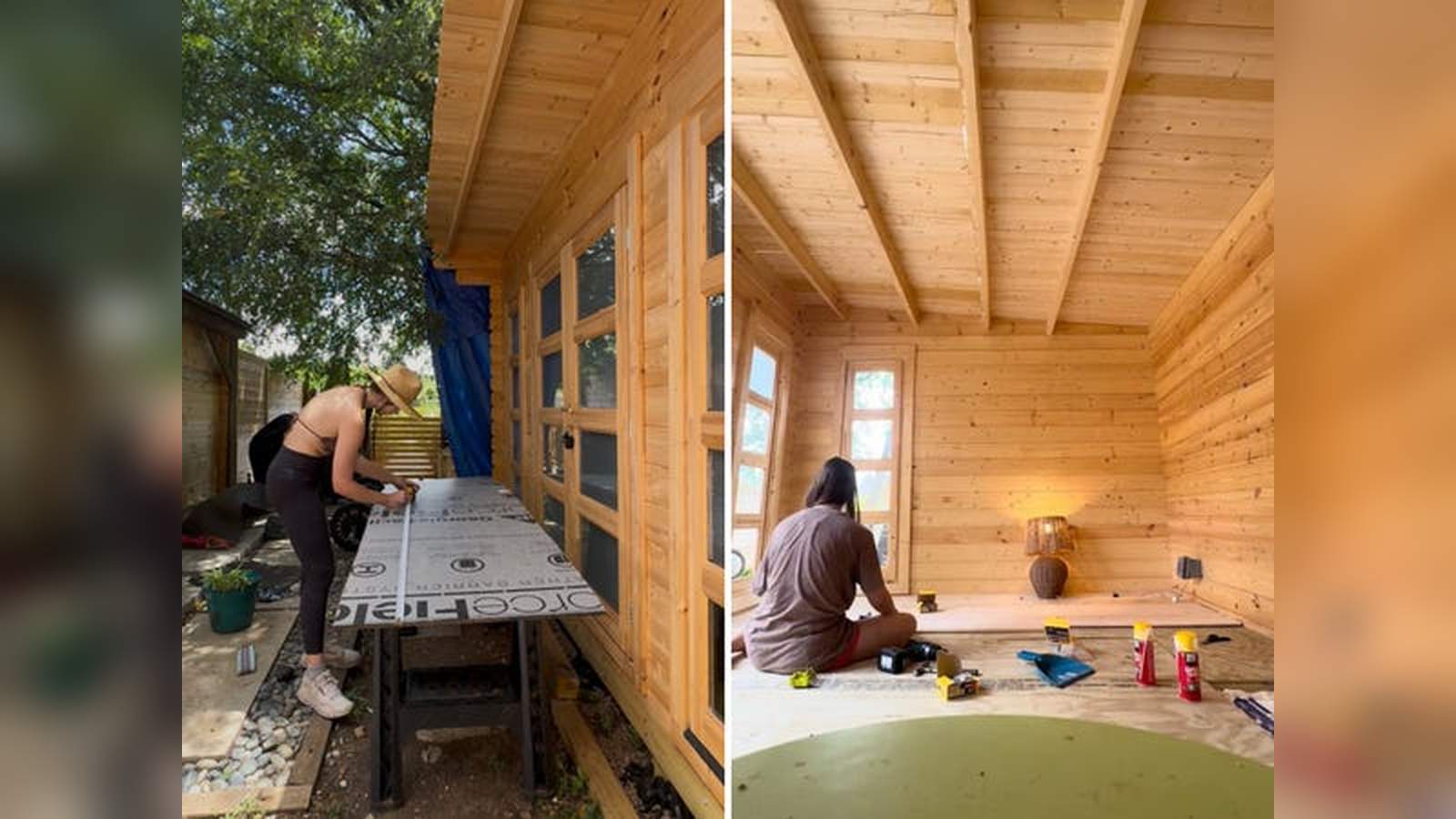
Building a Tiny Backyard Retreat
To reduce her housing overhead, Patton purchased an $8,500 cabin-style shed kit online using a loan. Over several months, she built the 100-square-foot structure in her backyard, relying on YouTube tutorials and ChatGPT for construction guidance, though she noted that AI advice occasionally introduced roofing errors. The build was officially completed in March 2025. The tiny structure lacks indoor plumbing, running water, and ice, requiring her to rely on water jugs and a continuous dehumidifier to manage high indoor humidity.
With her living quarters moved outdoors, Patton turned her main bungalow into a full-time short-term rental through Airbnb. She hosts hundreds of guests, with pricing dynamically managed by the platform, averaging $200 on weekends and $125 on weekdays during the school year. October proved particularly lucrative due to the Austin City Limits music festival, generating about $6,516 in gross earnings before platform fees and cleaning costs. However, rising home insurance premiums and utility bills mean rental revenue does not fully cover her monthly mortgage obligations.
Reflections and Financial Stakes
Patton’s experience highlights the vulnerability of first-time homebuyers who stretch past traditional financial thresholds, such as keeping mortgage payments under 30% of income. Having depleted her 401(k) and faced with ongoing property maintenance on a century-old home, she views the shed living arrangement as a temporary, exhaustive effort to salvage her investment. If financial conditions do not improve significantly, she is prepared to let the property go.
Recently sharing her story on social media, Patton has gained over 12,000 followers on Instagram while continuing freelance data analytics projects and dog-walking. She hopes that once she regains financial stability, she can use her experience to help others facing similar housing and employment crises.