


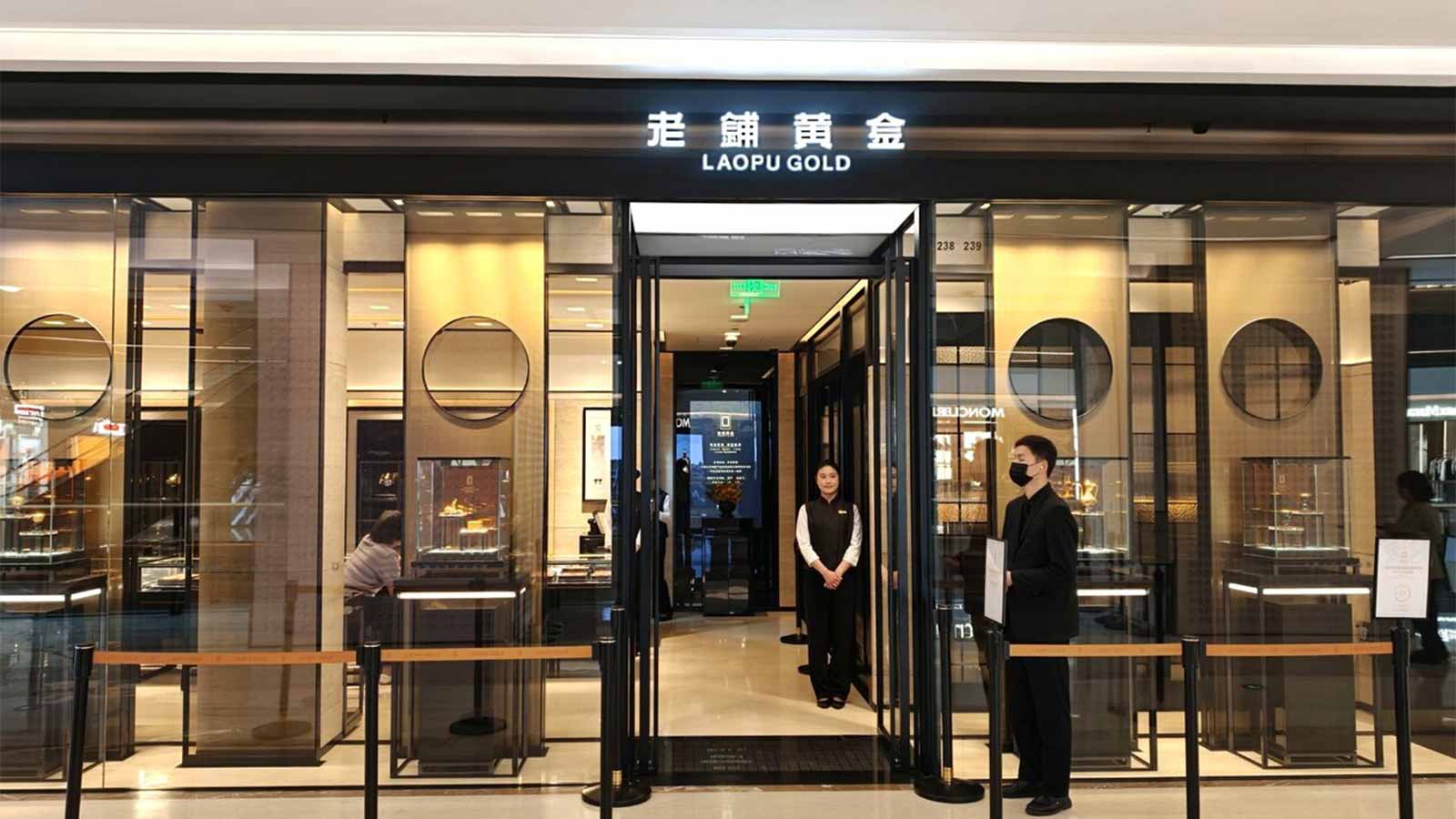
BEIJING – The rapid expansion of Chinese luxury jeweler Laopu Gold Co. is facing a significant structural test as a sharp correction in the global gold market reshapes consumer buying patterns. According to financial data compiled by Market Briefs and market reports from Yahoo Finance, the high-end retailer is experiencing a notable cooling in its growth momentum, primarily driven by a 24% decline in bullion prices from their historic peak in January 2026.
During the gold rush of 2025, Laopu Gold emerged as one of the most successful consumer stories in China, with its revenue more than tripling in the first half of that year. The brand successfully capitalized on a wave of speculative and defensive retail purchasing, as middle-class and wealthy Chinese consumers sought tangible assets that could serve as both aesthetic luxury items and secure stores of value. However, as the underlying commodity price corrected throughout early 2026, that purchasing thesis has weakened, prompting many consumers to adopt a wait-and-see approach.
The Impact of Falling Bullion Prices on Consumer Psychology
The primary driver behind Laopu Gold’s deceleration is the direct relationship between raw material pricing and investment-oriented consumer behavior. When gold prices were on a steady upward trajectory, purchasing premium gold jewelry was perceived by Chinese shoppers as a highly rational financial decision. Consumers felt they were acquiring an appreciating asset while enjoying the prestige of a luxury brand.
As bullion prices dropped approximately 24% from their January peak, the “store of value” argument lost its immediate appeal. In a declining market, retail buyers often withhold purchases, anticipating even lower entry points or fearing capital depreciation on their jewelry. This psychological shift has directly impacted foot traffic and transaction volumes across the luxury retail sector, demonstrating that even premium brands are not entirely immune to commodity market volatility.
Financial Metrics and the Fixed-Price Strategy
Despite the market-wide slowdown, Laopu Gold’s projected financial performance remains highly robust compared to conventional Western luxury brands. For the six-month period ending June 2026, the company expects to generate a maximum revenue of approximately 20.5 billion yuan (equivalent to roughly US$3.03 billion). Adjusted net profit for the same period is projected to rise by 83% to 85%, reaching up to 4.36 billion yuan.
While these figures represent substantial expansion, they mark a clear deceleration from the company’s previous 221% revenue surge. Laopu Gold’s unique operating model relies heavily on a fixed-price strategy rather than selling jewelry strictly by gold weight. By emphasizing traditional Chinese craftsmanship and high artistic value, the company commands a significant premium over raw bullion. This strategy protects profit margins during market downturns but makes the product harder to sell to speculative buyers when the price of raw gold is actively falling.
Market Realities: The 60% Stock Correction
The financial markets have reacted aggressively to this growth deceleration. Laopu Gold’s stock price has experienced a steep correction, falling more than 60% from its previous highs. This dramatic sell-off highlights a common phenomenon in growth-stock investing: when a company’s revenue growth slows from triple-digit rates to a still-strong 60% to 66% range, the market often reprices the stock far faster than the operational realities of the business change.
Laopu’s management has sought to reassure investors, attributing the ongoing growth to “the continuous expansion of brand influence” and a visible “improvement in high-value customer consumption.” The company operates nearly 50 high-end boutiques across mainland China and continues to report the highest per-store sales and floor efficiency in the country’s luxury sector for 2025 and the first half of 2026. This indicates that while speculative retail buyers have retreated, ultra-wealthy clients continue to patronize the brand.
The Broader Trend of Cooling Chinese Consumer Brands
Laopu Gold’s current stabilization phase is not an isolated event but part of a broader cooling trend across China’s high-growth consumer landscape. Other prominent domestic brands that previously enjoyed viral social media success and speculative consumer demand—such as the collectible toy producer Labubu and the rapid-expansion beverage chain Chagee—have also seen their explosive growth rates normalize.
This systemic cooling suggests that the era of hyper-growth driven by viral trends and speculative consumer spending is giving way to a more conservative retail environment. For Laopu Gold, the path forward will depend on its ability to transition from a brand riding a commodity-driven gold rush to an established luxury house sustained by genuine brand equity and high-net-worth customer loyalty, independent of daily gold price fluctuations.