


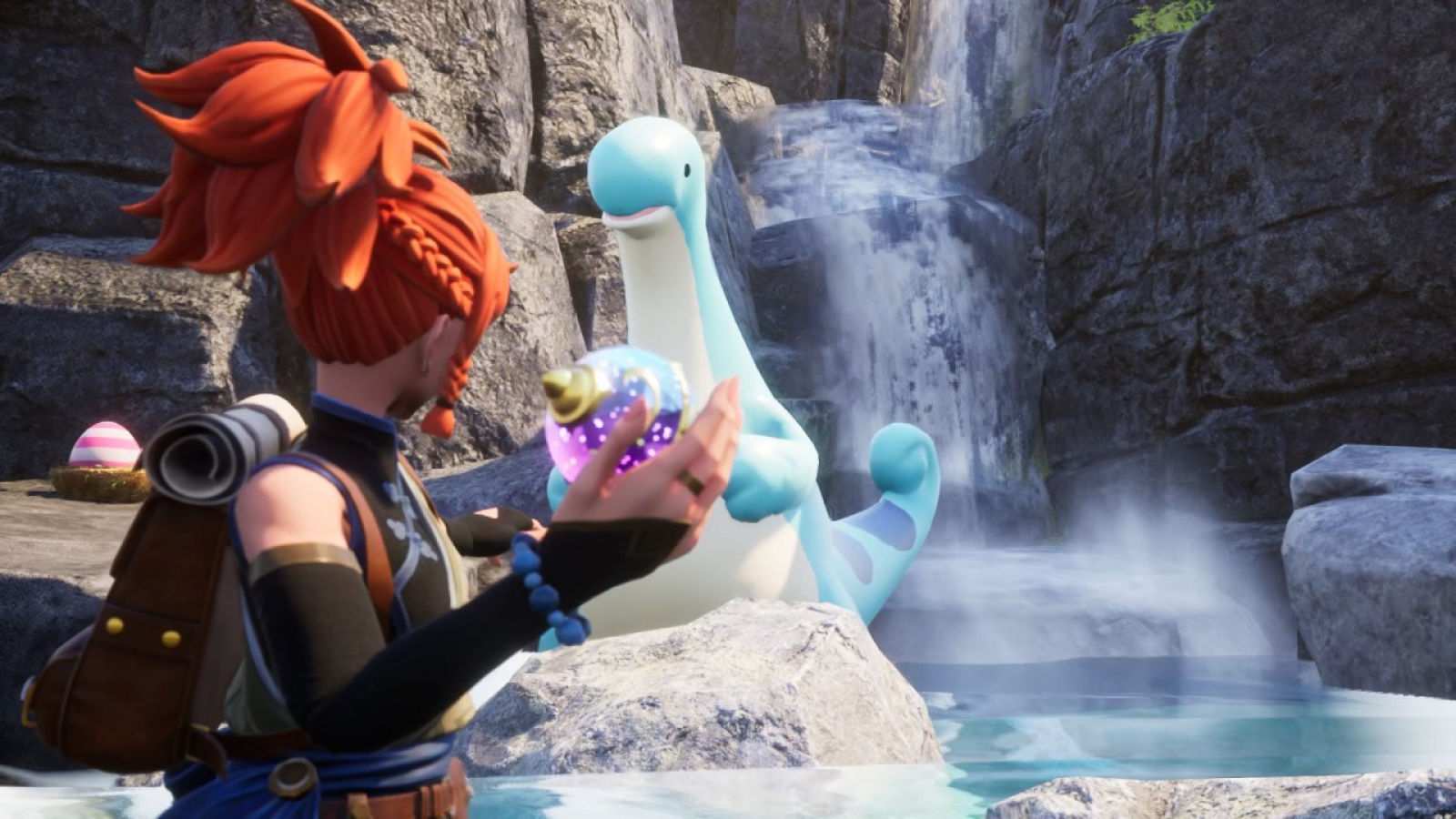
The Japan Patent Office (JPO) has formally upheld its rejection of a key divisional patent application filed by Nintendo and The Pokémon Company, delivering a major procedural blow to the corporate giants’ ongoing legal campaign against Palworld developer Pocketpair. The administrative ruling, which affirmed the denial of application No. 2024-031879 (and related divisional publication No. 2026-019762), concluded that the claimed gameplay mechanics lacked an “inventive step” in light of previously existing video games. Beyond the legal implications for the high-profile intellectual property lawsuit in the Tokyo District Court, the decision attracted widespread attention across the gaming industry due to an extraordinarily candid exchange between Nintendo’s legal team and the JPO examiner.
According to examination documents and industry analysis reported by outlets including Techdirt, Automaton Media, and GamesRadar+, the JPO cited extensive prior art to justify the rejection, spanning established titles such as ARK: Survival Evolved, Monster Hunter 4, Craftopia, Kantai Collection, and Nintendo’s own Pokémon GO. Crucially, the examiner also cited a 2013 YouTube video demonstrating gameplay from Pokémon Generations—an unofficial, indie 3D fan game created by fans—to demonstrate that capturing characters with thrown objects and transitioning between riding mechanics were already public knowledge long before Nintendo filed its applications.
Unprecedented Rhetoric Over Fan-Game Prior Art
The refusal triggered a unusually fierce procedural pushback from Nintendo. In its formal counterarguments, Nintendo accused the JPO examiner of acting “extremely inappropriately by deliberately mischaracterizing an infringing product as though it were an authorized one.” Nintendo argued that because Pokémon Generations was an unauthorized fan project that infringed upon its copyrights, the examiner should not rely on it as legitimate technical prior art. To reinforce its objection, Nintendo submitted complex filing suggestions, contending that if the examiner insisted on referring to the video, all entities shown must be formally described as infringing elements—demanding that Ash, Pikachu, Bulbasaur, and Poké Balls be rephrased as “a character infringing upon Ash,” “a character infringing upon Pikachu,” and so forth.
The JPO examiner responded with an uncharacteristically sharp and sarcastic rebuttal that quickly circulated among Japanese patent attorneys and gaming enthusiasts online. The examiner dismissed Nintendo’s objections outright, clarifying that under established Japanese patent law and judicial precedent, whether a reference material infringes copyright has zero legal relevance when evaluating an invention’s novelty or inventive step. The examiner noted that even if the office adopted Nintendo’s “cumbersome descriptions”—mockingly writing that the notice would have to refer to Pikachu as “an object in the form of a small yellow animal,” Ash as “an object in the form of a boy wearing a red cap,” Bulbasaur as “an object in the form of a small green animal,” and a Poké Ball as “a spherical object with a red upper half and a white lower half”—the fundamental logical structure of the patent rejection would remain completely unchanged.
Structural Vulnerability in Nintendo’s Patent Web
The JPO’s firm stance creates strategic complications for Nintendo’s main lawsuit against Pocketpair. When Nintendo and The Pokémon Company initially filed their patent infringement suit in the Tokyo District Court targeting Palworld, many legal observers expected claims centered on creature trademark or copyright infringement. Instead, Nintendo launched a suit predicated entirely on broad gameplay mechanic patents—specifically targeting mechanics involving aiming and throwing an item to capture creatures, and seamlessly mounting or transitioning between riding creatures in open-world environments.
The rejected application, No. 2024-031879, is not an isolated filing; it is a divisional patent that sits structurally between two granted patents currently asserted against Pocketpair in court: JP7505852 and JP7545191. Because the rejected filing descends directly from JP7505852 and shares claims with JP7545191 within Nintendo’s “monster capture” patent family, the JPO’s formal finding that these mechanics lack inventive step directly threatens the validity of the underlying patents powering the Tokyo lawsuit. If the JPO determines that the structural core of the patent family fails the originality threshold due to decades of prior art, Pocketpair gains powerful legal ammunition to seek the complete invalidation of Nintendo’s asserted patents.
Pocketpair’s Counter-Strategy and Industry Ripple Effects
In response to Nintendo’s aggressive legal offensive, Pocketpair has pursued a dual strategy of technical mitigation and administrative attack. While the Tokyo District Court proceedings remain in pre-trial phases, Pocketpair has actively patched Palworld to modify or eliminate specific mechanics disputed in the suit. Simultaneously, Pocketpair has been submitting extensive evidence of prior art—ranging from commercial titles to user-created game mods—to support formal patent invalidation proceedings at the JPO.
The JPO’s decision has resonated widely throughout the global video game development community. Legal experts and patent attorneys, such as Japanese patent attorney Kiyoshi Kurihara, noted that the sharp tone and explicit rejection of Nintendo’s arguments are highly unusual in standard patent practice. For years, game developers have expressed concern that allowing broad, foundational gameplay mechanics—such as throwing capture devices, mini-map indicators, or open-world mounting—to be locked away under patent claims could stifle game design and cripple independent studios. The JPO’s unwillingness to grant Nintendo exclusive domain over mechanics established collectively across the industry reinforces the high evidentiary bar required for software and gameplay patents.
Three-Month Appeal Window and Litigation Outlook
Under Japanese patent procedures, Nintendo now has a three-month window to file a petition for a trial against the rejection decision with the Commissioner of the JPO. Nintendo may choose to file an administrative appeal, attempt to narrow its patent claims through further amendments, or allow the rejection of this specific divisional application to stand while concentrating its legal resources on the Tokyo District Court lawsuit.
However, allowing the prior-art record established by the JPO to remain unchallenged carries severe risk for Nintendo’s broader litigation strategy. As the Tokyo District Court case progresses, Pocketpair’s legal team is expected to incorporate the JPO’s findings directly into its defense. With key divisional applications rejected and prior art established from games as diverse as ARK, Monster Hunter, and indie fan projects, Nintendo’s attempt to retroactively fence off open-world capture mechanics faces unprecedented hurdles, making the Palworld lawsuit an essential barometer for the future of video game intellectual property law.