


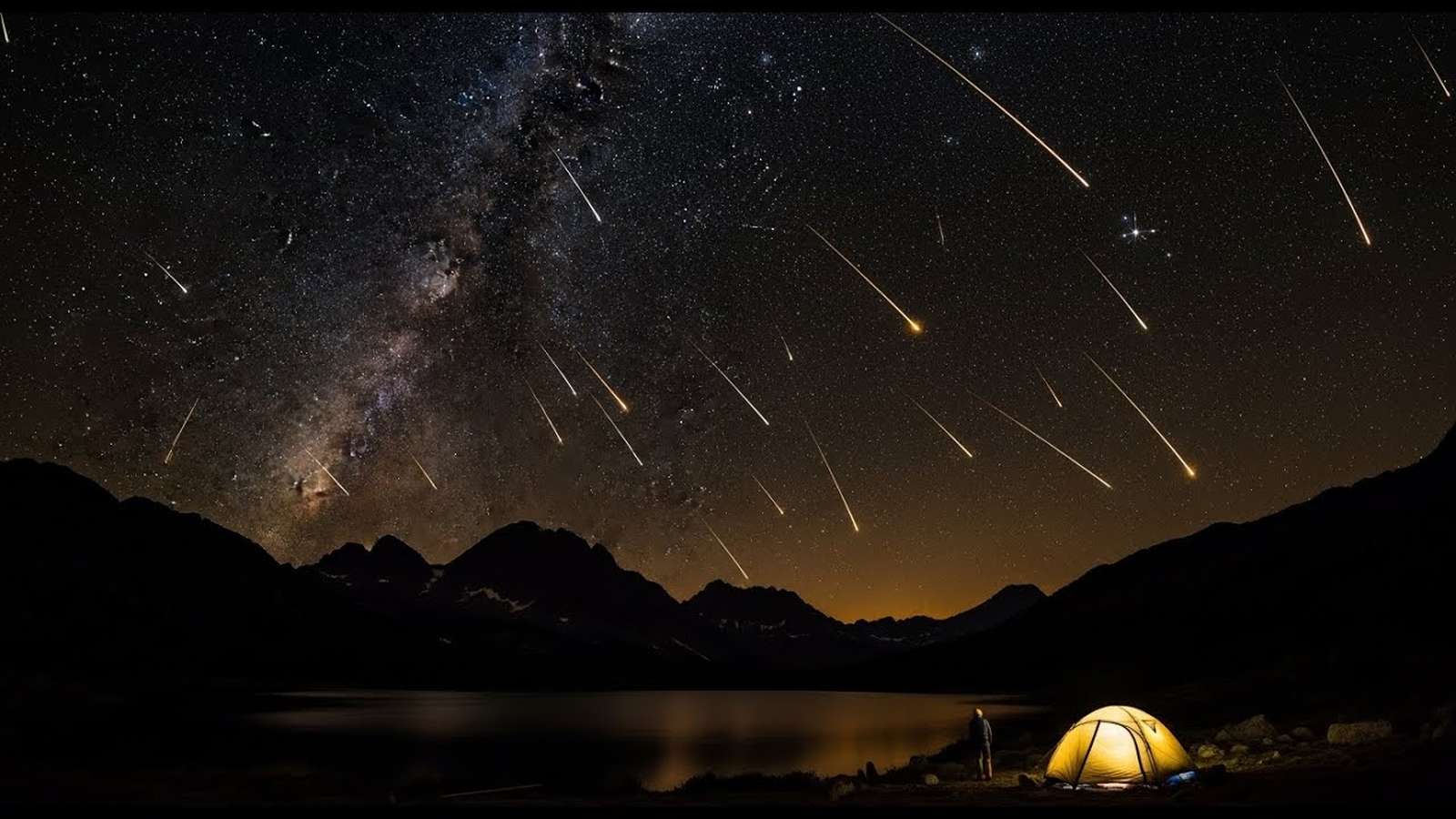
For stargazers who missed the Perseids earlier this year due to overcast skies or poor weather, the remainder of 2026 offers several opportunities to witness celestial displays. According to the American Meteor Society (AMS), five distinct meteor showers are scheduled to cross the night skies between September and December 2026. While some of these events will face challenges from lunar glare or lower-than-average hourly rates, strategic planning can still yield rewarding viewing experiences.
The Lunar Obstacle: Timing the Night Sky
One of the primary factors determining the quality of a meteor shower is the phase of the moon. Bright moonlight can easily wash out the faint streaks of light produced by burning space debris. For several of the upcoming 2026 showers, the AMS highlights that the timing of moonset will be crucial. Observers will need to target specific windows—often the quiet hours between midnight, moonset, and dawn—to secure the dark skies required for optimal visibility.
October’s Dual Showers: Orionids and Southern Taurids
The astronomical sequence begins in earnest with the Orionids, which run from October 2 through November 7. This shower is scheduled to peak on the night of October 21 to 22. While the Orionids have historically produced impressive displays of 50 to 75 meteors per hour during peak years, the AMS notes that recent showings have been more modest. Furthermore, observers in late October 2026 will contend with an 80% full moon on the peak night. To maximize chances, viewers should focus on the brief window between moonset and early dawn.
Simultaneously, the Southern Taurids will be active from September 20 through November 20. This particular shower features a dual-peak structure. The first peak occurs on the night of October 13 to 14, under highly favorable conditions with a moon that is only 10% full. The second peak arrives on the night of November 4 to 5, when the moon is 18% full. Although the Southern Taurids are famous for producing bright fireballs during “swarm years,” the AMS indicates that 2026 is not a swarm year. Consequently, observers should expect a modest rate of five to ten meteors per hour, with the mid-October peak offering the most favorable combination of dark skies and activity.
November’s Transitions: Northern Taurids and Leonids
As autumn progresses, the Northern Taurids overlap with their southern counterpart, stretching from October 20 through December 10. The peak night for this shower is November 11 to 12. Conditions are highly favorable regarding lunar interference, as the moon will be just 7% full. Although the hourly rate remains low at approximately five to ten meteors per hour, the lack of moonlight makes the post-midnight hours an excellent time for patient observers to spot these slow, bright meteors.
Shortly after, the Leonids will take center stage, running from November 6 through November 30 and peaking on the night of November 16 to 17. The Leonids are expected to yield a modest rate of 10 to 15 meteors per hour this year. On the peak night, the moon will be roughly 45% full. Fortunately, the AMS suggests this partial illumination should not entirely spoil the event, particularly during the early morning hours when the shower’s radiant point is high in the sky and the moon has progressed lower or set.
December’s Grand Finale: The Geminids
The premier event of late 2026 is undoubtedly the Geminids, widely regarded as one of the most reliable and active annual meteor showers. Running from December 4 through December 17, the Geminids will peak on the night of December 13 to 14. Under ideal conditions, this shower can produce up to 150 meteors per hour, rivaling or even exceeding the summer Perseids.
For 2026, the moon will be 21% full during the peak night. Crucially, astronomical forecasts indicate that the moon will set before the prime viewing hours for the Geminids begin. This leaves a wide, dark window in the post-midnight and pre-dawn hours, making the Geminids the absolute best viewing opportunity of the autumn-winter season.
A Look Toward the Future
For those planning long-term astronomical calendars, the AMS notes that the famous summer Perseids will face significant moonlight interference in both 2027 and 2028. Stargazers looking for a pristine Perseids experience will have to wait until August 11 to 12, 2029, when the moon will be a mere 5% full, offering near-perfect conditions. In the meantime, the late 2026 lineup—anchored by the December Geminids—remains the best immediate path to catching shooting stars.