


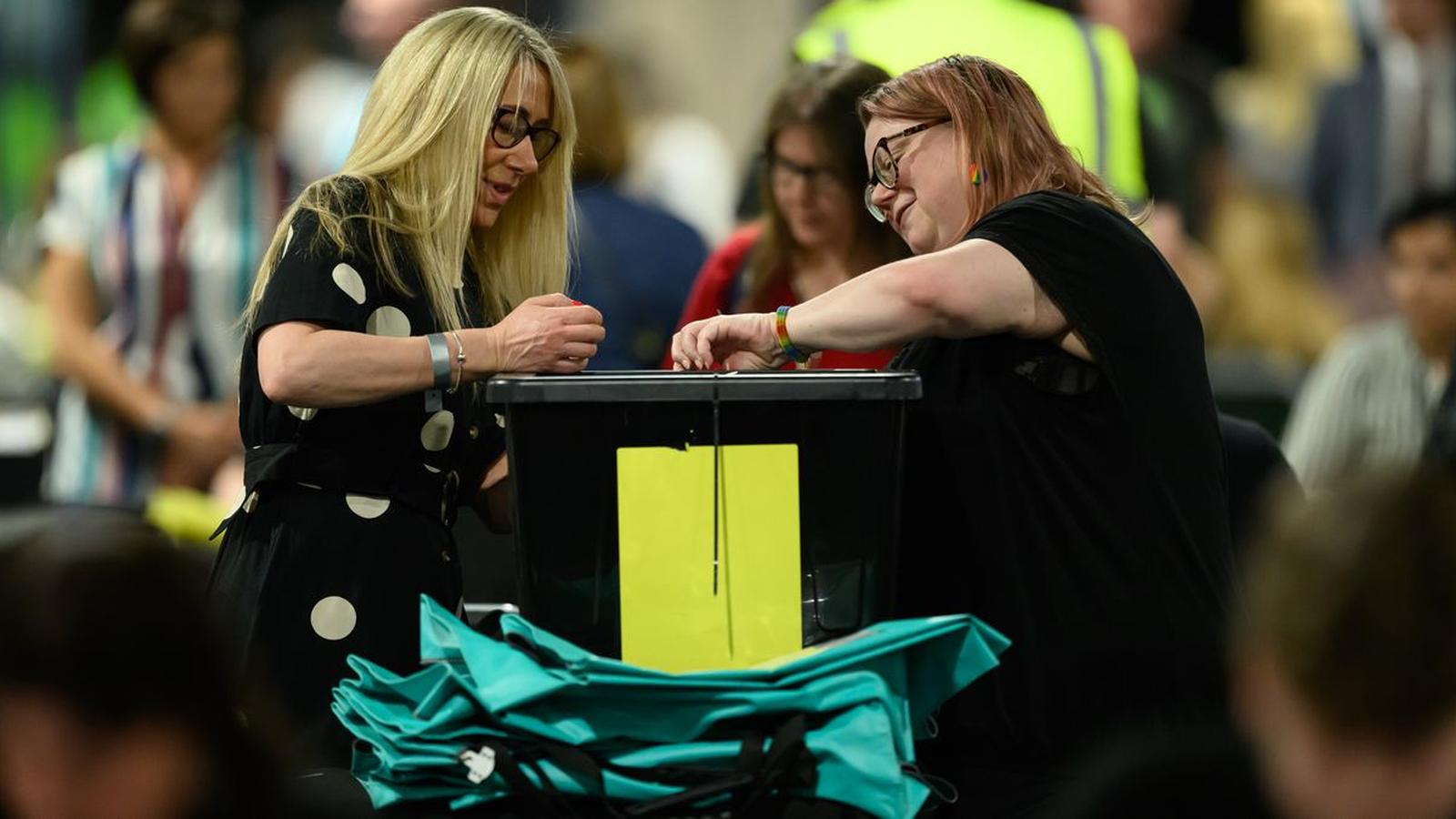
LEEDS (Azat TV) – Election officials in West Yorkshire have begun the final tally for the 2026 Leeds City Council elections, where 36 of the 99 total seats are at stake. As of Friday morning, ballot boxes from across the city’s 33 wards have been consolidated at the central count location, with a final declaration expected by mid-afternoon. This election serves as a pivotal test for the ruling Labour Party, which entered the contest with a 56-seat majority, but now faces a fragmented electorate increasingly drawn to smaller, insurgent political movements that have disrupted the traditional two-party dominance.
Labour majority and the Leeds City Council balance of power
The immediate focus for political observers is whether the Labour Party can maintain its firm grip on Leeds City Council. Prior to the polls opening on Thursday, Labour held 56 seats, providing a comfortable margin for governance. However, with more than a third of the council up for election, the arithmetic of the chamber could shift significantly. Voting took place across various wards including Alwoodley, Armley, Beeston and Holbeck, and Headingley and Hyde Park. In high-density areas such as Adel and Wharfedale, Morley North, and Temple Newsam, two seats were up for grabs, doubling the stakes for candidates in those specific localities.
Leeds, a metropolitan borough council, is responsible for essential frontline services such as refuse collection, social housing, and planning applications. While these local issues often dominate municipal campaigns, the 2026 cycle has been heavily influenced by broader national anxieties. Candidates from the Conservative Party have attempted to reclaim ground after a devastating 2024 performance, while Labour has struggled to insulate its local incumbents from fluctuating national approval ratings. The outcome in Leeds is widely regarded as a bellwether for the political mood in the North of England, specifically regarding how voters perceive the performance of the Westminster government since the last general election.
National sentiment and the Reform UK influence
A defining feature of this election cycle has been the rise of Reform UK and the Green Party, both of which have successfully positioned themselves as radical alternatives to the political establishment. According to analysts at The Conversation, the 2026 local elections have seen a conspicuous public impulse to punish old incumbents. Reform UK, led by Nigel Farage, and the Greens, led by Zack Polanski, have both cultivated images as political outsiders who eschew the conventional rhetoric of the major parties. This strategy appears to have resonated with a significant portion of the Leeds electorate, particularly those disillusioned with the perceived caution of Labour and Conservative leadership.
In Leeds, this shift is manifested in the way campaigns were conducted. While traditional parties focused on the technicalities of local governance, such as council tax rates and library funding, the newcomers often pivoted toward high-level cultural symbolism. This approach has forced established parties to defend their records in a political environment where cultural identity and national values frequently overshadow local policy detail. Data from YouGov earlier this year suggested that Brexit-era divisions continue to play a critical role, with approximately 50 percent of 2016 Leave voters indicating an intention to support Reform UK, while Remain voters have split their support between Labour, the Liberal Democrats, and the Greens.
Local governance versus cultural symbolism in Leeds
As the count progresses, the tension between local responsibility and national narrative remains high. Reform UK candidates have campaigned on platforms that include national issues like migration, despite local councils having no jurisdiction over such matters. Conversely, Green Party candidates in various regions have emphasized international human rights issues. This trend has transformed the Leeds local election into a showcase for a new style of politics where cultural signaling carries as much weight as the delivery of municipal services. For the residents of Leeds, the immediate consequence of these results will be the composition of the council that manages their daily services for the next four years.
The results for Leeds are expected to be announced around 3:00 PM on Friday, following a night of intensive counting. Beyond the immediate seat counts, the final data will provide a clear indication of whether the surge in support for smaller parties is a temporary protest or a permanent realignment of the English political landscape. Should Labour’s majority be significantly eroded, it may signal a need for the party to recalibrate its approach to local governance in Northern metropolitan areas. Conversely, a strong showing for the Conservatives would suggest a recovery that has thus far eluded them in national polling.
The 2026 results in Leeds are likely to demonstrate whether the outsider narrative championed by Reform UK and the Greens can translate into functional local governance or if voters will ultimately prioritize the technicalities of council services over broader cultural grievances once the final ballots are cast.