


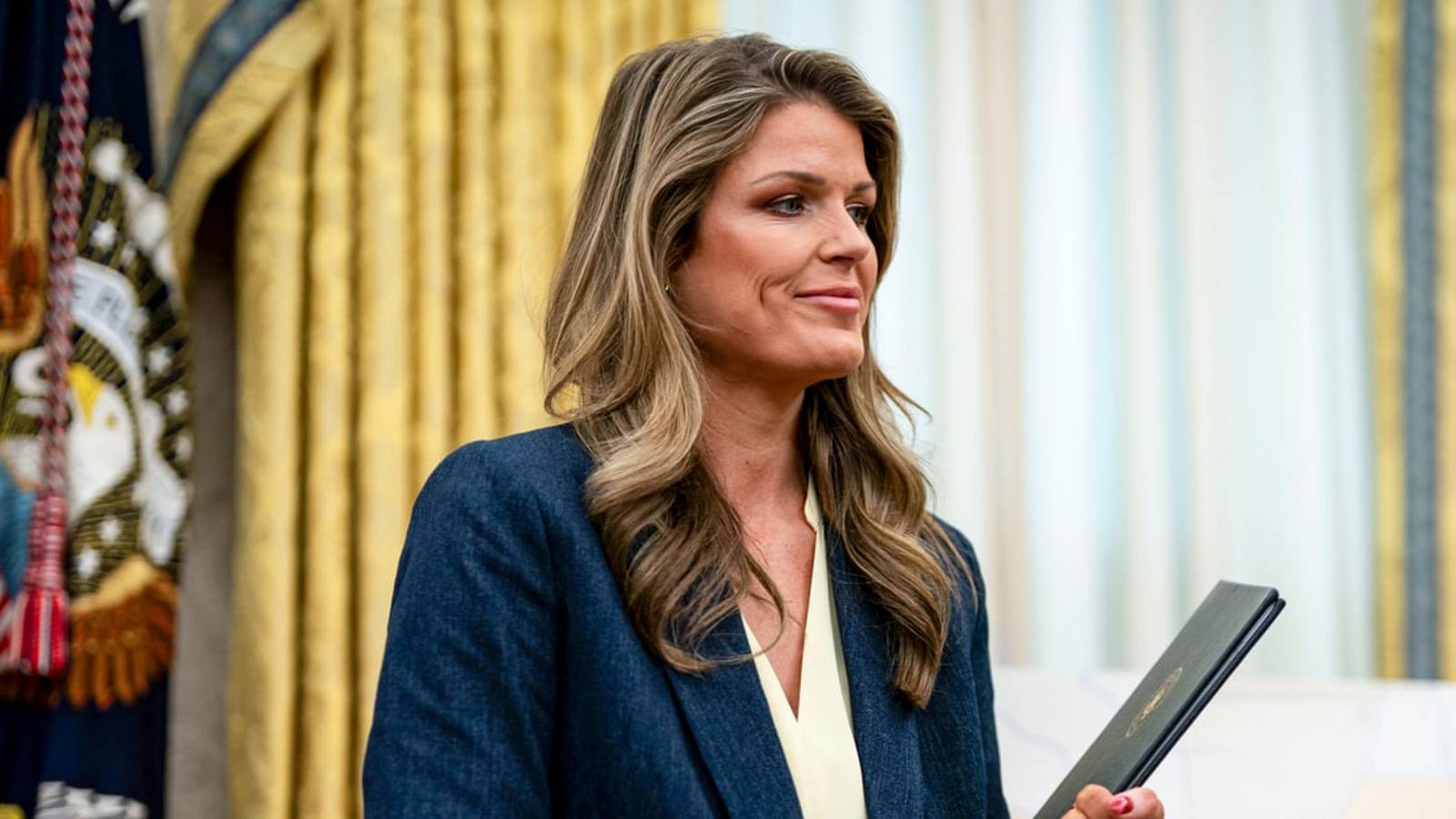
WASHINGTON D.C. (Azat TV) – Lindsey Halligan, whose contentious appointment as interim U.S. Attorney for the Eastern District of Virginia was deemed unlawful by a federal judge, is no longer employed by the U.S. Justice Department. Her departure follows a series of legal challenges and judicial rulings that invalidated her authority, highlighting the critical importance of procedural adherence in high-level executive appointments and the judiciary’s role in upholding legal safeguards.
Halligan, a former insurance lawyer with no prior prosecutorial experience, assumed the interim U.S. attorney position after former President Donald Trump appointed her. This move came after Trump reportedly pushed out the initial nominee, Erik Siebert, who had resisted pressure to prosecute several of Trump’s political adversaries, including former FBI Director James Comey and New York Attorney General Letitia James. This political backdrop immediately cast a shadow over Halligan’s appointment, leading to swift legal challenges.
Court Rulings Invalidated Appointment and Dismissed Cases
The core of the legal controversy centered on compliance with federal law, which stipulates that interim U.S. attorney appointments are limited to 120 days unless confirmed by the Senate. Since Siebert had not been confirmed within the statutory timeframe, local federal judges were granted the authority to make such appointments. Trump’s direct appointment of Halligan contravened this established legal framework, fueling legal challenges initiated by lawyers representing Comey and James.
U.S. District Judge David Novak, himself a Trump appointee in 2019, ruled Halligan’s appointment unlawful, ordering her to cease identifying herself as the district’s top federal prosecutor. Judge Novak remarked on Halligan’s notable lack of prosecutorial experience, stating that such unfamiliarity with district prosecutorial norms was atypical for someone nominated to such a critical role. Despite this, he opted not to pursue disciplinary action against her for misrepresenting herself in court, granting her “the benefit of the doubt,” according to SSBCrack.
The legal repercussions extended to significant cases brought forward by Halligan. U.S. District Judge Cameron Currie dismissed indictments Halligan had presented against James Comey and Letitia James. These indictments alleged serious charges, including making false statements and bank fraud, which both individuals denied. Judge Currie’s ruling explicitly cited Halligan’s unlawful appointment and her subsequent invalid presentation of these indictments to the grand jury as the primary reason for their dismissal. Despite these dismissals and court orders forbidding her from representing herself as U.S. Attorney, Halligan reportedly continued to be identified as such in official filings, drawing further criticism and necessitating additional judicial directives.
Justice Department Appeals Amid Vacancy
Sources close to the situation confirmed Halligan’s departure shortly after she left her disputed role. Her nomination had been resubmitted early in the year, but it subsequently stalled in the Senate, with no action taken to date. Meanwhile, the Justice Department is currently appealing the court rulings that invalidated Halligan’s appointment and authority, indicating an ongoing legal battle over the interpretation of appointment powers.
The Eastern District of Virginia has since opened applications for a new interim U.S. attorney to fill the vacancy created by Halligan’s departure and the legal quagmire surrounding her tenure. This move signals a clear intent to establish qualified leadership unencumbered by similar controversies, prioritizing adherence to established legal procedures.
Halligan’s situation draws a parallel to that of Alina Habba, another individual closely associated with former President Trump, who also faced disqualification from an acting U.S. attorney position. However, Habba remained within the Justice Department after judges upheld her disqualification in part. By contrast, Halligan’s exit from the department appears final, with no confirmed new role announced, according to NBC News.
Halligan’s brief and highly contentious tenure in a federal prosecutorial role underscores the inherent tensions that can arise between executive branch appointments and judicial oversight, particularly when political motivations are perceived to influence critical law enforcement positions. The definitive judicial rulings against her appointment and the subsequent dismissal of politically charged cases serve as a robust affirmation of the legal system’s checks and balances, emphasizing the non-negotiable requirement for proper procedural adherence in maintaining the integrity of the Justice Department.