


A New Design Philosophy
At the 2026 Meta Connect event, Meta introduced its latest entry into the virtual reality market: the Meta VR Glasses. Designed to directly challenge Apple’s Vision Pro, the new device prioritizes ergonomics and affordability, with a launch price of $1,299—significantly lower than the $3,699 starting price currently commanded by the Apple Vision Pro following its June 2026 price hike, as reported by PCMag.
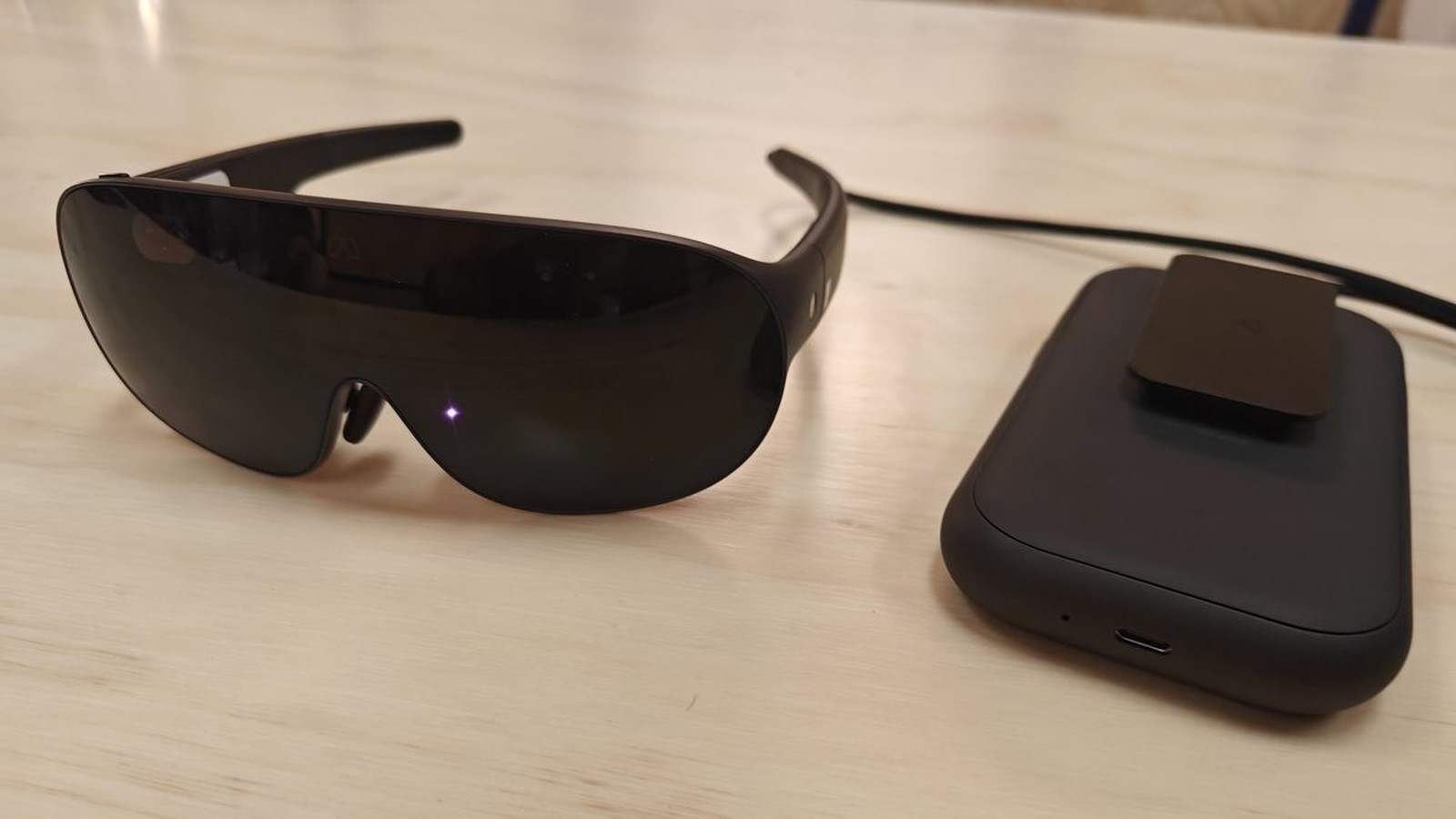
The most striking difference lies in the weight distribution. While the Vision Pro weighs between 750 and 800 grams, the new Meta VR Glasses weigh just 100 grams. Meta achieved this by offloading the processing unit—housing the Qualcomm Snapdragon Reality Elite chip, 128GB of storage, and 12GB of RAM—into a 300-gram “puck” connected to the headset via an optical cable, according to Interesting Engineering.
Productivity and Performance
Meta is positioning its new glasses as a productivity workhorse. During demonstrations, the company showcased the ability to project three virtual desktop screens, allowing users to extend their workstation into a digital environment. The device maintains compatibility with macOS and Windows PCs through Bluetooth or USB-C, aiming to bridge the gap between casual gaming and professional utility.
Visually, the glasses are equipped with 5K micro-OLED panels, delivering 37 pixels per degree (ppd)—a slight increase over the 34ppd found in the Apple Vision Pro. However, early reports indicate a trade-off in the field of view, which is estimated at 70 degrees, narrower than the 110-degree field of view offered by the Meta Quest 3. While the visuals provide sharp contrast and vivid colors, some users noted a slight graininess during high-definition video playback.
Market Stakes and Future Outlook
The success of the Meta VR Glasses hinges on consumer adoption of the “puck” architecture and the practicality of virtual workspaces. Meta’s Chief Technology Officer, Andrew Bosworth, has publicly criticized the design of the Vision Pro, suggesting that its weight makes it impractical for extended use. Despite this, Meta faces significant financial pressure, with its Reality Labs division reporting a $4.6 billion loss in the most recent quarter.
As the device heads toward a spring 2027 release, Meta must prove that the convenience of a lighter headset outweighs the technical limitations of tethered computing. Whether this lower price point and improved ergonomics will force a price adjustment or design shift from Apple remains to be seen.