


What the photograph shows
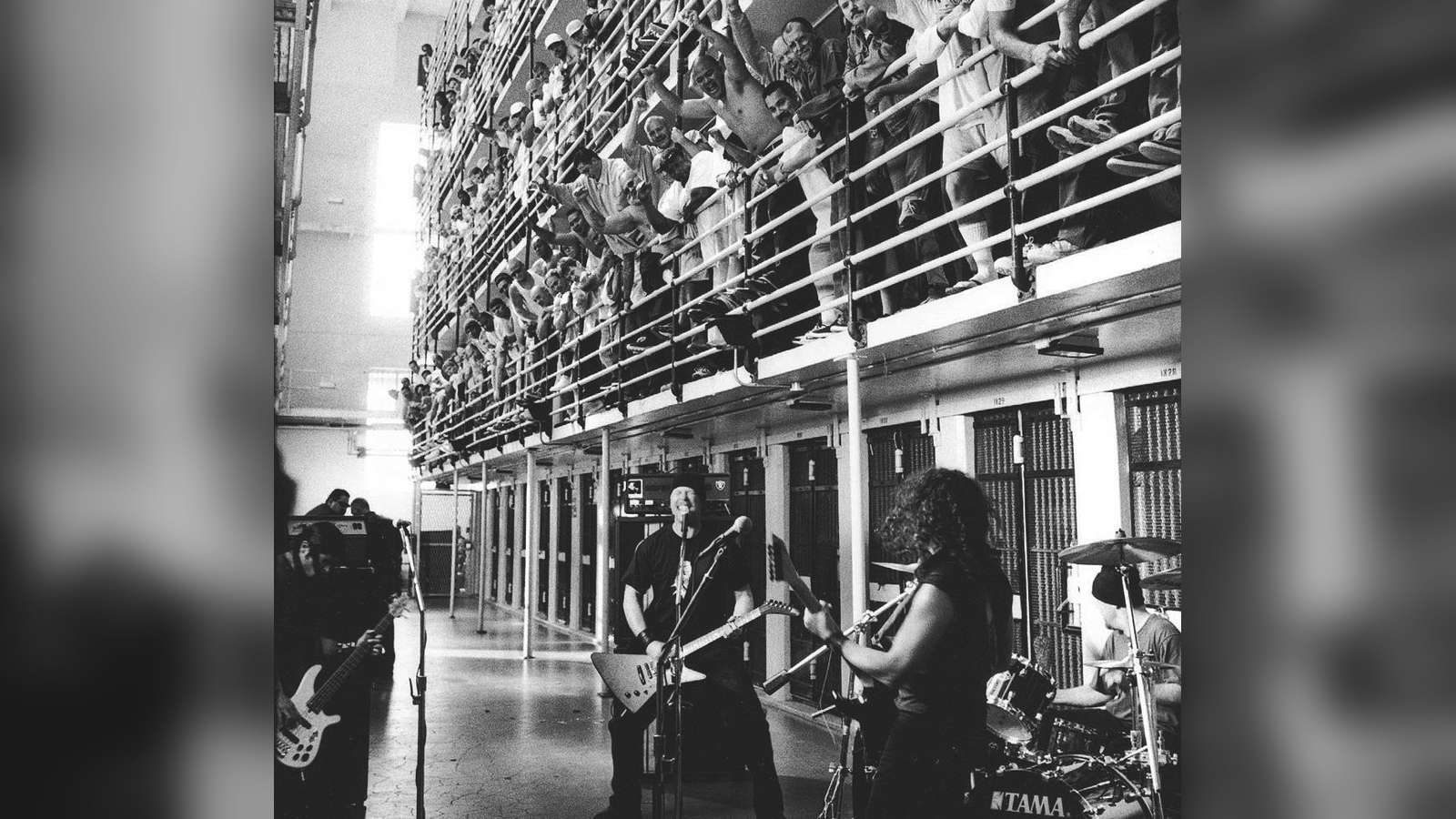
The photograph captures a striking juxtaposition: the world’s biggest heavy metal band performing against a backdrop of bleak, institutional concrete and chain-link fencing. Metallica, led by James Hetfield’s intense vocal delivery, is seen in the middle of a high-energy set within the yard of San Quentin State Prison. The composition of the image emphasizes the confinement of the setting; the band members appear almost dwarfed by the imposing architecture of the prison, yet they command the space with a ferocity that matches the environment. The lighting is harsh and natural, typical of a daytime outdoor shoot, highlighting the unpolished, gritty aesthetic that the band intentionally adopted for their 2003 album, St. Anger. Every element in the frame—from the makeshift stage setup to the rapt, albeit restricted, audience—speaks to a moment of intense creative and social intersection.
The moment behind the image
In 2003, Metallica arrived at San Quentin with a specific mission: to film the music video for their title track, ‘St. Anger.’ However, the visit transcended a mere production requirement. The band chose this location to mirror the themes of internal struggle, anger, and confinement that permeated their new material. The filming was conducted as a genuine concert for the inmates, providing a rare and electrifying break from the monotony of prison life. Beyond the music, the band made a meaningful contribution to the facility, donating $10,000 to fund a new baseball field, a gesture that underscored their desire to provide a tangible benefit to the community they were visiting. The tension of the day was palpable, with the band members noting that the energy from the inmates was unlike any stadium crowd they had ever played for—it was raw, unfiltered, and deeply personal.
Photographer and provenance
While the specific photographer behind this frame is often credited to the production team associated with the St. Anger music video shoot, the image has circulated widely as an iconic document of the band’s history. The provenance of such images usually traces back to the band’s own archives or the production company hired to handle the video shoot. The lack of a singular, famous journalistic byline suggests that this was primarily a promotional capture, yet it has taken on a life of its own as a piece of cultural history. The image’s survival and continued circulation on social media and music platforms speak to its power as a visual shorthand for the band’s ‘rebellious’ return to their roots.
Historical context and the ‘Night Stalker’
The San Quentin concert is etched into rock lore due to the unusual reactions it provoked. Most notably, the infamous serial killer Richard Ramirez, known as the ‘Night Stalker,’ was an inmate on death row at the time. According to guitarist Kirk Hammett, Ramirez was reportedly incensed that he was denied access to the concert. Guards stationed at his cell reported that Ramirez paced in frustration, unable to see the band but clearly hearing the music echoing through the prison walls. In a bizarre turn, he reportedly handed over a magazine featuring Metallica on the cover to his guards, a small token of his fixation. This anecdote serves as a dark contrast to the band’s intent, highlighting the strange reality of performing in one of the most secure and notorious facilities in the United States.
Why it still matters
The San Quentin session remains a pivotal moment for Metallica’s mid-2000s transition. It stripped away the polish of their earlier stadium tours, grounding the band in a claustrophobic environment that mirrored the themes of their music. The image serves as a permanent record of a time when the band sought to confront their own creative demons. It stands as a testament to the power of music to bridge the divide between the free world and those behind bars, even if only for an afternoon. The photograph remains a vital piece of the Metallica legacy, reminding fans of the band’s willingness to step outside traditional venues to find an authentic, if uncomfortable, connection with their audience.