


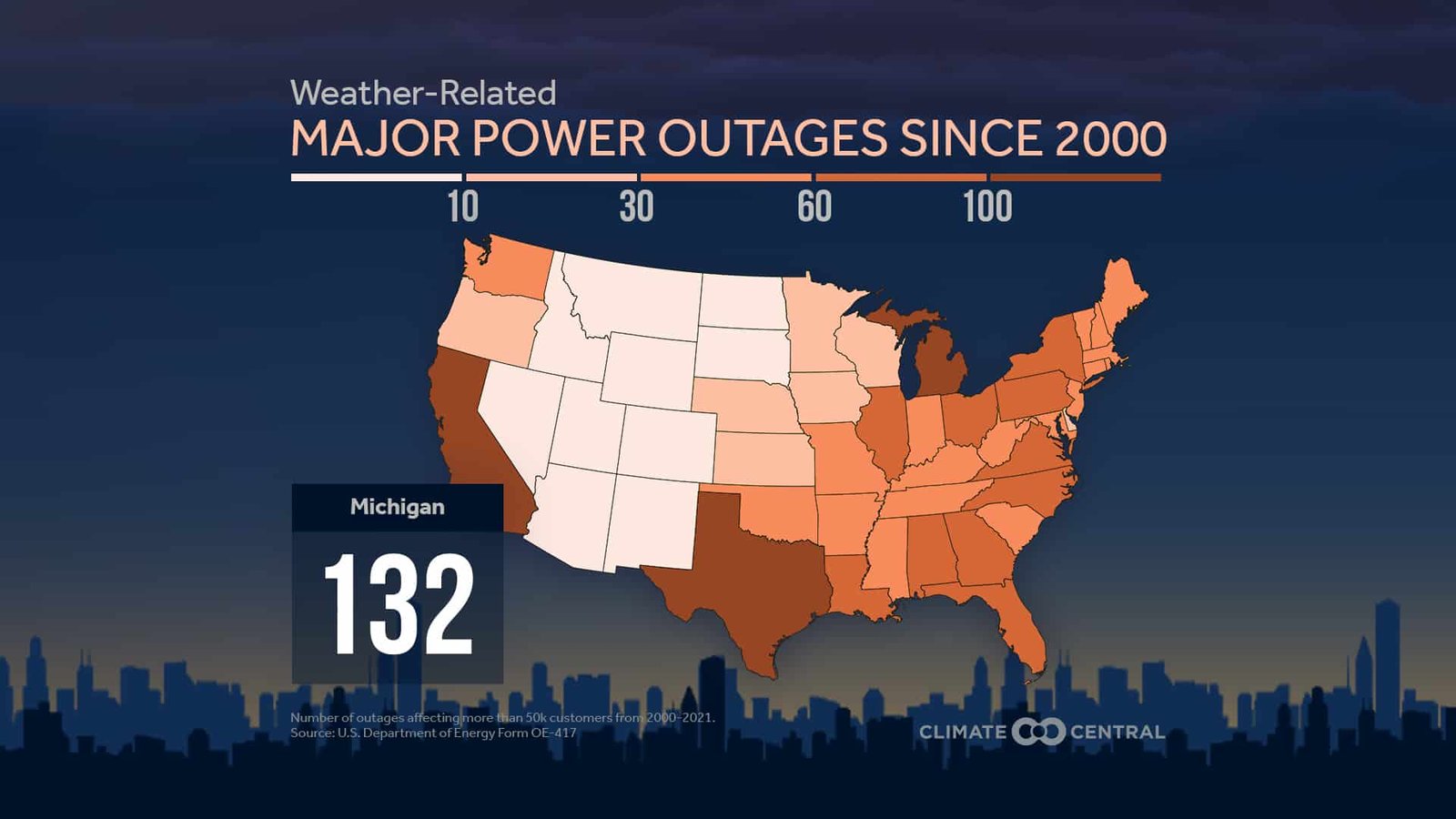
The final days of December 2025 brought Michigan to a standstill. Two relentless days of freezing rain and a fierce ‘bomb cyclone’ swept across the state, unleashing a cascade of power outages that left more than 115,000 residents in the dark by noon on December 29, according to Lansing State Journal and USA TODAY.
What exactly triggered this crisis? It started Friday, December 26, when an ice storm descended upon Michigan, coating trees, power lines, and roads with up to half an inch of ice. The storm’s grip only tightened as Sunday night rolled in, with snow piling up and winds reaching a staggering 72 mph in the Upper Peninsula. By Monday morning, blizzard warnings were in effect for much of the region, and the situation had escalated into what meteorologists call a ‘bomb cyclone’—a rapidly intensifying storm system that behaves much like a winter hurricane.
The numbers tell a sobering story. Clare County took the hardest hit, with more than 16,200 customers—over 61% of its population—without electricity. In the Upper Peninsula, Marquette County was facing outages for 8,146 customers, while Menominee County had 3,557 affected, roughly 23% of its residents. In total, the count hovered near 115,591 statewide as of midday Monday.
Consumers Energy, Michigan’s largest utility, reported over 62,700 outages, while other providers like Great Lakes Energy and DTE Energy also saw their grids overwhelmed. Some smaller cooperatives, such as Alger Delta CEA, had nearly half their customers affected. The outages stretched from the blizzard-ravaged north to the ice-laden counties in the middle and southern parts of the state, including Oakland County with nearly 3,500 outages.
The impact went beyond flickering lights and cold homes. Roads became treacherous, tree limbs snapped under the weight of ice and wind, and downed power lines posed real dangers. AccuWeather’s Senior Meteorologist Bill Deger warned that such strong winds could send tree branches and even holiday decorations airborne, making outdoor conditions hazardous not just for residents but for the crews scrambling to restore power.
In Upper Michigan, restoration efforts were hampered by the blizzard itself. Utility companies like UPPCO (Upper Peninsula Power Company) and Marquette Board of Light and Power faced what they described as ‘extremely difficult’ conditions. Crews worked in tandem with contractors, braving blocked roads and falling trees. In fact, the demand for information was so high that Marquette BLP’s outage center crashed Monday morning due to an influx of requests. Residents were urged to prepare for extended outages as the weather refused to cooperate.
Meanwhile, throughout the Midwest, the storm’s reach was felt. Minnesota, North Dakota, and Wisconsin also faced blizzard warnings, with Minnesota’s governor authorizing the National Guard to support emergency operations. Snowfall varied widely, from 6 inches in some pockets to over 2 feet along the Great Lakes, compounding the difficulty for both residents and first responders.
For those affected, the advice was clear: stay away from downed lines, assume they are live, and report outages promptly. Utilities provided online maps and hotlines, but the sheer volume of cases tested their capacity. With some outage centers temporarily offline, the challenge was not only in restoring power but also in keeping the public informed and safe.
The National Weather Service, AccuWeather, and local authorities all highlighted that the dangerous conditions could persist, especially as high winds and snow continued through Monday afternoon. The prospect of hazardous travel, further outages, and extended restoration times loomed large.
As Michigan’s communities dug in—neighbors checking on each other, local news crews tracking the progress, and utility workers pressing on—the event became a test of resilience. The bomb cyclone may have knocked out the lights, but it also illuminated the often invisible work of those who battle the elements to keep the grid running.
Looking at the facts, it’s clear that Michigan’s power infrastructure faced a perfect storm—literally and figuratively. The combination of ice, snow, and hurricane-force winds proved to be a formidable adversary, exposing vulnerabilities while showcasing the determination of utility workers and local communities. As climate patterns shift and extreme weather becomes more common, events like this will likely test preparedness and response systems across the Midwest.