
Quick Read
- Russian Deputy PM Alexey Overchuk threatened to terminate air links if Armenia joins the EU.
- Tourism from Russia and Iran accounts for nearly half of Armenia’s annual tourist arrivals.
- Up to 80% of Armenia’s freight transit currently relies on Russian-linked corridors.
A Shift from Economic Pressure to Transport Isolation
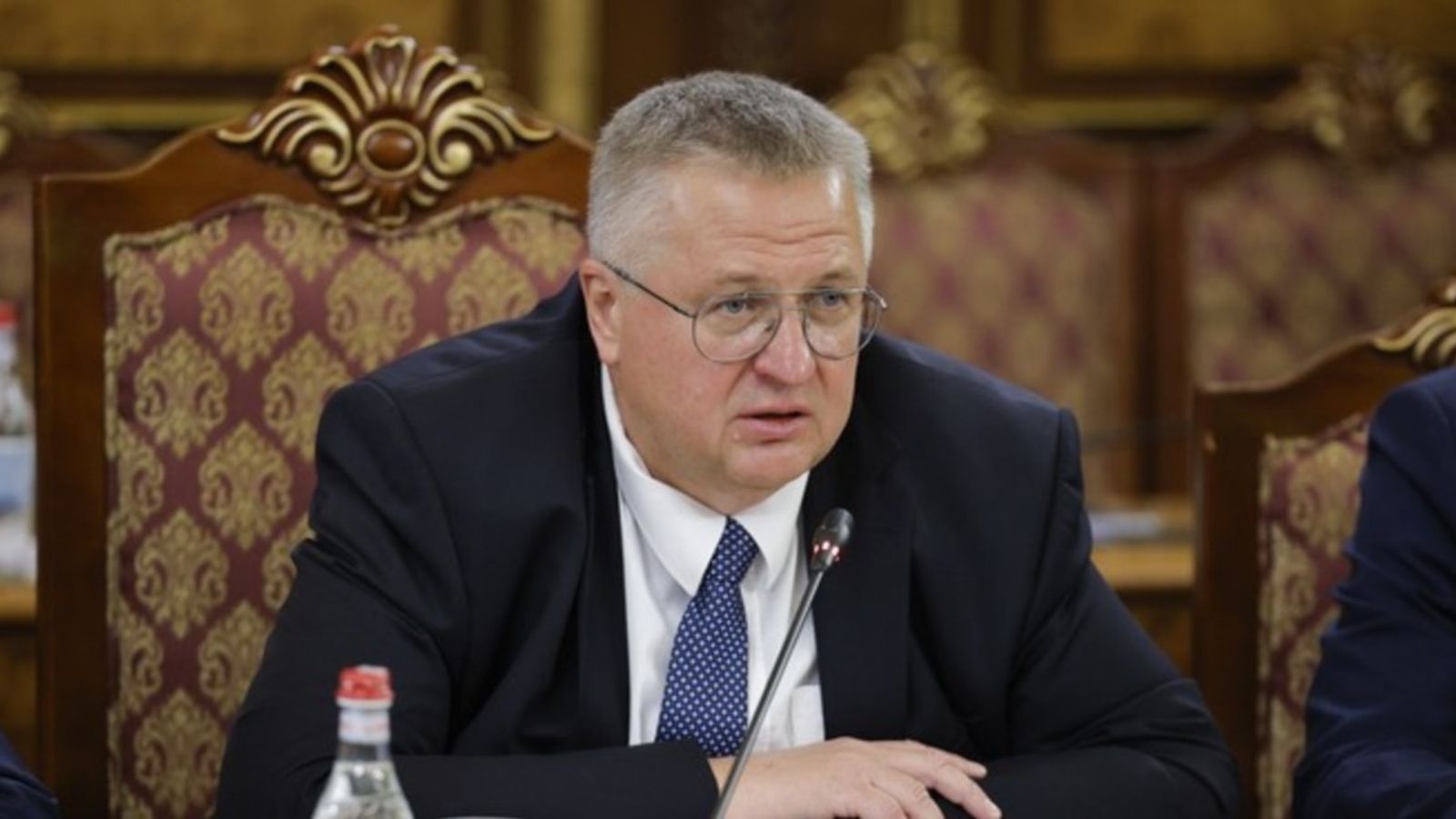
The Kremlin has escalated its rhetoric regarding Armenia’s European aspirations, with Russian Deputy Prime Minister Alexey Overchuk explicitly warning that joining the European Union would terminate direct air communication between Yerevan and Moscow. This statement, delivered on April 4, 2026, marks a significant departure from previous general economic warnings, signaling a readiness to utilize transport connectivity as a tool of geopolitical leverage.
Overchuk’s assertion relies on the precedent of Russia’s current aviation blockade with EU member states. By framing this as an inevitable technical consequence of political alignment, Moscow is attempting to decouple the decision from its own policy choices, presenting the potential isolation as a direct trade-off for Armenian citizens. This narrative is further bolstered by Aleksey Shevtsov, Deputy Secretary of the Russian Security Council, who explicitly linked the potential EU integration to a collapse in tourism revenue, citing that nearly 50% of Armenia’s current tourist flow originates from Russia and Iran.
Economic Stakes and the Diaspora Factor
The economic implications of such a rupture are profound. With Russian tourists contributing an estimated $1 billion annually to the Armenian economy, the loss of this traffic would place immediate strain on the hospitality and service sectors. Beyond tourism, the logistics sector faces an existential risk; according to Eurasian Economic Union data, up to 80% of Armenia’s freight turnover is tied to the Russian market. For a landlocked nation, the threat to these transport corridors is not merely a diplomatic friction point but a direct challenge to the country’s economic stability.
This pressure strategy also targets the substantial Armenian diaspora in Russia, whose ability to maintain ties with their homeland depends heavily on the very air corridors now being used as bargaining chips. By threatening to restrict movement, Moscow aims to create domestic political friction within Armenia, forcing a choice between long-term institutional reform and immediate economic survival.
Institutional Sovereignty vs. Coerced Integration
The standoff underscores a fundamental clash of values. While Prime Minister Nikol Pashinyan has maintained that Armenia’s current agenda remains compatible with its existing obligations, the Kremlin’s insistence that membership in the EAEU and the EU is mutually exclusive leaves little room for a middle path. From a liberal democratic perspective, the use of transport and economic isolation to dictate a sovereign nation’s foreign policy trajectory highlights the coercive nature of the current regional security architecture.
Ultimately, the threat of an air blockade serves as a litmus test for Armenia’s democratic resilience. The challenge for Yerevan is to navigate this transition without sacrificing the civil liberties and institutional reforms that define its EU aspirations, while mitigating the tangible risks of a potential economic decoupling from its traditional, albeit increasingly volatile, transit partners. The sustainability of Armenia’s path will depend on whether it can diversify its logistical and economic dependencies before such threats are operationalized.