


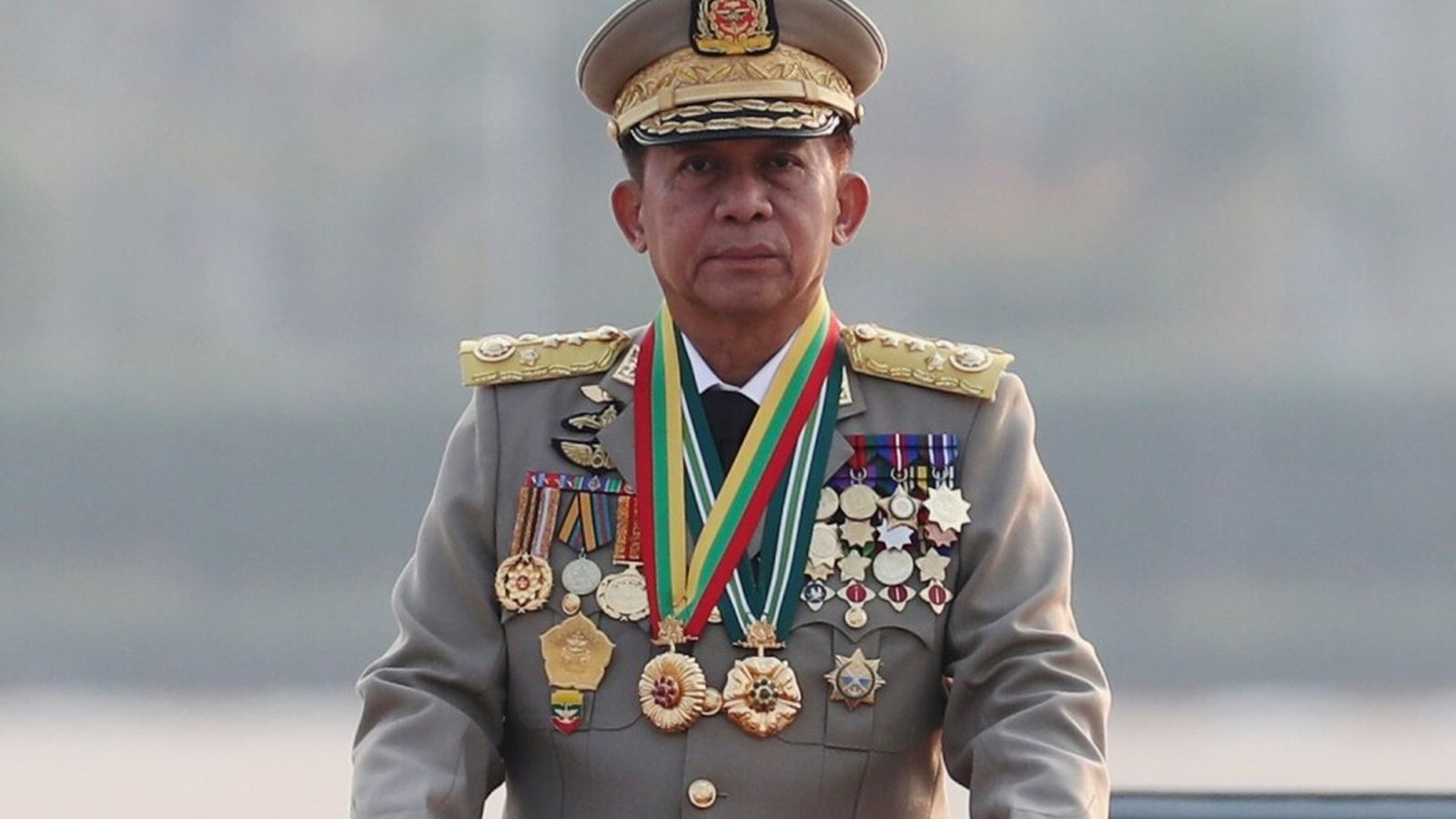
NAYPYIDAW (Azat TV) – Myanmar’s long-standing military leader, Senior General Min Aung Hlaing, was elected president on Friday, April 3, 2026, by a parliament dominated by military-backed parties. The vote, which saw the 69-year-old secure 429 out of 584 ballots, marks a formal transition from direct military council rule to a civilian-titled administration, five years after he ousted the country’s elected government in a 2021 coup.
Formalizing Control Through Presidential Power
The transition follows a series of elections held in December and January, which were widely boycotted by opposition factions and dismissed by international observers as a mechanism to solidify junta rule behind a veneer of democratic legitimacy. Under the military-imposed constitution, Min Aung Hlaing was required to relinquish his post as commander-in-chief to hold the presidency. He has appointed General Ye Win Oo, a close intelligence aide and longtime loyalist, to assume the role of military commander, ensuring that the armed forces remain under the control of his inner circle.
The Stakes of International Accountability
Human rights organizations and international legal experts have been quick to challenge the implications of this shift. Amnesty International stated that the change in title does not grant the former general immunity from ongoing investigations into grave international law violations. Min Aung Hlaing remains the subject of a pending arrest warrant request at the International Criminal Court (ICC) concerning the 2017 expulsion of the Rohingya minority from Rakhine State. Critics argue that the regime is utilizing the facade of a presidency to complicate diplomatic relations and potentially secure a degree of state-level protection against international prosecution.
Military Consolidation Amidst Civil Conflict
The election occurs against the backdrop of a brutal, multi-front civil war that has claimed thousands of lives since the 2021 coup. With the Union Solidarity and Development Party holding over 80 percent of contested seats and the military retaining a constitutionally mandated 25 percent block of non-elected seats, the new administration is expected to maintain its hardline military strategy. Analysts suggest that the formalization of this government may trigger increased military pressure against resistance groups as the regime seeks to assert total territorial control under its new civilian-political identity.
The transition to a presidential system appears less an evolution toward governance and more a strategic entrenchment of existing power structures, designed to shield the leadership from external legal pressure while maintaining the military’s absolute control over the state apparatus.