


The Intersection of Criminal Charges and Probate Law
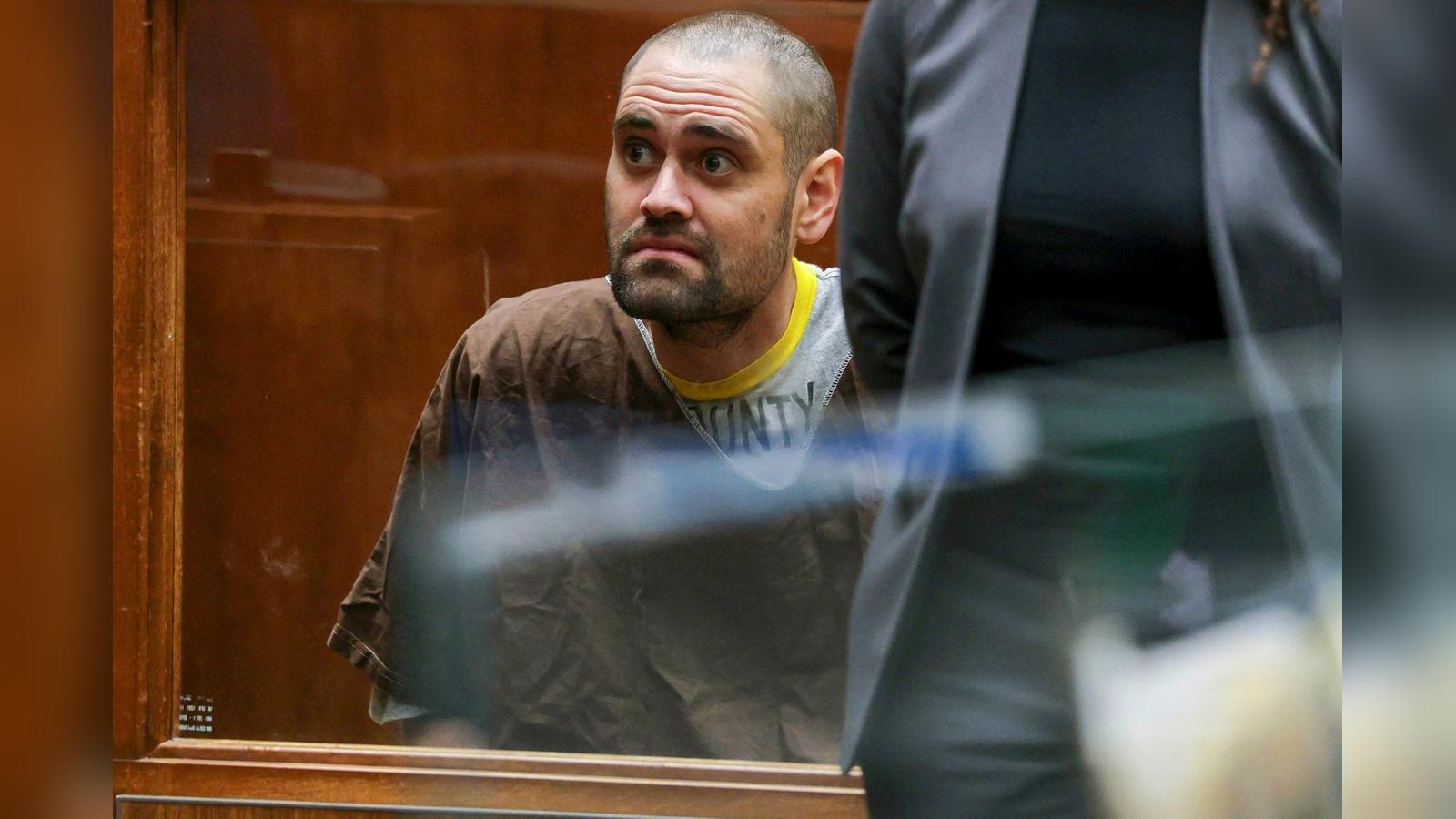
LOS ANGELES — In a legal battle that straddles the boundary between high-profile criminal prosecution and complex estate administration, Nick Reiner, the 32-year-old son of the late Hollywood icons Rob and Michele Singer Reiner, is waging a high-stakes campaign in Los Angeles County Superior Court. Currently incarcerated at the Twin Towers Correctional Facility in Los Angeles, Reiner is demanding the immediate release of more than half a million dollars from a $1.5 million trust fund established for him at birth in 1993. The legal dispute has intensified following a grand jury indictment that formally charges him with the brutal double murder of his parents, presenting a classic conflict between the constitutional presumption of innocence and the strict fiduciary responsibilities of estate trustees.
According to court records obtained by the Los Angeles Times and Us Weekly, Reiner filed a brief declaration reiterating his demand for a $558,000 distribution—an amount he claims he has been legally owed since fall 2023 when he reached the milestone age of 30. However, the managers of the trust, including former trustee Paul Kanin and current trustee Jodi Pais Montgomery, have filed extensive paperwork seeking to block any disbursements. The central pillar of their opposition is California’s “Slayer Statute,” a legal doctrine designed to prevent individuals from financially profiting from the deaths of those they are accused of killing.
A Grim Discovery in Brentwood
The criminal case against Nick Reiner began on December 14, 2025, when Los Angeles police officers discovered celebrated director Rob Reiner and storied producer Michele Singer Reiner stabbed to death in the bedroom of their Brentwood mansion. The double homicide shocked the entertainment industry and wider public, given Rob Reiner’s monumental contributions to American cinema and civic life in California. Nick Reiner was arrested shortly thereafter, pleading not guilty to initial charges in February 2026.
The prosecution’s case advanced significantly on Wednesday, August 12, 2026, when a grand jury returned a formal indictment charging Reiner with two counts of first-degree murder. Crucially, the indictment unsealed by Los Angeles County District Attorney Nathan J. Hochman added a special circumstance allegation: that the defendant committed the murders by means of “lying in wait.” This addition elevates the gravity of the trial, steering the prosecution toward potential life-without-parole sentences. DA Hochman characterized the slayings as “a profound betrayal by someone who was loved and trusted by the very people he is accused of killing,” emphasizing that the grand jury’s decision brings the state one step closer to achieving justice.
The “Slayer Statute” and the Fiduciary Dilemma
At the heart of the probate dispute is California Probate Code Section 250, commonly referred to as the Slayer Statute. The law dictates that any beneficiary who “feloniously and intentionally” kills a benefactor is barred from inheriting or receiving any property, interest, or benefit from the decedent’s estate or trust. In their filings, attorneys for the trust’s former manager, Paul Kanin, argued that the Slayer Statute is not a mere pretext for delaying distributions, but a binding legal obligation that any prudent trustee must address.
“Nick’s sense of urgency is real, but it did not arise in a vacuum,” Kanin’s legal team wrote in a filing. “It arises from the deaths of his parents, the very settlors of the Trust at issue, and Nick is presently accused of causing those deaths.” The trustees contend that distributing over $500,000 to an indicted double-murder suspect before a verdict is reached would represent an egregious breach of fiduciary duty, especially if Reiner is subsequently convicted and legally disqualified from inheriting.
Conversely, Nick Reiner’s probate attorney, Anita P. Wu, has mounted a vigorous defense of her client’s property rights. Speaking to The New York Times, Wu emphasized the fundamental constitutional principle of due process. “The ‘Slayer Statute’ requires a determination, not a mere accusation,” Wu stated. “Nick is presumed innocent and has been convicted of nothing.” Reiner’s legal team argues that the age-30 distribution of $558,000 vested in fall 2023—more than two years before the tragic deaths of his parents—and therefore should be treated as his independent property, unaffected by subsequent events.
The Battle Over Legal Representation and Public Funds
The probate filings reveal that Reiner’s push for the trust funds is directly tied to his criminal defense strategy. In his June 2026 petition, Reiner explicitly stated that he was entitled to “mount his defense with the resources that are lawfully his own.” His initial high-profile defense attorney, Alan Jackson, withdrew from the criminal case in January 2026 but continued to pursue outstanding fees through the trust, receiving a payment in April.
Since Jackson’s departure, Reiner has been represented by the Los Angeles County Public Defender’s Office. The trust’s legal representatives have seized upon this fact to argue that Reiner is not facing irreparable harm or a deprivation of his constitutional right to counsel. In their court filings, the trustees’ lawyers noted that Reiner’s basic needs—including housing, food, and medical care—are fully met by the state while he is in custody. Furthermore, they asserted that “a criminal defendant has no entitlement to the specific private counsel of his choice at the trust’s expense, and the loss of that preference is not a cognizable trust-related harm.” Under this interpretation, the trust has no legal obligation to finance a private criminal defense for a beneficiary accused of murdering the trust’s creators.
Commissary Disputes and the Reality of Restrictive Custody
Beyond the half-million-dollar distribution, the legal papers expose smaller, highly localized disputes regarding Reiner’s daily life inside the Twin Towers Correctional Facility. Court records show that Reiner’s probate attorney petitioned the trust for a $20,000 disbursement to fund his prison commissary account.
Attorneys for the trust strongly objected to this request, pointing out that the maximum balance a commissary account can hold at any given time is $200—making the $20,000 request one hundred times the legal limit. They also highlighted that Reiner’s restrictive custody status severely limits his access to commissary items, rendering the large request unnecessary and legally unjustifiable. The trustees characterized the demand as further evidence of a lack of financial due diligence and an attempt to bypass standard administrative controls.
Procedural Next Steps
As the probate court prepares to hear arguments on Monday, August 17, 2026, legal experts are closely watching how the California Superior Court judge will balance the competing demands of probate law and criminal justice. While a civil probate judge has the authority to make an independent determination regarding the Slayer Statute under a lower standard of proof (“preponderance of the evidence” rather than “beyond a reasonable doubt”), such rulings are frequently stayed pending the outcome of the criminal trial to avoid conflicting judgments.
Meanwhile, Nick Reiner remains in custody without bail. While no definitive date has been set for the double-murder trial, the criminal proceedings are expected to accelerate in September 2026 with a series of crucial pre-trial hearings. The outcome of both the probate and criminal cases will likely set important precedents regarding how trusts are administered when a beneficiary is accused of the ultimate crime against the estate’s creators.