


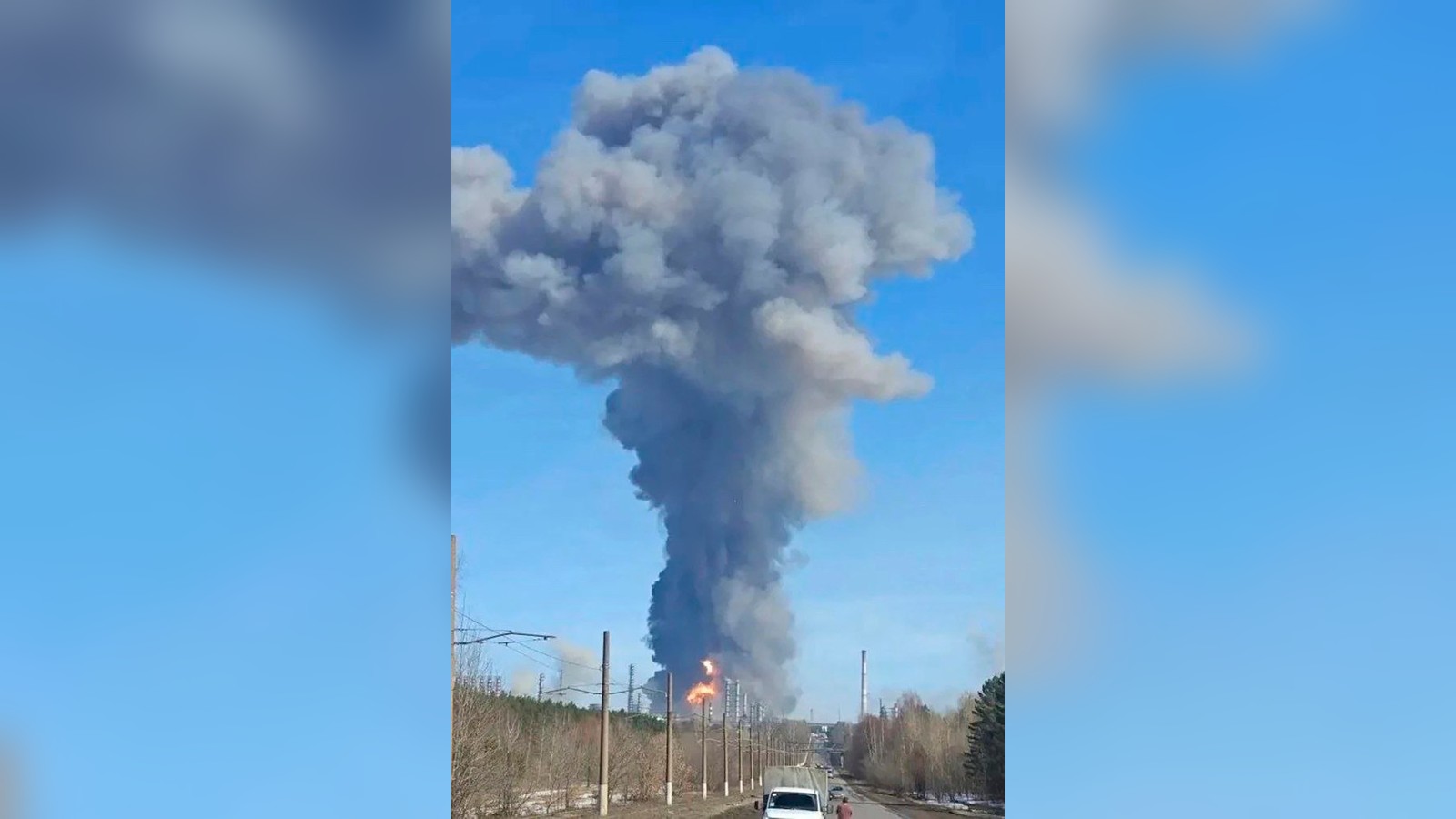
A massive fire erupted at the Nizhnekamskneftekhim petrochemical complex in the Russian city of Nizhnekamsk, Tatarstan, during the night of November 15, 2026. Eyewitness footage circulated on social media and shared by various monitoring channels depicts intense orange flames and thick plumes of smoke rising above the facility. The site is recognized as one of the largest petrochemical hubs in Europe, and its sudden ignition has drawn significant attention to the vulnerabilities of Russia's critical industrial infrastructure located deep within its borders.
The incident occurred concurrently with widespread reports of a drone attack targeting the city's industrial zone. Local authorities, including Nizhnekamsk Mayor Radmir Belyaev, confirmed that air defense systems were active in the region throughout the night. While officials acknowledged these defensive operations, there has been no immediate official confirmation from Russian authorities regarding the specific cause of the blaze, the extent of the damage sustained by the plant, or any potential casualties. The facility is owned by the chemical giant SIBUR and remains a vital component of the regional economy.
Industrial significance and strategic location
The Nizhnekamskneftekhim complex serves as a linchpin of Russia's industrial output, specializing in the production of synthetic rubber, plastics, and ethylene. These materials are essential for various domestic and industrial sectors. Its strategic importance is further compounded by its location in a dense industrial hub that also hosts the TANECO and TAIF-NK oil refineries. This area is situated approximately 1,200 kilometers, or 745 miles, from the Ukrainian border, highlighting the reach of modern long-range strike capabilities.
This industrial zone has become a recurring target for long-range strikes throughout the ongoing conflict. The Ukrainian General Staff has previously claimed successful operations against the TANECO refinery in both August and September 2026. The recurring nature of these incidents underscores a broader pattern of targeting core nodes of the Russian energy and industrial infrastructure, aimed at disrupting the supply chains that sustain both the domestic market and the broader economy.
Regional impact and synchronized incidents
The events in Tatarstan were reportedly accompanied by damage to a 220 kV electrical substation in Taganrog, Rostov Oblast. According to reports from the Telegram channel Astra, the damage to the Taganrog-10 facility resulted in power outages that affected both the city and local industrial sites, including the TAGMET metallurgical plant. This synchronized disruption suggests a coordinated effort to strain regional infrastructure, affecting both energy distribution and manufacturing capacity simultaneously across different Russian territories.
The broader context of these strikes includes recent reported attacks on other major facilities, such as the Lukoil-Volgograd Oil Refinery and the Ryazan Oil Refinery. As Russia faces these repeated challenges to its refinery and petrochemical sectors, the cumulative effect on fuel distribution and production remains a subject of intense scrutiny by regional observers and international analysts alike.
Uncertainty regarding operational damage
As of the morning of November 15, the full scope of the destruction at the Nizhnekamsk facility remains unverified. While Ukrainian monitoring channels and local residents have linked the fire to the reported drone activity, independent confirmation of the facility being directly struck is currently unavailable. The absence of detailed damage assessments from regional authorities leaves the operational impact of the fire on the SIBUR production chain uncertain.
The repeated targeting of major petrochemical and refining facilities suggests a deliberate effort to strain Russia’s industrial capacity and fuel supply chains. However, the strategic effectiveness of these individual strikes remains difficult to quantify without transparency regarding repair timelines and sustained production output. As monitoring continues, the industry awaits further clarity on whether this fire will result in long-term production constraints for the Nizhnekamskneftekhim complex or if repairs can be expedited to restore normal operations.