


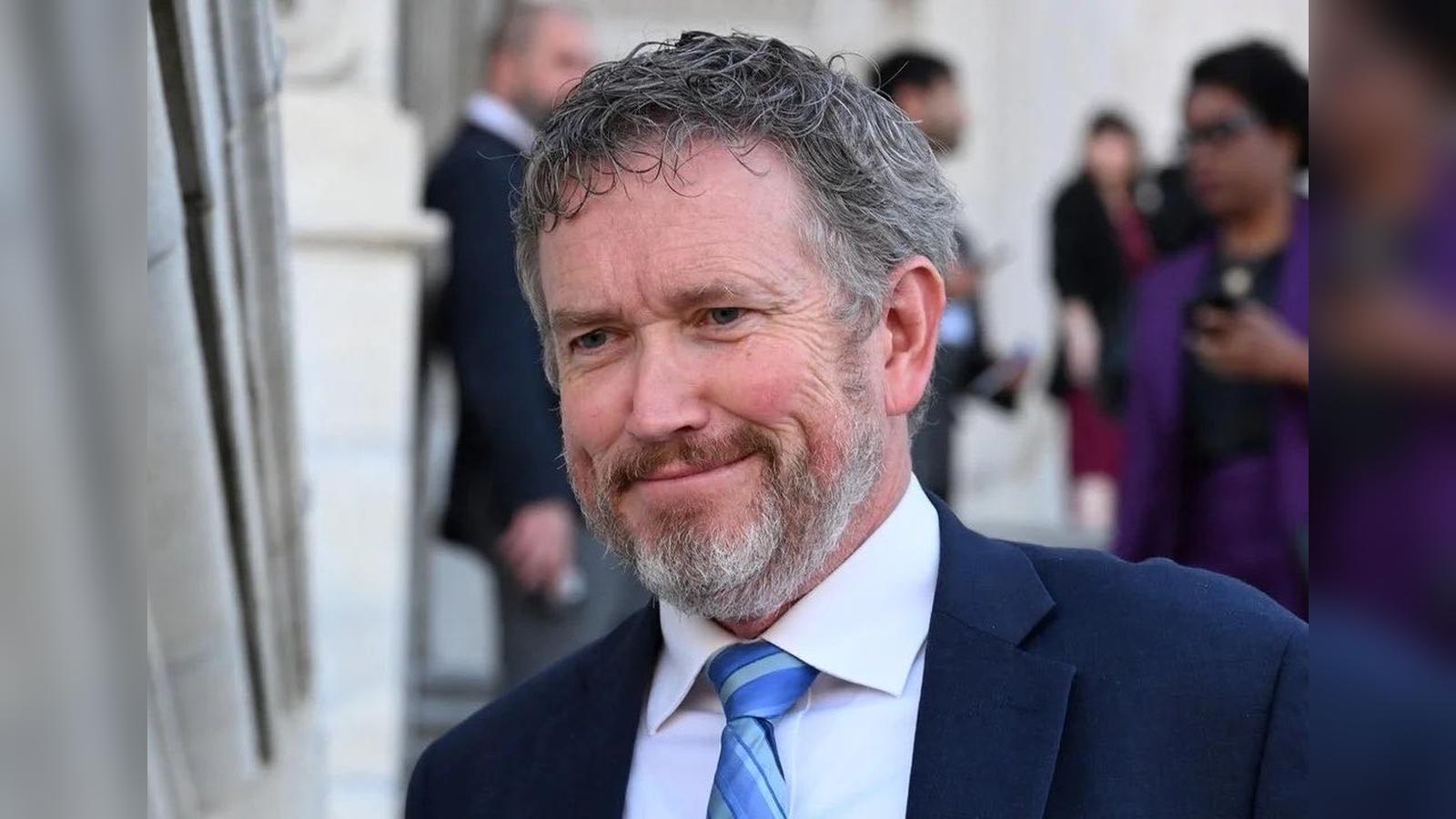
Outgoing U.S. Representative Thomas Massie, a Kentucky Republican, has formally announced his intention to force a floor vote in the House of Representatives aimed at ending U.S. military involvement in Iran. Massie, who is set to depart office in January following a primary election loss, introduced H.Con.Res. 126, a measure that invokes the War Powers Resolution of 1973 to direct the President to remove American armed forces from active hostilities. This legislative maneuver represents a final attempt by the libertarian-leaning congressman to challenge the Trump administration’s military strategy as the conflict, which has far exceeded initial administration expectations of a brief engagement, enters its ninth month.
The push by Massie is framed as a strategic opportunity for his Republican colleagues to distance themselves from the administration’s policies following significant losses in the November 3 midterm elections. Massie has characterized his effort as offering his fellow party members a “life boat from MAGA,” suggesting that continued alignment with the current military trajectory carries substantial political risk. He has pointed to the war’s economic impact—specifically rising costs for energy, fertilizer, and groceries—as a primary driver of voter alienation. This assessment is not unique to the congressman; Vice President JD Vance explicitly acknowledged the war's role in the party's recent electoral defeat, noting on social media that the conflict was a primary reason for the GOP's losses.
Legislative Obstacles and Internal GOP Dissent
While Massie has expressed confidence that a vote could be forced by mid-December, provided House leadership does not cancel upcoming legislative days, the path to passage remains fraught with difficulty. The congressman noted that two other pending measures, H.Con.Res. 86 and H.Con.Res. 89, are already waiting for action and could potentially reach the floor even sooner than his own resolution. Despite this, senior Republican leadership remains largely resistant to the initiative. House Armed Services Committee Chairman Mike Rogers has confirmed his opposition to the measure, and other prominent figures like Representative Tom Cole have expressed reluctance to send legislation to the president that would likely face a veto, arguing that a Republican Congress should not force such a confrontation with a Republican administration.
The political divide within the Republican Party regarding the conflict remains pronounced and complex. While a previous Iran War Powers resolution successfully passed the House in September with support from seven Republicans—including Representatives Tom Barrett, Warren Davidson, and Brian Fitzpatrick—the current effort faces skepticism regarding whether additional members will break ranks. Representative Jeff Van Drew suggested that only a small number of additional Republicans might support the measure, while others, like Representative Tom Barrett, have signaled they would maintain their previous positions without expecting a broader shift in party sentiment. Massie has been actively holding conversations with members, attempting to leverage the recent election results to persuade them that a vote against the war is a necessary political correction.
Geopolitical Context and Future Legislative Outlook
The urgency of the legislative push is set against a backdrop of intensifying conflict and domestic pressure. Public polling from Reuters/Ipsos conducted between November 6 and 9 indicates that 51 percent of Republicans favor congressional action to end the war, highlighting a significant disconnect between the party's base and its congressional leadership. Meanwhile, Democratic lawmakers have signaled that ending the war will be a primary objective once they assume control of Congress in January. They have outlined potential strategies including funding restrictions, legislative mandates, and formal investigations into the administration's military conduct, including the actions of Defense Secretary Pete Hegseth.
As the conflict approaches its ninth month, the situation has become increasingly volatile. Iranian state media has issued warnings regarding potential modifications to the Khorramshahr ballistic missile, purportedly capable of threatening American military installations in Europe. Although these claims have not been independently verified, they coincide with directives from Supreme Leader Mojtaba Khamenei to remove previous geographical constraints on retaliatory strikes. The interplay between these external threats and the domestic legislative calendar creates a complex environment for Massie's final weeks. Whether the congressman can successfully force a vote that compels a shift in policy remains the central uncertainty of the current lame-duck session, as the administration maintains its military posture despite mounting calls for a strategic reassessment.
The broader legislative context involves the looming expiration of government funding on December 11, a deadline that may further complicate Massie's efforts. The potential for a government shutdown provides a narrow window for this debate, as leadership focuses on fiscal negotiations. Massie’s attempt to force a vote is fundamentally a challenge to the executive branch's authority, utilizing the War Powers Resolution to reclaim a degree of congressional oversight. However, even if successful in securing a floor vote, the legislative hurdle of overcoming a potential presidential veto remains, which would require a two-thirds majority in both the House and the Senate—a threshold that currently appears unlikely to be met given the party-line adherence of most Republican lawmakers. As Massie prepares to exit, his final act serves as a definitive marker of the internal friction that the Iran conflict has generated within the Republican caucus, leaving the resolution of the war as a primary challenge for the incoming Congress.