


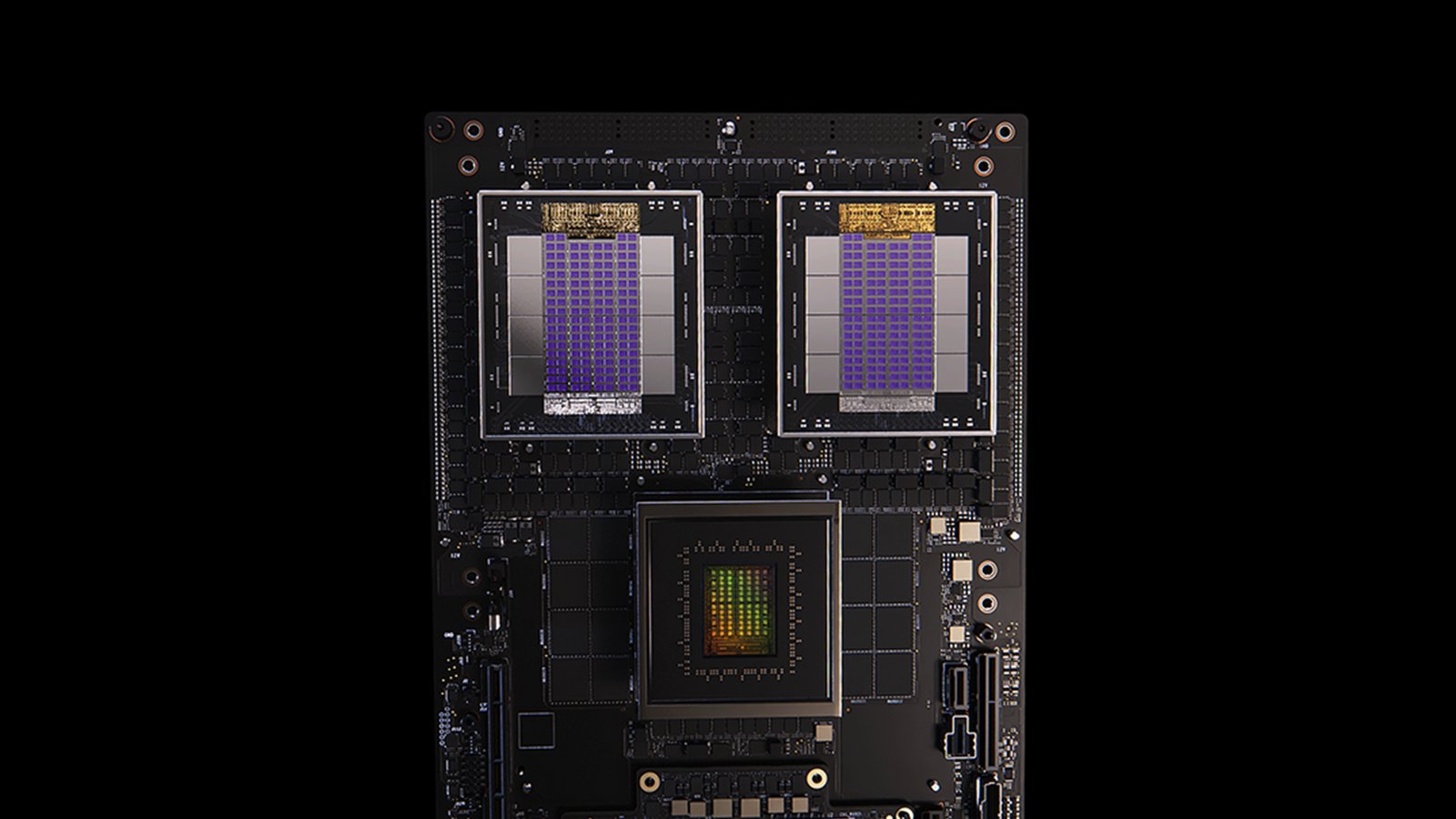
Nvidia Chief Executive Officer Jensen Huang has unveiled a financial framework aimed at mobilizing more than $500 billion in private capital to finance artificial intelligence data centers and GPU hardware deployment. Under non-binding memorandums of understanding signed with six prominent alternative asset managers and investment banks—Apollo Global Management, BlackRock, Blackstone, Brookfield Asset Management, Goldman Sachs, and KKR—Nvidia seeks to institutionalize high-performance compute as a project-financed real asset class, comparable to energy grid installations, pipelines, and transportation infrastructure.
The agreement marks an attempt to decouple the vast capital expenditures required for next-generation AI infrastructure from corporate software balance sheets and venture equity, shifting the financial burden into institutional credit markets. The news initially prompted a modest increase in Nvidia’s stock price, while shares of major cloud providers fell as market participants evaluated how third-party capital pools might alter competitive dynamics across the technology sector.
Mobilizing Wall Street Capital for GPU Infrastructure
The strategic core of the framework consists of independent compute financing platforms managed by participating investment firms. These vehicles are designed to aggregate long-duration private debt and equity capital, providing qualified enterprise customers, frontier research laboratories, specialized AI cloud providers, and hyperscale operators with access to low-cost debt structured around long-term equipment utilization.
Addressing the rationale behind the initiative, Huang stated that modern GPU compute has transitioned from a routine corporate IT expenditure into a scarce, revenue-generating infrastructure asset. By establishing dedicated investment platforms, Nvidia aims to extend financing terms to match the operating lifespans of AI data centers, preventing capital constraints from stalling customer hardware procurement. Investment leaders supporting the framework, including Apollo’s Jim Zelter, emphasized that modern compute exhibits defined investment metrics that allow institutional buy-side firms to underwrite predictable cash flows rather than speculative short-term tech valuation multiples.
Rental Rates and Nvidia’s Residual-Value Guarantees
The economics supporting the financing push rely on firm compute pricing power and hardware resale expectations. Market data indicates that rental rates for Nvidia’s previous-generation H100 GPUs expanded from approximately $1.70 per GPU-hour in October 2025 to $2.35 by March 2026. Meanwhile, cloud rental pricing for the company’s newer Blackwell B200 architecture currently ranges between $5.30 and $7.05 per GPU-hour.
To de-risk institutional debt offerings and facilitate favorable interest rates, Huang disclosed that Nvidia may provide direct residual-value support covering up to 25% of select opportunities on a project-by-project basis. By absorbing partial downside risk on hardware residual values, Nvidia intends to assure lenders that secondary market liquidity or software-driven longevity will protect principal investments if an off-taker defaults or if model training cycles normalize.
Market Shockwave: Hyperscalers Slide as Neoclouds Gain Ground
Financial markets reacted swiftly to the structural implications of the deal. Shares of major hyperscale cloud operators declined following the announcement, with Amazon falling 2.4%, Alphabet losing nearly 2%, and Microsoft dropping approximately 1%. Conversely, specialized cloud operators such as CoreWeave registered share price gains.
The market divergence reflects competitive concerns regarding capital allocation. Combined 2026 capital expenditures across the four largest technology hyperscalers are tracking near $745 billion, an outlay recently characterized by NYU Stern Valuation Professor Aswath Damodaran as speculative positioning rather than structured capital deployment. By opening an alternative $500 billion institutional credit pipeline, Nvidia offers independent AI clouds and frontier research labs access to institutional funding scale previously reserved for balance sheets with massive cash reserves, thereby eroding hyperscalers’ structural advantages in compute availability.
Avoiding the Trap of Circular Financing
As initial details surfaced, financial analysts raised questions regarding the exposure of Nvidia’s balance sheet to circular credit risk, recalling past technology cycles where vendors funded their own sales through aggressive vendor financing. Analysis from CNBC highlighted that Nvidia is not issuing direct loans from its corporate balance sheet to inflate sales figures, but is instead acting as an intermediary coordinating independent institutional private credit.
While Nvidia’s conditional 25% residual-value guarantee introduces limited backstop exposure, the direct principal risk remains with the third-party asset managers and their institutional investors. Management maintained that maintaining independent platforms protects the hardware manufacturer from credit default cycles while ensuring that capital allocation remains subject to strict underwriting discipline by institutional lenders.
Structural Bottlenecks and Execution Risks
Despite the headline scale of the $500 billion target, market analysts emphasize that non-binding memorandums of understanding do not represent immediate cash commitments in escrow. Actual capital deployment will depend on several external friction points, including long-term off-take agreements from corporate tenants, power grid interconnection availability, data center construction schedules, and sustained demand for AI model training.
If secondary market prices for specialized accelerators decline sharply or if energy constraints delay data center commission timelines, institutional debt deployment could slow significantly. Nevertheless, if the platform succeeds in establishing GPU compute as a bankable infrastructure asset class, Nvidia will have established an institutional financing engine that stabilizes hardware demand independent of short-term corporate capital spending budgets.