


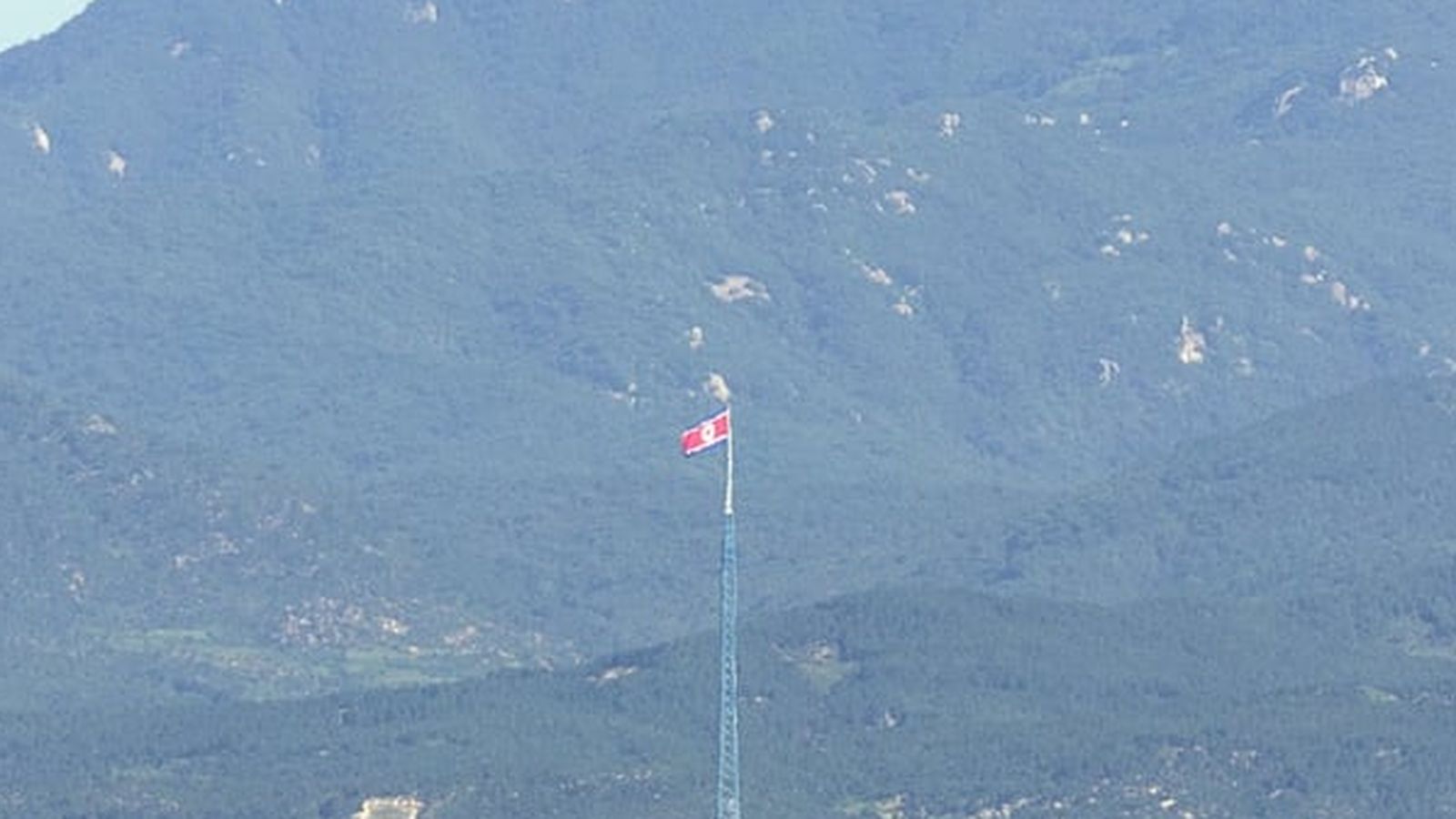
SEOUL (Azat TV) – At approximately 6:00 a.m. on Wednesday, August 12, 2026, North Korea launched a suspected short-range ballistic missile from the southeastern port city of Wonsan, sending the projectile flying roughly 700 kilometers (435 miles) eastward into the Sea of Japan. The flight marks Pyongyang’s 11th missile test activity in 2026 and its second test in under a week, following an unannounced launch on August 6. Coming just days before the scheduled August 17 kickoff of the joint United States–South Korea Ulchi Freedom Shield military exercises, the event highlights intensifying security dynamics that span both East Asian maritime defense and the battlefield in Ukraine.
Wonsan Test Flight and Allied Surveillance Tracking
South Korea’s Joint Chiefs of Staff (JCS) confirmed that South Korean, United States, and Japanese defense authorities tracked the trajectory from its earliest stages. While the JCS refrained from immediately specifying the missile’s launch angle or definitive classification, officials noted that a detailed technical investigation remains underway to determine the exact payload and propulsion characteristics. The JCS stated that South Korean forces maintain an overwhelming response posture under the combined defense framework with Washington.
In Tokyo, Japanese Defense Minister Shinjiro Koizumi strongly condemned the launch during a news conference, designating it a direct breach of United Nations Security Council resolutions. Koizumi confirmed that Japan lodged a formal diplomatic protest with Pyongyang through its embassy channels in Beijing. Simultaneously, U.S. Indo-Pacific Command in Hawaii reported that while the launch was closely monitored alongside regional partners, current assessments indicate no immediate threat to U.S. personnel, territory, or sovereign allies.
Dual Objectives: Tactical Proving Ground and Russian Export Pipeline
The 700-kilometer range demonstrated in Wednesday’s test matches the operational envelope of North Korea’s KN-23 (Hwasong-11Ga) series of short-range ballistic missiles, as well as the upgraded Hwasong-11MA hypersonic variant unveiled late last year. The Hwasong-11MA design incorporates a maneuverable re-entry vehicle capable of executing a terminal pull-up maneuver to evade radar tracking and surface-to-air interception systems.
Military analysts highlight that North Korea’s state media has remained unusually silent regarding both the August 6 and August 12 launches. Yang Moo-jin, a professor at the University of North Korean Studies, noted that such silence typically signals either low-key evaluation of highly classified systems, serial quality testing of newly manufactured batches, or follow-up trials addressing previous flight anomalies. Yang emphasized that Pyongyang may be actively evaluating modified tactical missiles intended for export to Russian armed forces or refining technology for its ongoing nuclear submarine and submarine-launched ballistic missile (SLBM) programs.
The battlefield implications of North Korea’s missile industrial base are already visible in Eastern Europe. Ukrainian President Volodymyr Zelensky reported that Russian forces utilized North Korean ballistic missiles in recent strikes, including an attack on a steel facility in Zaporizhzhia that killed seven workers and a July 30 strike on Radushne near Kryvyi Rih using KN-23 missiles. Intelligence assessments also indicate that a North Korean ballistic missile unit, equipped with six transportable launchers and 120 missiles, has been stationed in Russia’s Voronezh region near the border with Ukraine’s Luhansk province.
Lee Il-woo, a senior analyst at the Korea Defence Network, observed that combat utilization in Ukraine serves as an active proving ground for North Korea. Operational data from combat conditions allows North Korean engineers to reduce the missile’s circular error probable (CEP), refine guidance hardware, and analyze how its flight profiles perform against Western-supplied air defense systems such as the Patriot system.
Signaling Tokyo and Washington Ahead of Combined Drills
Beyond the export dimension, regional security experts point to clear geopolitical signaling aimed at Tokyo and Washington. Hong Min, a senior research fellow at the Korea Institute for National Unification (KINU), noted that a 700-kilometer trajectory fired from Wonsan precisely mirrors the distance to Japan’s Sasebo Port, a primary hub for U.S. naval operations in the Western Pacific. Firing along this range allows Pyongyang to signal strategic reach against forward-deployed coalition assets.
Tensions between Pyongyang and Tokyo have escalated markedly throughout the summer. North Korea has published seven formal condemnations of Japanese defense policy since July, focusing criticism on Tokyo’s latest defense white paper and Japan’s July 30 operational test of a Tomahawk cruise missile from the Aegis destroyer JS Chokai. Kim Yo Jong, the powerful sister of North Korean leader Kim Jong Un, previously denounced Tokyo’s acquisition of long-range strike capabilities as an active preparation for aggression backed by Washington.
At the same time, the timing directly precedes the annual Ulchi Freedom Shield drills set for August 17–27, 2026. While U.S. Forces spokesman Col. Ryan Donald reiterated that the annual exercise is a transparent and defensive training protocol, Pyongyang traditionally characterizes all combined allied maneuvers as invasion rehearsals. Expert Lim Eul-chul of Kyungnam University emphasized that Pyongyang routinely uses missile demonstrations as a direct counter-response to force deployment exercises on the Korean Peninsula.
Geopolitical Dilemma for Seoul
The convergence of European security and Korean Peninsula stability places South Korea in a complex legal and diplomatic posture. President Zelensky recently renewed appeals for Seoul to provide defensive surface-to-air missile hardware, offering advanced Ukrainian military drone technology in return. However, South Korean domestic legislation strictly restricts weapons delivery to active combat zones, and Seoul remains cautious about permanently severing diplomatic leverage with Moscow.
As South Korean, U.S., and Japanese intelligence agencies continue analyzing flight telemetry from the Wonsan launch, the test underscores how North Korea’s domestic missile testing schedule has become inextricably linked with international conflict lines, weapon supply chains, and broader Pacific deterrence strategy.