


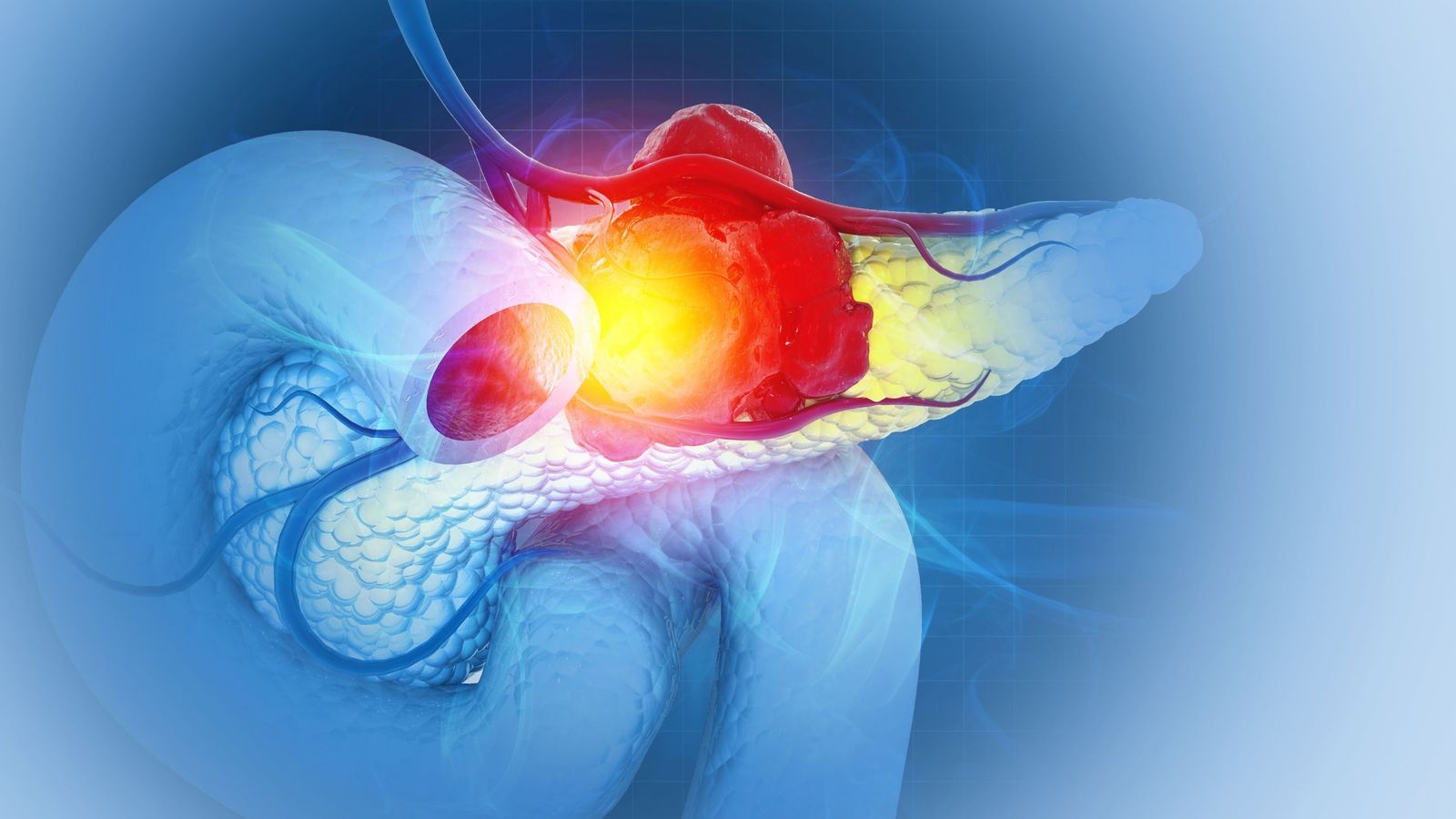
MADRID (Azat TV) – Scientists at the Spanish National Cancer Research Centre (CNIO) have reported a significant breakthrough in the fight against pancreatic cancer, developing a triple-combination drug therapy that completely and permanently eliminated tumors in preclinical mouse models without notable side effects. While the findings, published in a recent study, offer unprecedented hope for a disease known for its aggressive nature and resistance to treatment, researchers caution that the path to human clinical trials remains complex and lengthy.
Breakthrough in Pancreatic Cancer Treatment
The experimental treatment, developed by the CNIO’s Experimental Oncology Group, successfully cured pancreatic tumors in mice, preventing their return or the development of drug resistance for more than 200 days after the cessation of treatment. This outcome is particularly remarkable for pancreatic cancer, a malignancy notorious for its high relapse rates and ability to evade conventional therapies. The study authors emphasized that the combination therapy led to significant regression of tumors in genetically engineered mouse models and patient-derived tumor xenografts, all while being well tolerated by the subjects.
The triple-drug approach involves combining an experimental drug, which is already approved for lung cancer, with a protein degrader and an additional targeted therapy. This innovative combination resulted in the complete disappearance of tumors across three different mouse models, affirming its potency in preclinical settings, according to the Economictimes.com.
Targeting Cancer’s Resistance Mechanisms
Central to the therapy’s success is its ability to circumvent the resistance mechanisms that pancreatic cancer cells often employ. Senior study author Carmen Guerra, a cancer biologist at CNIO, explained to Live Science that while blocking certain KRAS-related pathways can halt the growth of small tumors, larger tumors typically adapt by activating alternative survival routes. Her team’s research identified a protein called STAT3 as a key emergency backup pathway that becomes highly active when other growth routes are blocked.
By genetically blocking three critical pathways—KRAS, a related pathway, and STAT3—the researchers observed tumor regression. This understanding paved the way for the drug-based strategy, which includes a newer compound specifically designed to disable STAT3. This multi-pronged attack on the tumor’s survival mechanisms is what allowed for the complete eradication of the cancer in the mouse models, preventing the tumors from finding new ways to multiply and become resistant.
The Path to Human Pancreatic Cancer Trials
Despite the highly encouraging results, researchers underscore that the journey to human application is still in its early stages. Mariano Barbacid, head of the Experimental Oncology Group at the CNIO, stated that while such experimental results have never been obtained before, they are not yet in a position to initiate clinical trials with the triple therapy. He emphasized to PNAS, as quoted by CNIO, that ‘the path to optimizing the triple combination therapy described here for use in a clinical setting will not be easy.’
Guerra further noted that mice can be ‘more resistant to this kind of toxicity’ than humans, and that the genetic diversity of pancreatic tumors among patients means each case presents unique challenges. The next steps will involve extensive preclinical development and optimization to ensure safety and efficacy before any human trials can commence.
The Aggressive Nature of Pancreatic Cancer
Pancreatic cancer develops when tumors form in the pancreas, an organ crucial for producing insulin and digestive enzymes. It is widely considered one of the most challenging cancers to treat, primarily due to its late detection and inherent resistance to many common cancer drugs. According to the World Cancer Research Fund, pancreatic cancer ranks as the 12th most common cancer globally.
In the United States, pancreatic cancer accounts for approximately 3% of all cancers but nearly 8% of all cancer-related deaths. The American Cancer Society estimates that in 2026, about 67,530 people will be diagnosed with the disease, and approximately 52,740 people are expected to die from it, highlighting the urgent need for more effective treatments. The CNIO’s breakthrough offers a glimmer of hope against a disease that has long defied successful therapeutic intervention.
The ability of this new triple therapy to not only eliminate pancreatic tumors but also prevent their relapse and the development of drug resistance in preclinical models marks a critical conceptual advance, addressing the very mechanisms that make this cancer so deadly and difficult to treat.