


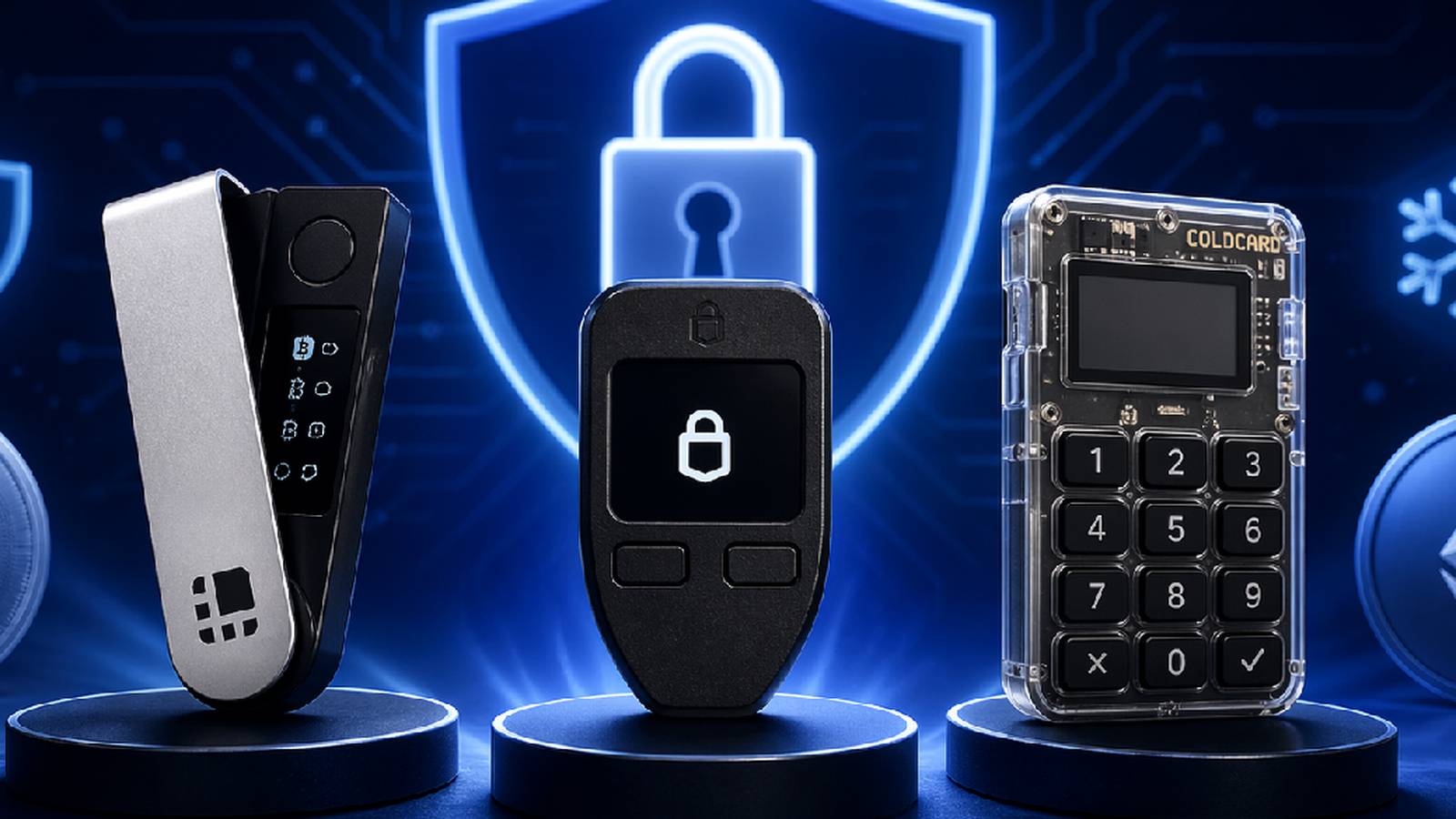
In the wake of a devastating security exploit that resulted in the theft of over $38 million worth of Bitcoin (BTC) from Coinkite’s Coldcard hardware wallets, major competitors Ledger and Trezor have moved quickly to reassure the global cryptocurrency community that their systems remain unaffected. The incident, which has severely dented investor sentiment, has reignited intense debate surrounding the long-term viability of self-custody solutions for digital assets.
The Core Vulnerability: How the Coldcard Exploit Occurred
According to technical disclosures, the security breach stemmed from a critical code flaw within Coldcard’s custom firmware. This vulnerability directly impacted how the hardware devices generated randomness using their True Random Number Generator (TRNG). In cryptographic security, randomness is the foundation of seed phrase generation, which secures private keys.
Under normal operating conditions, Coldcard utilizes a standard 128-bit mathematical complexity system (entropy) to generate secure seed phrases. However, the firmware flaw effectively downgraded the device’s security to a highly guessable 40-bit system. By reducing the cryptographic complexity to this level, the system became vulnerable to brute-force attacks, enabling the attacker to guess seed phrases and drain at least $38 million in Bitcoin from affected hardware wallets.
Ledger and Trezor Issue Rapid Safety Assurances
Because Coldcard shares some hardware design principles related to TRNG integration with other industry players, anxiety quickly spread that similar vulnerabilities might exist in other popular hardware wallets. In response, both Ledger and Trezor issued official statements to distance themselves from Coinkite’s exploit.
Ledger clarified that its devices utilize a different, more secure architecture. The firm emphasized that its hardware wallets rely on a 256-bit mathematical complexity system (entropy), making their seed phrases mathematically impossible to crack through brute force. Ledger confirmed that its devices are “not affected” by the Coldcard flaw.
Similarly, Trezor assured its user base that their funds are entirely safe. In an official communication, Trezor stated: “Trezor users: your funds are safe. The recent Coldcard issue is limited to their own custom firmware and how some of their devices generated randomness. Trezor does not share that code.” By highlighting that the flaw was software-based and isolated to Coinkite’s proprietary firmware, Trezor sought to isolate the reputational damage to Coldcard alone.
Market Fallout: Bitcoin Sentiment Hits Four-Month Low
Despite the rapid damage control by Ledger and Trezor, the exploit triggered widespread anxiety regarding the safety of hardware wallets and the broader concept of self-custody. According to data from market intelligence platform Santiment, Bitcoin social and market sentiment plunged to its lowest level in four months, mirroring the extreme caution observed during the West Asia geopolitical crisis in April.
The negative sentiment had an immediate impact on the market. Bitcoin’s price dropped by nearly 3%, hitting a two-week low of approximately $62.4K, before staged a minor recovery to trade slightly above the $63K threshold. The panic also affected institutional channels; US Spot Bitcoin ETFs registered a notable daily net outflow of $265 million on the Friday following the exploit, suggesting that even institutional-adjacent retail investors were shaken by the security news.
The Self-Custody Debate Intensifies
The high-profile exploit has polarized prominent voices in the cryptocurrency space. Udi Wertheimer, co-founder of Taproot Wizards, expressed deep skepticism about the current state of individual security, calling personal self-custody “worryingly unrealistic” for the average user. Wertheimer warned that the rapid evolution of artificial intelligence models equipped with advanced cybersecurity attack capabilities will only intensify the frequency and sophistication of such hacks in the future.
Conversely, Coinbase CEO Brian Armstrong offered a different perspective on physical key management. Armstrong suggested that the most effective way to mitigate physical and digital security threats is by “air-gapping keys”—keeping private keys completely disconnected from any internet-facing networks. He noted that this practice remains the operational standard for Coinbase’s institutional crypto ETF custody services.
As the industry processes the fallout from the Coldcard exploit, the incident highlights a critical inflection point: whether retail investors will continue to trust hardware-based self-custody, or increasingly migrate toward regulated institutional custody vehicles like Spot ETFs to avoid the complex technical risks of managing their own private keys.