


Democratic Advantage Solidifies Ahead of Voting
With one week remaining until the midterm elections, a final PBS News/NPR/Marist poll reveals that Democrats hold an 8-point lead among likely voters in the fight for control of Congress. According to reporting highlighted by NewsBreak, 52 percent of likely voters say they would back the Democratic candidate in their congressional district if the election were held today, while 44 percent would back the Republican. The Democratic edge is underpinned by stronger voter enthusiasm and independent voters breaking for Democratic candidates by double-digit margins.
The national political landscape leading into the final week reflects intense voter frustration with incumbent leadership. A separate comprehensive survey published by The Associated Press reported in the Baltimore Sun found that a strong majority of voters believe President Donald Trump is falling short on domestic and foreign issues, with about 8 in 10 voters citing the economy or the cost of living as their top priorities. Approximately two-thirds of registered voters point to healthcare and the ongoing war with Iran as critical deciding factors in their vote.
Voter Enthusiasm and Base Dynamics
Voter motivation heavily favors the Democratic Party in the final stretch of the campaign cycle. While roughly two-thirds of registered voters overall consider it extremely important to cast a ballot, enthusiasm diverges sharply along party lines. About three-quarters of Democratic voters state that voting in the November midterm elections is extremely important, compared with roughly 6 in 10 Republicans. This motivation gap has allowed Democratic candidates to expand their outreach efforts beyond traditional strongholds into competitive territory.
Despite holding Congress for the past two years, Republicans face significant headwinds from an electorate demanding substantive political change. About half of registered voters state they prefer Democratic control of the House or Senate, while roughly 4 in 10 favor continued Republican leadership, and 15 percent remain undecided. Independent voters are notably critical of the current congressional majority, with roughly two-thirds viewing the Republican Party unfavorably.
Economic Pressures and Presidential Disapproval
Economic dissatisfaction remains the central vulnerability for the Republican legislative majority. Nearly two years into President Trump’s second term, about three-quarters of registered voters disapprove of his handling of the economy, and roughly 8 in 10 disapprove of his management of the cost of living. Even within the Republican base, only 54 percent approve of his economic leadership, while foreign policy approval suffers as the war with Iran extends into its eighth month.
As campaigns enter their final operational week, both parties are locking down base turnout while attempting to persuade remaining undecided independents. The PBS News/NPR/Marist findings establish a challenging baseline for the GOP, turning the final days into a high-stakes referendum on economic conditions, presidential leadership, and legislative control.
Presidential Nationalization and Voter Referendum
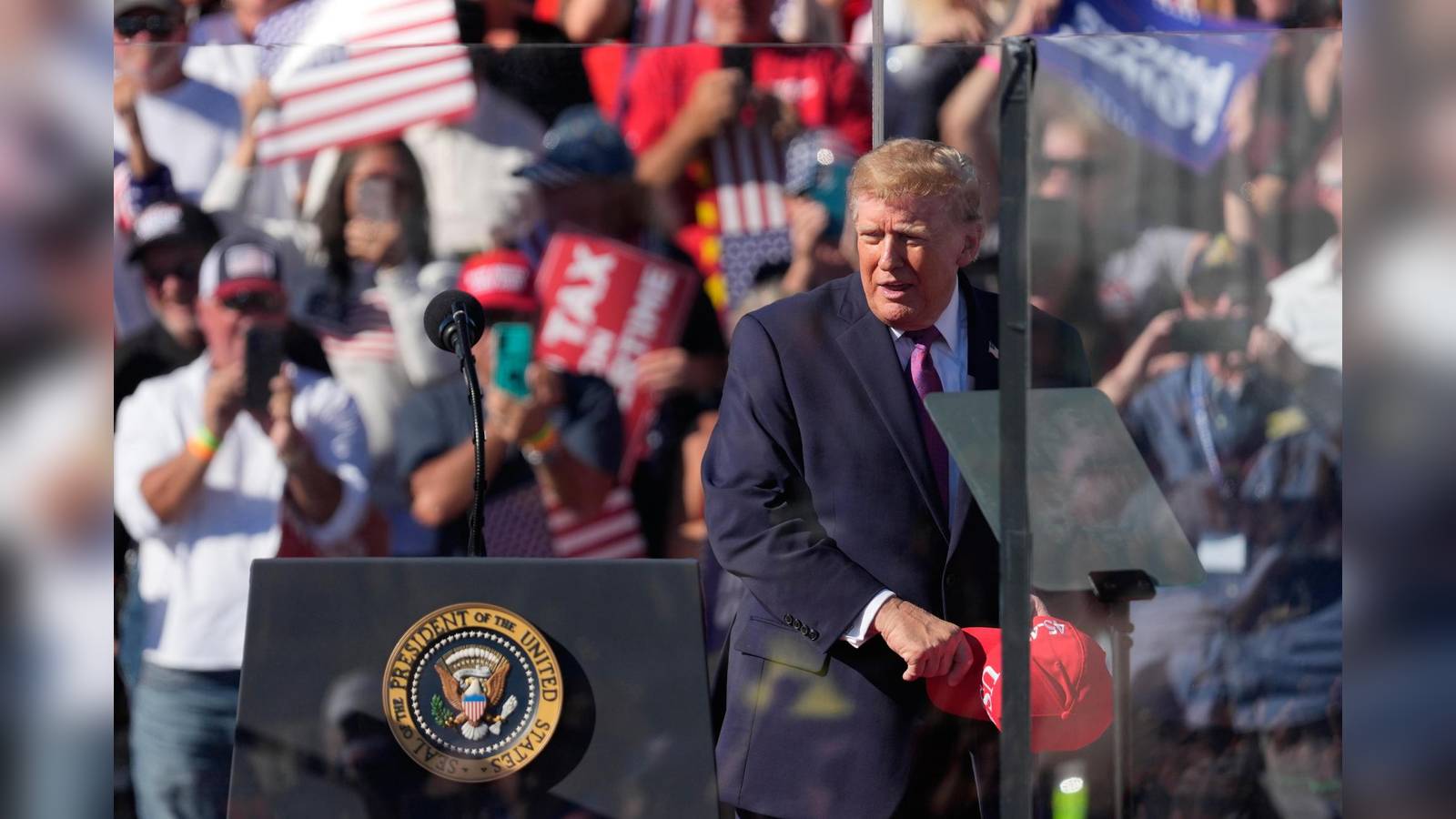
President Donald Trump has actively nationalized the midterms, urging voters in the waning days of the campaign to view the election as though he were personally on the ballot. However, the survey data indicates that likely voters view the contest through a sharply critical lens. By a 2-to-1 margin, likely voters say their midterm ballot is a vote against the president rather than for him, with 44 percent viewing their congressional vote as a direct expression of opposition to Trump. In contrast, only 21 percent categorize their vote as support for his leadership, while roughly one-third view him as a minor factor.
This dynamic creates a complex strategic challenge for Republican congressional candidates, many of whom have attempted to distance themselves from the nationalized narrative. Political analysts note that while presidential involvement aims to energize the core MAGA base, it simultaneously consolidates opposition among independents and disaffected voters. Independent voters break heavily against the incumbent administration, providing a substantial structural tailwind for Democratic candidates as ballots continue to be cast across the country.
Early Voting and Electoral Mechanics
The mechanics of early voting have further shaped the closing days of the campaign cycle. More than 30 million ballots have already been cast nationwide, split between mail-in voting and in-person early participation. Among likely voters who report having already cast a ballot, support leans heavily toward Democratic candidates, reflecting robust early mobilization efforts. Meanwhile, Republican campaigns are depending heavily on traditional in-person turnout on Election Day to close the enthusiasm deficit.
Strategic positioning across competitive districts continues to shift as outside spending tops $10 billion, marking one of the most expensive midterm cycles in United States history. While strategists from both parties debate whether the momentum will translate fully into legislative shifts in both chambers, the underlying metrics of voter dissatisfaction, economic anxiety, and presidential disapproval leave the legislative majority on the defensive as the final hours of the campaign unfold.