


The Constitutional Weight of a Royal Appearance
In the highly codified world of the British monarchy, visual presentation is rarely just an aesthetic choice; it is a form of political communication. The publication of Earl Charles Spencer’s new 348-page memoir, Swan Song: Diana, My Sister, has cast fresh light on this delicate balance. According to details published by Suara Garut, the book reveals that Queen Elizabeth II privately reprimanded Princess Diana for her dramatic hairstyle choice during the 1984 State Opening of Parliament—an incident that highlights the persistent friction between personal autonomy and institutional protocol.
The State Opening of Parliament is one of the most significant constitutional events in the United Kingdom, serving as the formal beginning of the legislative session. During the ceremony, the reigning monarch delivers a speech from the throne, outlining the government’s legislative agenda for the upcoming year. It is an occasion designed to emphasize the continuity, seriousness, and authority of the state. However, on November 6, 1984, the focus of the British press and public shifted entirely away from the government’s policy goals and toward the appearance of the young Princess of Wales.
The Chignon That Overshadowed the Crown
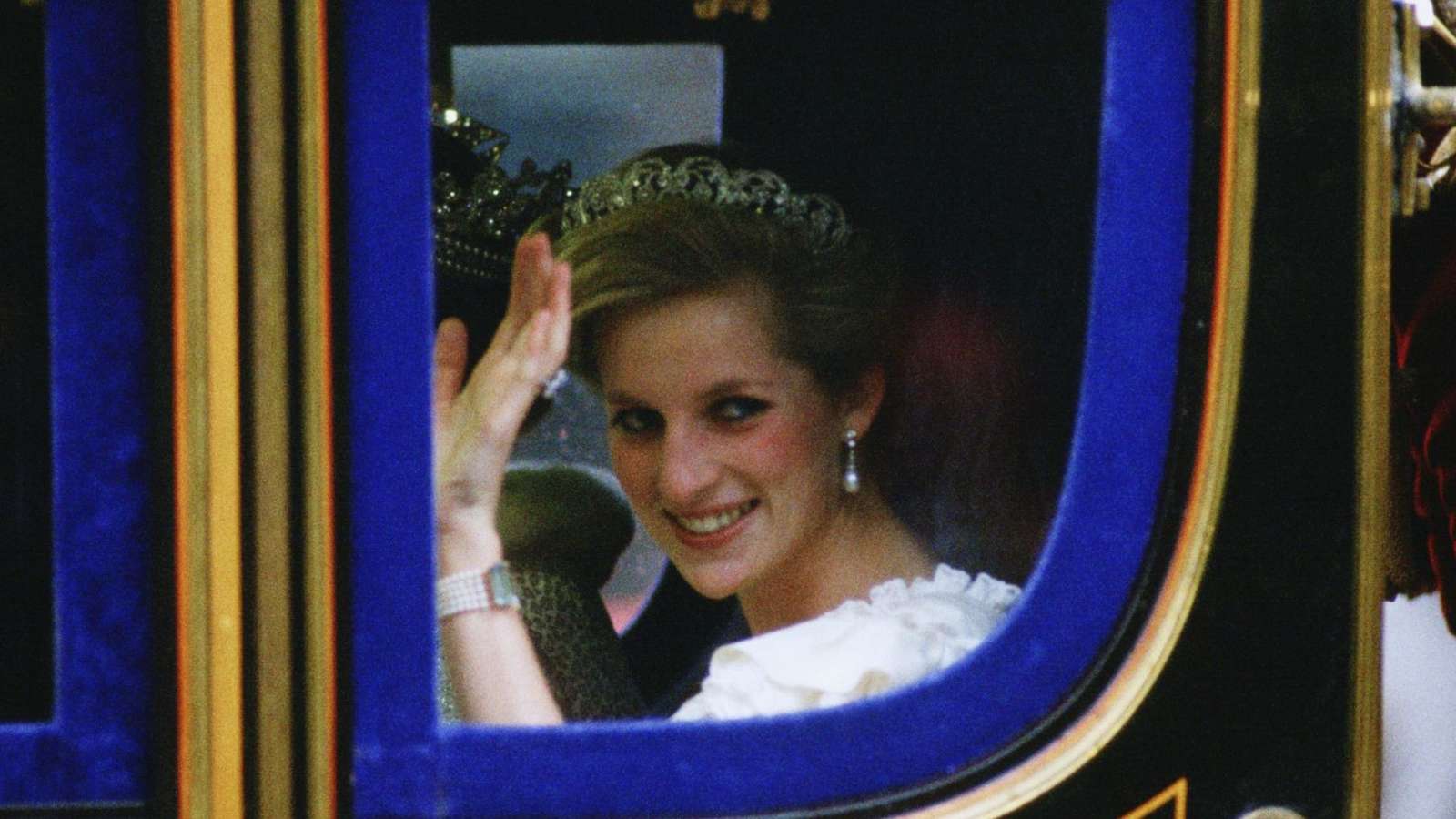
Princess Diana, who had been married to the future King Charles III for only three years at the time, arrived at the historic ceremony in a traditional horse-drawn carriage. As reported by SSBCrack, she chose to deviate from her signature shaggy haircut—a style that had already sparked a global fashion trend among millions of women. Instead, she unveiled an ornate, swept-back updo styled by her personal hairdresser, Richard Dalton. The voluminous chignon, pinned at the nape of her neck in a style reminiscent of classic mid-century film stars, was crowned with the diamond Spencer Tiara.
“When Diana arrived at Parliament and descended from her horse-drawn carriage, there were gasps of admiration from onlookers,” Earl Spencer writes in his memoir. He notes that the public, accustomed to her everyday look, was stunned by the “ravishing” transformation, which highlighted her bone structure and gave her an air of exceptional refinement. Yet, this public admiration quickly translated into a media storm that did not sit well with Buckingham Palace.
The following morning, British newspapers were dominated by close-up photographs of Diana’s new hairstyle. The Queen’s speech—detailing the legislative priorities of Margaret Thatcher’s administration—was relegated to secondary coverage or, as Spencer notes, “a mere footnote in the papers.” This displacement of state business by celebrity fascination crossed an unwritten boundary of royal protocol.
Institutional Discipline and “The Boss”
The reaction from Queen Elizabeth II was swift and direct. Earl Spencer reveals that Diana was “told off” by the monarch for allowing her appearance to overshadow the constitutional significance of the day. For the Queen, the State Opening of Parliament was a duty of supreme national importance, where the focus should remain squarely on the Crown and the government, not the fashion choices of individual family members.
Despite her growing global celebrity, Diana’s reaction to the reprimand demonstrated her deep-seated respect for the monarchy’s internal hierarchy. Spencer writes that his sister was “ever respectful of ‘the boss,’ as she called the Queen.” From that day forward, Diana made a conscious decision to adopt simpler, less distracting hairstyles at any public events where both she and the Queen were in attendance. This adjustment was a clear acknowledgment of the limits of her personal expression within the royal structure.
This incident, while seemingly minor on the surface, underscores the broader challenges Diana faced as her public appeal grew. As Marie Claire points out, her ability to captivate the public was a double-edged sword. While it modernized the public image of the royal family, it also created significant tension with court traditionalists who viewed her immense popularity as a threat to the established order of precedence.
The Behind-the-Scenes Toll of Royal Styling
The pressure of maintaining an iconic public image while navigating palace politics was a constant source of stress for the Princess. Richard Dalton, who served as Diana’s hairdresser during this transformative decade, has previously shared his own perspective on the emotional weight she carried. In his book, It’s All About the Hair – My Decade with Diana, Dalton recalled the intense focus on her appearance, noting that Diana even expressed a wish that she could redo her 1981 wedding just to “get the hair right.”
Dalton described the highly charged atmosphere behind closed doors, recalling how Diana’s mood would fluctuate under the pressure of public scrutiny. “Some days she would be happy, some days quiet, some days talkative and some days sad,” Dalton wrote, adding that on her lowest days, the tension was palpable enough that “sparks would be flying off the hair dryer.” This behind-the-scenes context highlights the human cost of the visual perfection demanded of the “People’s Princess.”
Decades after the event, the revelation of this private exchange between the Queen and the Princess of Wales serves as a compelling case study in the dynamics of modern royal public relations. It illustrates how even the smallest details of personal styling can become battlegrounds where the demands of state protocol clash with the realities of modern mass media coverage.