


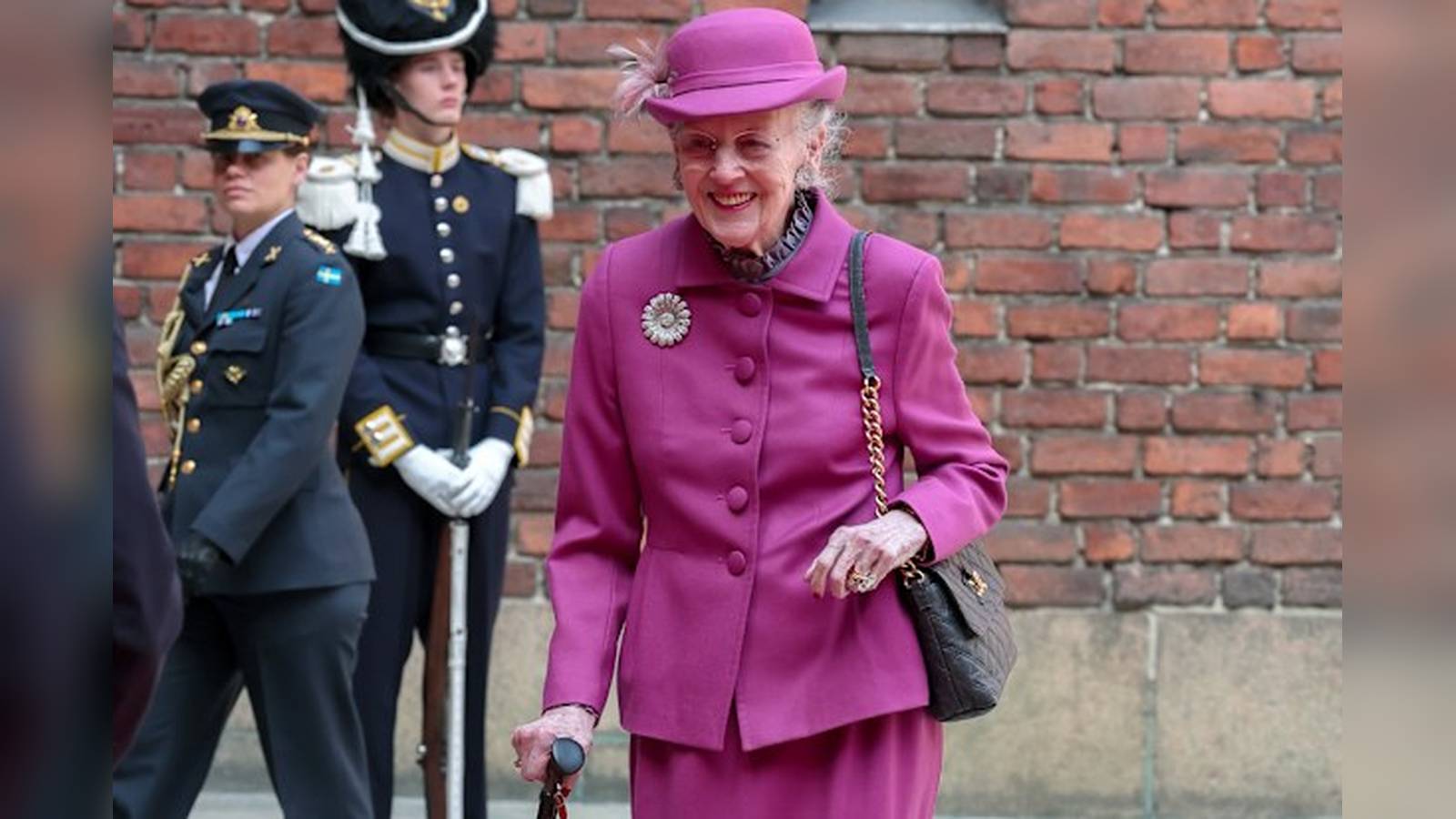
The sudden hospitalization of Denmark’s former reigning monarch, Queen Margrethe II, has cast a sharp light on the physical vulnerabilities of Scandinavia’s aging royal generation. At 86 years old, her latest health emergency has forced her to cancel her scheduled journey to Oslo for the state funeral of her close cousin, King Harald V of Norway. This development, confirmed by the Danish Royal House, underscores the accelerating transition of institutional duties to a younger generation of royals across northern Europe.
The Diagnosis and Immediate Medical Response
According to official statements from Amalienborg Palace, reported by IceNews, Queen Margrethe was admitted to Rigshospitalet in Copenhagen on Sunday evening after feeling unwell. Doctors subsequently diagnosed her with a new blood clot in her hip region alongside mild dehydration. The palace confirmed that she is being treated for both conditions, is in “good spirits,” and is expected to remain hospitalized throughout the week for close observation and ongoing therapy.
This medical episode marks the third significant health scare for the former queen this year alone. As detailed by The Nightly, Margrethe suffered a heart attack on May 14, which required a balloon angioplasty to her coronary artery. Just two weeks after her discharge, she was readmitted following a bad fall that occurred in September 2025, during which a CT scan revealed a large blood clot in her hip. The recurrence of a clot in the same region highlights the persistent orthopedic and vascular challenges she faces.
A Pattern of Physical Decline and the 2024 Abdication
The former queen’s health struggles have long been the driving force behind the restructuring of the Danish monarchy. In her historic 2023 New Year’s Eve address, Margrethe announced her decision to abdicate after a 52-year reign, pointing to a major back surgery in early 2023 as the catalyst for her reflections on the future. As reported by Nine.com.au, she noted at the time that “the number of ‘ailments’ increases” and that “one cannot undertake as much as one managed in the past.”
Her abdication in January 2024 allowed her son, King Frederik X, to ascend the throne, yet Margrethe retained her title of Her Majesty Queen Margrethe in accordance with Danish royal tradition. Although she has continued to perform official duties on a reduced scale—including a high-profile visit to Stockholm for the 80th birthday of Sweden’s King Carl XVI Gustaf—her mobility has been severely restricted, requiring the regular use of a walking stick and seating during public engagements.
Dynastic Consequences and the Oslo State Funeral
The immediate consequence of Margrethe’s hospitalization is her absence from the state funeral of King Harald V of Norway, who passed away peacefully at Oslo University Hospital on August 28, 2026, at the age of 89. Harald’s funeral represents a massive diplomatic and royal gathering, described by regional observers as the largest assembly of foreign royalty in recent years.
In her absence, Denmark will be represented by a delegation led by King Frederik X, Queen Mary, Crown Prince Christian, and Margrethe’s younger sister, Princess Benedikte. This collective representation is symbolic of the close-knit ties that bind the Scandinavian houses. Historically linked by the Kalmar Union (1397–1523), the royal families of Denmark, Norway, and Sweden remain deeply connected through marriage, personal friendship, and shared institutional challenges.
Parallel Transitions Across the North Sea
The health crisis in Copenhagen coincides with a period of profound transition and controversy for the Norwegian royal family. Norway’s newly acceded King Haakon VIII and Queen Mette-Marit are navigating their own structural hurdles. Queen Mette-Marit was herself hospitalized recently, forcing her to miss her husband’s historic swearing-in ceremony before parliament.
Despite these challenges, public support for the Norwegian monarchy has reportedly seen a recent uptick, as citizens rally around the new sovereigns. The seamless coordination between King Frederik X and King Haakon VIII during this period of bereavement and illness reflects a coordinated effort to project stability across the Scandinavian region, ensuring that even as the older generation steps back, the continuity of the crown remains absolute.