


Escalation at the Prime Minister’s Residence
In an unprecedented display of political tension in New Delhi, Indian opposition leader Rahul Gandhi and several senior members of the Indian National Congress were detained by police on Tuesday after leading a protest march to the residence of Prime Minister Narendra Modi. The demonstration, centered at 7, Lok Kalyan Marg, was organized to demand accountability for the ongoing NEET exam paper leak crisis and to protest the state’s aggressive response to student demonstrators.
The protest followed a tumultuous Monday, during which the student-led Cockroach Janta Party (CJP) marched to Parliament. That event saw violent clashes between protesters and security forces, including the use of lathicharges and tear gas. According to Delhi Police, 118 security personnel were injured in the Monday violence, while activists reported significant injuries among students. By Tuesday, the situation had intensified as Congress leaders joined the call for the resignations of PM Modi, Home Minister Amit Shah, and Education Minister Dharmendra Pradhan.
Stalled Negotiations and Police Action
The protest on Tuesday afternoon saw Rahul Gandhi, Priyanka Gandhi Vadra, and Congress President Mallikarjun Kharge gathering at 10, Rajaji Marg before marching to the Prime Minister’s residence. Union Minister of State in the PMO, Jitendra Singh, engaged in inconclusive talks with Gandhi at the protest site. Government sources claimed Gandhi had initially agreed to call off the protest if a parliamentary discussion on the paper leaks was guaranteed, but later added a demand for the Education Minister’s resignation, leading the government to characterize the opposition’s position as shifting.
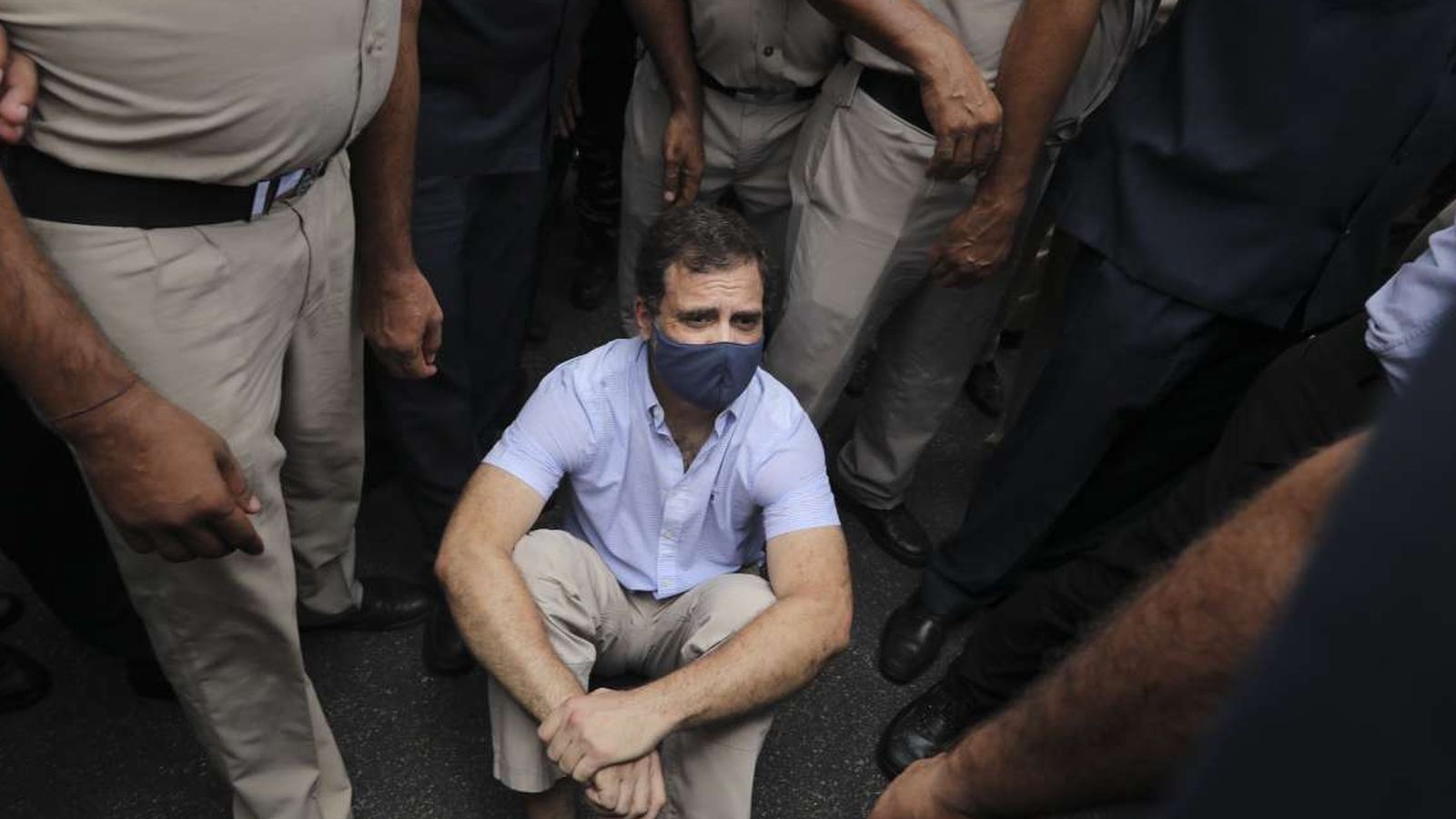
As the protest continued into the evening, Delhi Police began dispersing the crowd. Footage captured Gandhi sitting on the road, surrounded by police, before being forcibly removed and taken to Chhatrasal Stadium. Priyanka Gandhi Vadra was transported to Mandir Marg Police station, where she was later visited by Sonia Gandhi. Both leaders were released by 9 pm, though the underlying political impasse remains unresolved.
The Broader Political Stakes
The crisis stems from widespread allegations of paper leaks in the NEET examinations, which have devastated the morale of students across India. While the government maintains it is investigating the leaks and taking swift action against those responsible, the opposition has framed the administration’s response as a systemic failure to protect the interests of the youth. The Parliament has faced early adjournments for two consecutive days, with the Congress alleging that their attempts to raise the issue have been systematically stifled.
The protest also highlighted divisions within the opposition. While leaders from the Samajwadi Party and NCP (Sharadchandra Pawar) joined the protest, the Aam Aadmi Party (AAP) expressed skepticism, suggesting the Congress’s involvement was a strategic distraction from the CJP-led agitation. As the government calls for constructive cooperation, the student community continues to demand concrete reforms, signaling that the pressure on the Ministry of Education is unlikely to subside immediately.