


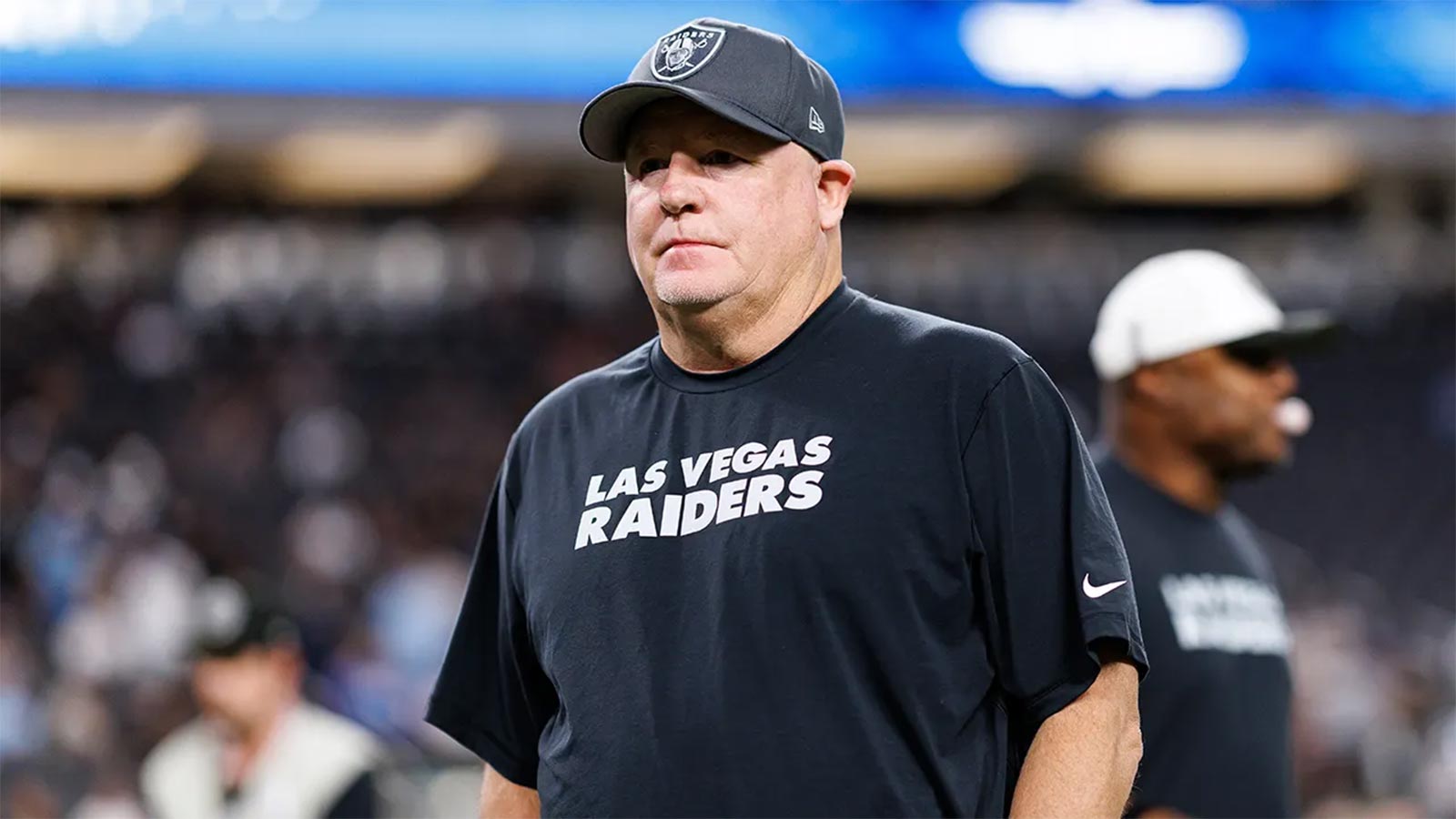
Raiders Dismiss Chip Kelly Amid Offensive Struggles
On a cold November night in Las Vegas, the news broke: Chip Kelly, the highest-paid offensive coordinator in the NFL, was fired by the Raiders after just 11 games. The announcement came mere hours after the team suffered its fifth consecutive defeat—a 24-10 loss to the Cleveland Browns—cementing a 2-9 record and guaranteeing a fourth straight losing season.
Head coach Pete Carroll addressed the media with a tone that blended disappointment and finality. “I spoke with Chip Kelly earlier this evening and informed him of his release as offensive coordinator of the Raiders,” Carroll stated. “I would like to thank Chip for his service and wish him all the best in the future.” The brevity of the statement matched the short-lived tenure Kelly had with the team—an offseason hire, he was brought in with hopes of revitalizing a stagnant offense. Instead, the Raiders found themselves ranked near the bottom of the league in nearly every offensive metric.
High Expectations, Low Returns: What Went Wrong?
Kelly’s arrival was met with fanfare. His reputation for creative play calling at the collegiate level and his lucrative contract set high expectations. But by Week 2, cracks had started to show. Following a loss to the Los Angeles Chargers, Carroll was publicly critical of Kelly’s decisions. “We protected OK, and we didn’t get the ball thrown underneath. That’s what I wish we would have done,” Carroll said, hinting at a philosophical divide. “I wish we would not have taken those shots. They looked like we had to score quick or something. I don’t feel like that when we play is the way that we should ever play.”
The numbers tell a grim story. Through 11 games, the Raiders ranked 30th in total offense, averaging just 269 yards per game. Scoring was even more anemic: 31st in the NFL at 15.5 points per game. The nadir came in Kelly’s final game, where quarterback Geno Smith was sacked ten times for a net loss of 77 yards. The team averaged a paltry 3.6 yards per play—a stat that speaks volumes about both the protection schemes and the play calling.
Personnel Problems and Scheme Issues
The Raiders’ offensive line was a known vulnerability heading into the season. When starting left tackle Kolton Miller went down with a high ankle sprain in Week 4, his replacement, Stone Forsythe, struggled mightily. According to Next Gen Stats, Forsythe was left to fend for himself on 78.6 percent of snaps, with little help schemed in by Kelly. The lack of robust protection—often a pitfall for coordinators transitioning from college to the NFL—left Smith under constant pressure and the offense in disarray.
The run game fared no better. Top draft pick Ashton Jeanty was expected to be a centerpiece, but Kelly’s scheme failed to find creative ways to get the ball in his hands. Execution errors abounded, with players appearing uncertain about their assignments—a sign of deeper issues in preparation and coaching.
A Fractured Partnership and Public Criticism
As losses piled up, Carroll’s public frustration grew. This wasn’t the first time he’d parted ways with a coordinator mid-season; earlier in November, special teams coordinator Tom McMahon was also dismissed. But the scrutiny on Kelly was sharper, and the criticisms more pointed. The marriage between Carroll and Kelly, once seen as a bold experiment, quickly soured. NFL senior writer Ted Nguyen summed it up: “It’s unfair to pin all of the offensive issues on Kelly, but his scheme was poorly constructed, and the team didn’t look prepared week in and week out.”
For the Raiders, the firing marks another chapter in a long history of offensive instability. Since 2002, the franchise has endured 18 losing seasons, with coordinator turnover becoming a familiar refrain. For Kelly, the future is uncertain. Despite his pedigree and the substantial investment made by the team, the NFL proved to be an unforgiving arena—where reputation and salary mean little when wins don’t follow.
Looking Ahead: What’s Next for the Raiders and Chip Kelly?
The immediate question for the Raiders is who will take over the offensive reins. With the season already lost and the team searching for answers, attention shifts to the offseason and the possibility of a broader rebuild. For Kelly, this abrupt end is a stark reminder of the volatility of NFL coaching careers. Whether he returns to the college ranks or seeks another shot in the pros, his brief tenure in Las Vegas will be remembered as a cautionary tale of high expectations, unmet promises, and the relentless pressure of professional football.
The Raiders’ decision to part ways with Chip Kelly reflects a broader struggle within the organization—one where talent and resources have not translated into success. While Kelly’s schemes were flawed and the personnel issues glaring, the rapid unraveling of this partnership underscores the challenges NFL teams face when trying to reinvent themselves. Ultimately, the move signals both a reckoning for the Raiders’ leadership and a reminder that, in football, results are the only true currency.