


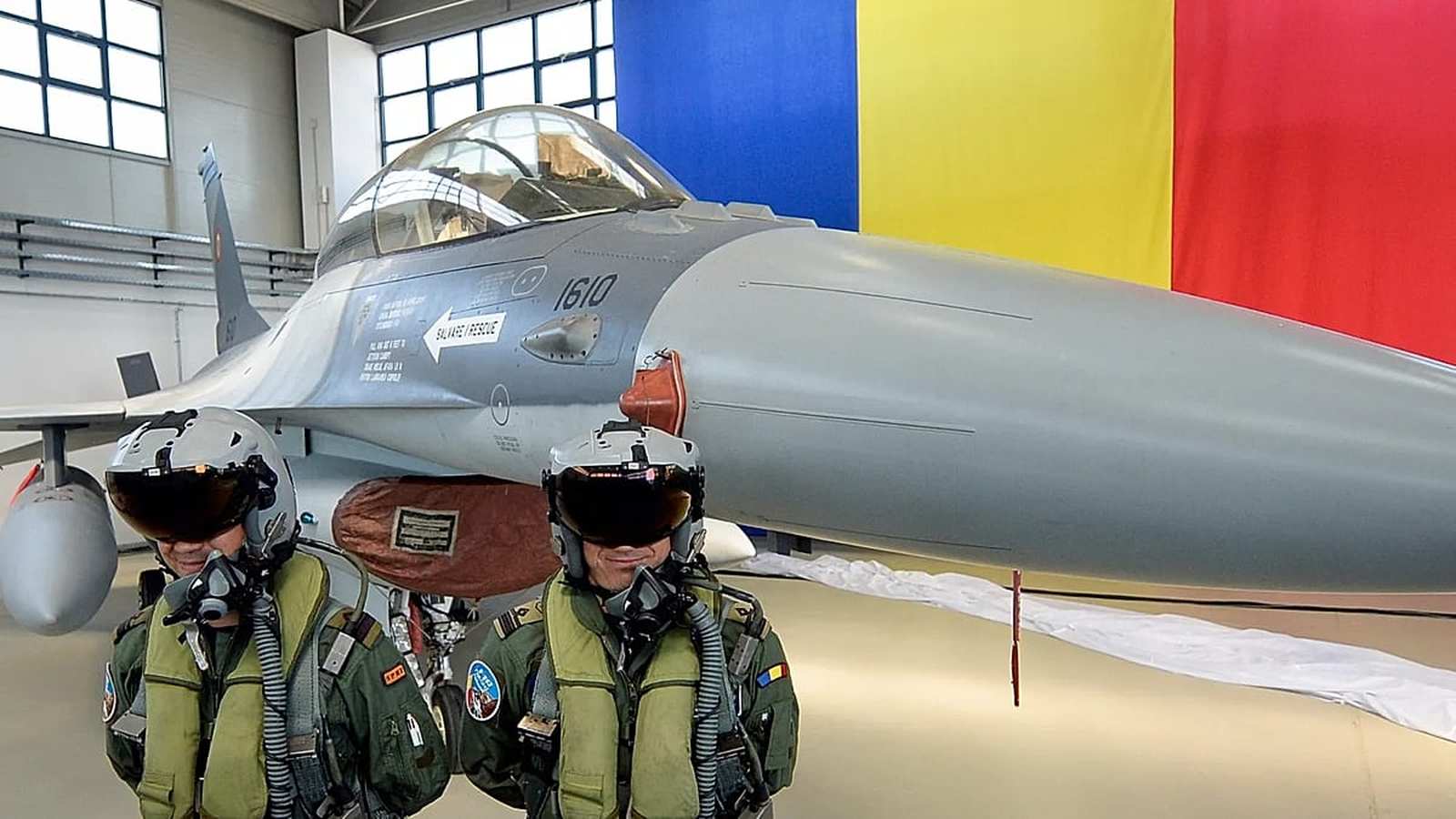
Historic Interception Over Romanian Territory
For the first time since the onset of the full-scale war in Ukraine in 2022, a Romanian F-16 fighter jet has successfully intercepted and shot down an unidentified drone within Romanian airspace. The incident, which occurred on Friday, July 24, 2026, signals a hardening of posture by the NATO member state following dozens of previous unauthorized incursions.
According to the Romanian Ministry of Defence, radar systems first detected the aerial target at approximately 9:39 a.m. local time, roughly 20 kilometers east of the Black Sea port of Sulina. The drone, which authorities suspect to be a Shahed-type loitering munition commonly deployed by Russian forces, was tracked continuously as it moved westward toward the cities of Brăila, Fetești, and Buzău.
At 11:02 a.m., a Romanian F-16 assigned to the 86th Air Base engaged the target with an air-to-air missile. The drone was destroyed over an uninhabited area near the village of Padina in Buzău county. President Nicușor Dan confirmed the operation, noting that because the target was positioned over unpopulated terrain, the pilot was able to engage without risking civilian life or infrastructure.
NATO Response and Regional Security
The interception involved coordinated efforts between multiple NATO assets. Prior to the F-16 engagement, Italian Air Force Eurofighter Typhoons operating under the NATO Air Policing mission from Mihail Kogălniceanu air base were scrambled to monitor the drone’s trajectory. The deployment of both Romanian and Italian assets underscores the alliance’s heightened vigilance regarding the security of its eastern flank.
While the origin of the drone remains under formal investigation, interim Defence Minister Radu Miruță stated that the vehicle appeared to be a standard drone used by Russian forces in their operations against Ukraine. General Gheorghita Vlad, the Chief of Staff of the Romanian Army, corroborated these visual assessments, noting that while it is too early to draw definitive conclusions, the profile matches that of Iranian-designed Shahed drones.
Escalation Concerns and Investment Needs
The downing of the drone follows a series of troubling incidents in the region. Since 2022, Romania has reported at least 15 airspace breaches this year alone. In May, a separate incident saw a drone crash into an apartment building in the border town of Galati, causing injuries and prompting renewed calls from NATO for Moscow to cease what the alliance has characterized as “reckless behavior.”
Minister Miruță emphasized that this latest incident serves as a catalyst for deeper investment in Romania’s national air defense. “This underscores the need for continued investment in counter-drone capabilities and the modernization of our armed forces,” Miruță told Euronews Romania. The incident also follows a milestone in May 2026, when the Romanian Air Force’s “Carpathian Vipers” detachment successfully downed a drone while deployed in Estonia as part of an enhanced NATO air policing mission.
As the investigation continues, recovery teams are working to retrieve the remains of the drone and the missiles used in the engagement to confirm the device’s technical specifications and origin. The incident adds to the growing pressure on trade and energy routes in the Black Sea, which have seen increased Russian activity ahead of the harvest season.