


A Shift in Officiating Standards
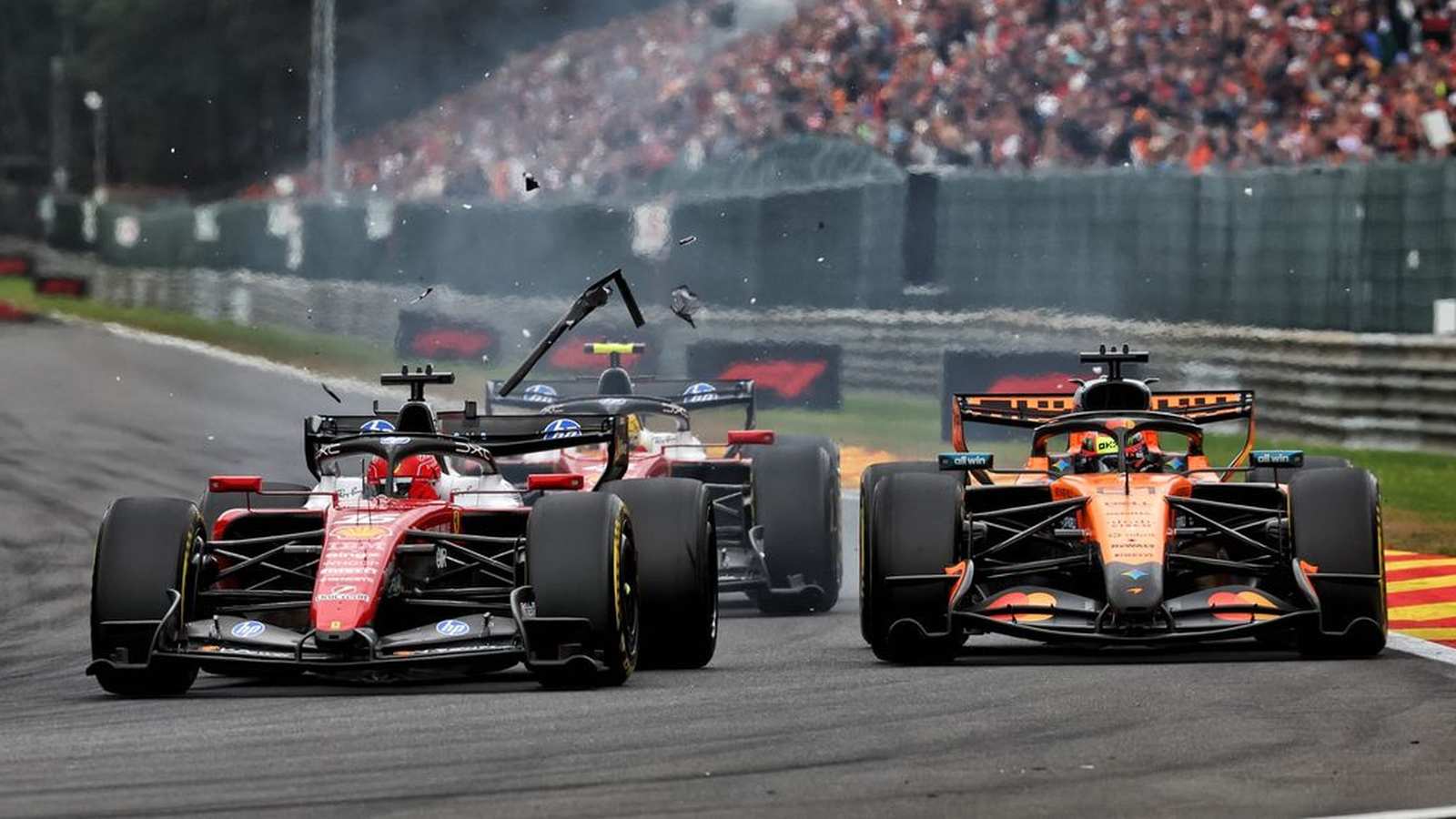
During a pivotal meeting between Formula 1 drivers and FIA stewards at the Hungarian Grand Prix, officials acknowledged that they erred in their initial assessment of the collision between Ferrari’s Charles Leclerc and McLaren’s Oscar Piastri at the Belgian Grand Prix. The incident, which occurred at the Les Combes chicane during the eighth lap at Spa-Francorchamps, was originally ruled a ‘racing incident’ with no further action taken.
However, after reviewing the maneuver—in which Leclerc squeezed Piastri towards the edge of the track, resulting in contact and floor damage to the McLaren—stewards confirmed that, in retrospect, the action warranted a penalty. This admission comes as part of the FIA’s ongoing effort to improve consistency in race officiating and clarify defensive driving guidelines for the remainder of the season.
Driver Feedback and Precedent
The meeting served as an essential forum for drivers to voice concerns regarding the precedent set by the original ruling. Piastri, who suffered a performance deficit of roughly two to three tenths per lap following the damage, argued that the lack of intervention created an incentive for drivers to leave the “absolute bare minimum space,” increasing the danger of high-speed contact in braking zones.
Charles Leclerc, attending the meeting, conceded that his defensive move was “a bit too sketchy” and “over the limit.” His admission aligns with the emerging consensus among stewards, who indicated that similar maneuvers in future races will likely result in a five-second time penalty. By acknowledging the mistake, the FIA aims to recalibrate the sport’s expectations for wheel-to-wheel combat, ensuring that defensive lines do not compromise the safety or integrity of racing.
Broader Regulatory Adjustments
Beyond the specific Leclerc-Piastri clash, the Hungary discussions touched upon broader regulatory adjustments for the 2027 season, with some measures slated for immediate implementation. Notably, stewards have agreed to exercise greater leniency regarding incidents occurring during safety car restarts. Drivers have long contended that unpredictable tyre pressures and complex energy deployment patterns make racing restarts uniquely difficult to judge, a point the FIA has now formally integrated into its officiating approach.
Despite the importance of these deliberations, the session was not attended by all drivers. Lewis Hamilton, Fernando Alonso, Lance Stroll, Sergio Perez, and Valtteri Bottas were absent. Hamilton’s absence was particularly notable given his own controversial penalty for a first-lap clash with George Russell at Spa, a decision that has drawn criticism from both drivers involved. While it remains unclear if these absences were due to specific scheduling conflicts or strategic choices, the consensus reached among those present suggests a significant shift in how the FIA will approach aggressive defensive maneuvers moving forward.