


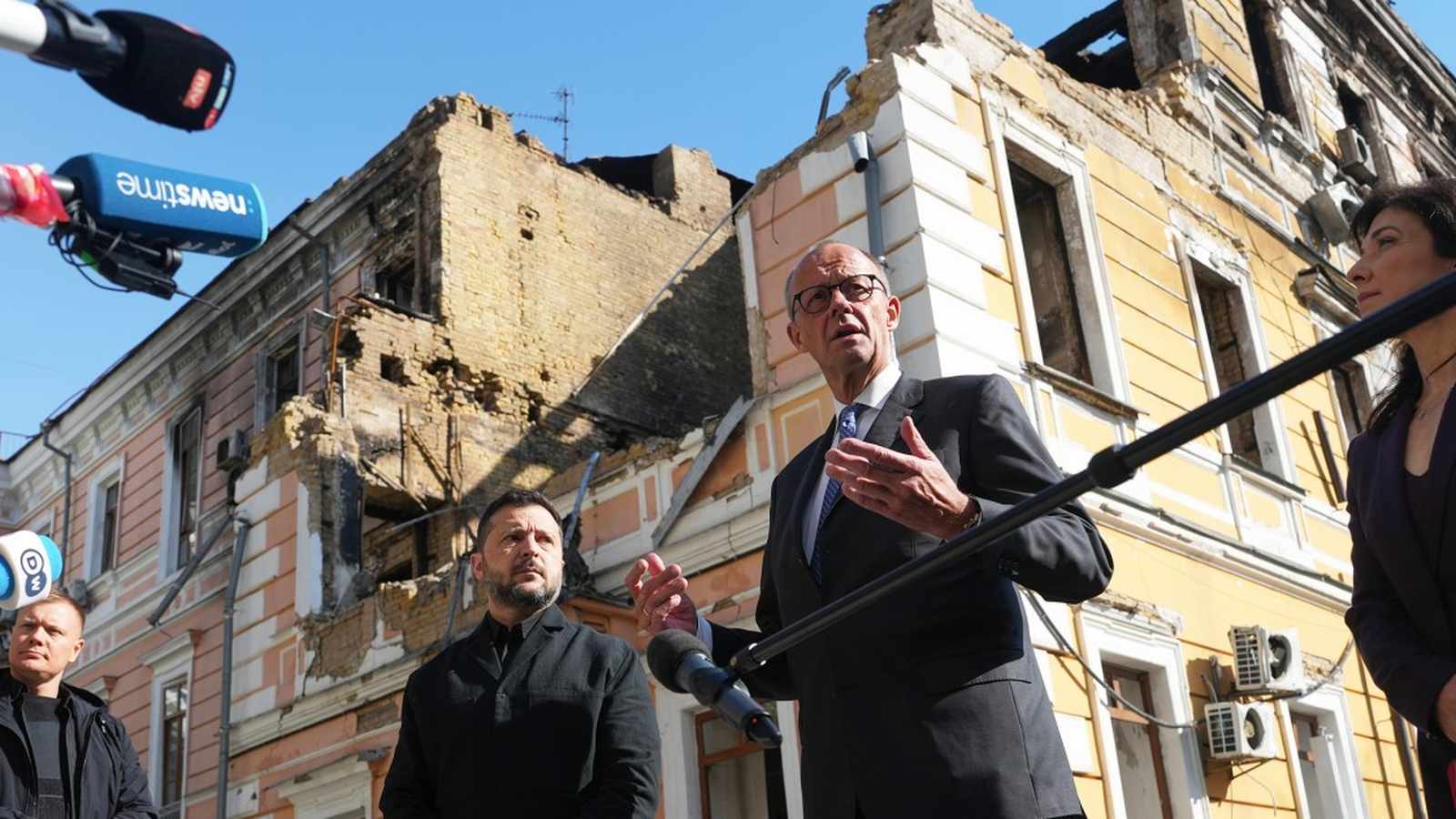
A Grim Welcome for the German Delegation
As German Chancellor Friedrich Merz’s train pulled into Kyiv on Sunday, the delegation was immediately met with air raid sirens and the explosive sounds of Russian strikes on the Ukrainian capital, according to NBC News. Unlike previous visits by international leaders of his stature, during which the Kremlin typically paused or scaled back attacks on the city, the current visit unfolded amid persistent wartime explosions.
The ongoing bombardment marks what officials describe as a significant new level of escalation by Moscow. The following Monday, Germany’s foreign intelligence chief warned that the country faces a growing risk of becoming embroiled in a direct violent conflict with Russia as Moscow intensifies its broader shadow war against European democracies.
Tactical Shifts and Daylight Bombardment
Over recent weeks, Russia has ramped up around-the-clock strikes on Kyiv, severely disrupting daily life, forcing millions into shelters, and paralyzing transport networks. In a notable tactical shift over a four-day period, Russian forces targeted several of Kyiv’s key bridges, with some strikes occurring in broad daylight amid active traffic.
These daytime bridge attacks aim to disrupt movement across the Dnipro River and further disable transit within Ukraine’s largest city. During the visit, an air raid alert forced Ukrainian President Volodymyr Zelenskyy to rush Chancellor Merz away from the National Academy of Sciences after a drone strike hit the national landmark, creating a dangerous situation as people scrambled to escape thick smoke and flames.
Official Justifications and Retaliatory Claims
The Russian Defense Ministry stated that it has been launching massive strikes against Kyiv in response to Ukrainian operations targeting Russian oil refineries. The Ukrainian Defense Ministry reported disabling more than half of Russia’s refining capacity through a series of strikes since the summer, triggering a fuel crisis.
Regarding the infrastructure attacks, the Russian Defense Ministry maintained that specific bridges were targeted because they facilitate the movement of troops and military cargo. Meanwhile, the Russian Foreign Ministry issued a warning urging foreign diplomats and nationals to evacuate Kyiv ahead of continued large-scale retaliatory strikes.
European Solidarity Amid Evacuation Warnings
Despite Moscow’s warnings and a similar evacuation threat issued earlier in May, European diplomats and allies have rejected calls to abandon the Ukrainian capital. European Union Ambassador Katarina Mathernova posted on X, stating that while Russia’s message demands diplomats leave or risk their lives, the collective European response is to stay.
During his meetings, Chancellor Merz reaffirmed Germany’s long-standing support for Ukraine, announcing an additional $1.1 billion in military aid. Merz emphasized that Germany would not be intimidated into abandoning Ukraine, framing the commitment as a vital matter of European security amid escalating hybrid warfare.