


Senate Reconvenes for Pivotal Fourth Vote as Shutdown Drags On
Friday afternoon in Washington finds the U.S. Senate once again at the heart of a stalemate gripping the federal government. Now on the third day of a partial government shutdown, senators are preparing for a fourth vote on dueling funding bills—a moment that could determine whether the impasse continues into next week, with real consequences for millions.
At the center of this political deadlock are two competing measures: one, a House-passed Republican resolution to extend government funding for seven weeks; the other, a Democratic bill that would do the same but also make permanent the Affordable Care Act’s expiring tax credits. Both have already failed multiple times to secure the 60 votes needed to advance. This afternoon’s vote, the fourth in as many days, is being watched closely—not only by lawmakers, but also by federal workers and ordinary Americans caught in the crossfire.
Federal Workers and Programs Face Mounting Pressure
As the shutdown stretches on, the effects are rippling outward. With over 2,000 employees at the Bureau of Labor Statistics furloughed, the monthly jobs report—a critical window into the health of the U.S. economy—will not be released. This blackout comes at a precarious moment, heightening anxieties among economists and investors.
Meanwhile, the Trump administration is moving aggressively to freeze funding for infrastructure projects in Democratic-led cities such as Chicago and New York. $2.1 billion earmarked for Chicago’s Red Line Extension and modernization initiatives has been put on hold, with the Office of Management and Budget citing concerns over “race-based contracting.” In Portland, federal aid is under review, with the administration citing “left-wing anarchy.” The president has also reversed earlier announced counterterrorism funding cuts for New York following outcry from local officials.
At the White House, Press Secretary Karoline Leavitt told reporters, “We are $37 trillion in debt, and the federal government is currently shut down. There is no more money coming into the coffers.” She placed responsibility for looming layoffs squarely on Democrats, framing the administration’s actions as “tough decisions” forced by the opposition. “Nobody wants to do that, but sometimes in government you have to make tough decisions,” Leavitt said.
Partisan Rhetoric Intensifies as Negotiations Stall
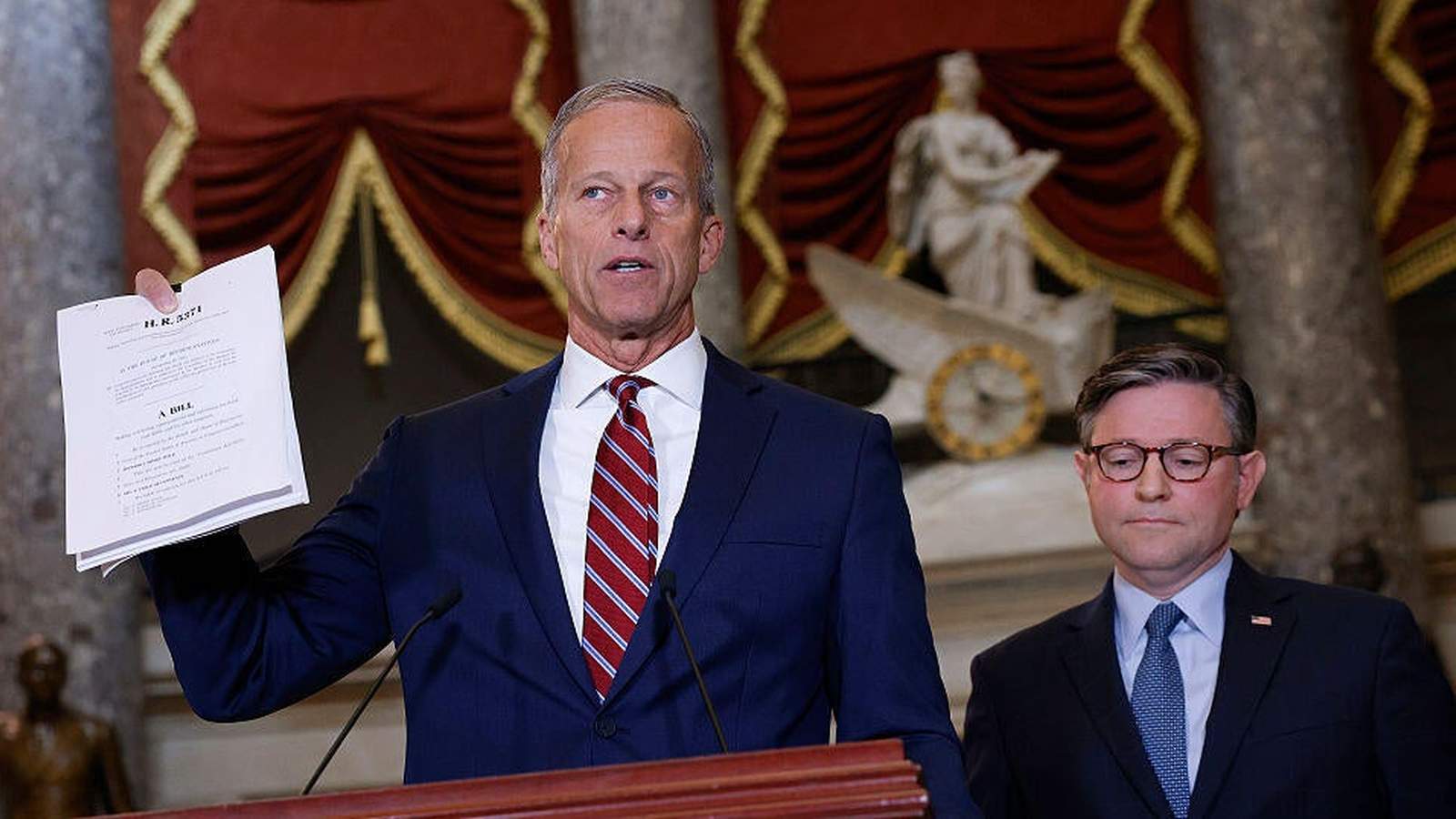
The shutdown is not just a bureaucratic crisis—it’s a crucible for partisan rhetoric and political brinkmanship. House Speaker Mike Johnson, flanked by Senate Majority Leader John Thune, insisted that Republicans have “done our job,” passing a “clean, simple resolution” to keep the government open. He accused Democrats of “making a political play” by tying health care debates to funding negotiations.
Johnson, in a press conference, acknowledged that President Trump is “trolling the Democrats,” using memes and social media to highlight what he calls “the absurdity of the Democrats’ position.” But he was quick to add, “The effects are very serious on real people, real Americans. We support federal employees who do a great job in all these different areas.”
Senator Jeanne Shaheen (D-NH), speaking on CNN, called for leadership on both sides: “I think the good news is that people are still talking. I think the bad news is that we’re not seeing the leadership on both sides really willing to sit down and negotiate.” Shaheen, who has opposed advancing the House-passed bill, stressed the urgency of extending Obamacare subsidies, noting that insurance companies are already setting rates for the coming year.
Republican senators, meanwhile, are hopeful that the mounting pressure from the shutdown and threats of layoffs will peel off enough Democratic votes for the House-passed resolution to move forward. The last two votes saw three Democrats break ranks: Catherine Cortez Masto of Nevada, John Fetterman of Pennsylvania, and Angus King of Maine (an independent who caucuses with Democrats). Still, the bill needs eight Democratic defections to reach the required threshold.
Obamacare Subsidies at the Heart of the Dispute
At the core of the shutdown fight is a surprisingly popular issue: extending enhanced tax credits for Affordable Care Act plans. According to a new poll from KFF, 78% of Americans—including majorities of Republicans and independents—believe Congress should renew the credits. More than 22 million people benefit from these subsidies, which are set to expire at the end of the year. Without action, average out-of-pocket premium payments could nearly double, and millions risk losing coverage.
Yet, despite broad public support, most Americans remain unaware of the issue’s immediacy. The KFF poll found that six in ten have heard little or nothing about the expiring credits—a gap that underscores the challenge of mobilizing public opinion in a crisis defined by procedural votes and opaque negotiations.
Senate Leaders Signal Next Steps as Weekend Approaches
Senate Majority Leader John Thune was blunt: if Friday’s votes fail, “We’ll come back. We’ll vote again on Monday.” That means, for federal workers and the millions affected by the shutdown, the weekend will bring no reprieve. Both sides are digging in, with Republicans refusing to negotiate health care while the government is shuttered, and Democrats insisting the subsidies be addressed now.
Outside the Capitol, frustration is mounting. Young Trump voters, who helped propel the president to victory last year, are now expressing disillusionment over the administration’s handling of immigration and the economy. Focus groups observed by NBC News reveal a sense of betrayal among some who backed Trump, worried that the shutdown is harming “real Americans” while partisan games continue.
In the broader landscape, pressure is also mounting over foreign policy. President Trump issued an ultimatum to Hamas, giving the group until Sunday evening to accept a ceasefire proposal in Gaza. The president’s rhetoric—warning that “all hell will break out” if the deal is not accepted—adds another layer of tension to an already fraught political moment.
What Comes Next?
As senators prepare to cast their votes, the stakes are unmistakably high. The choices made in the coming hours could shape the trajectory of the shutdown, with ripple effects for public services, federal employees, and the nation’s economic outlook. For now, bipartisan talks continue behind closed doors, but the path to a resolution remains uncertain.
In the words of Senator Shaheen, “It takes people on both sides of the aisle.” The coming days will reveal whether compromise is possible—or whether the shutdown becomes a prolonged test of political will.
Assessment: The ongoing Senate deadlock highlights how policy disputes—especially over health care—can become catalysts for wider partisan gridlock, directly impacting millions of Americans. While the rhetoric has grown sharper, and both sides blame each other, it’s clear that real leadership and a willingness to negotiate are the only paths out of this impasse. Until then, the shutdown remains a stark reminder that political decisions have tangible, human costs.