


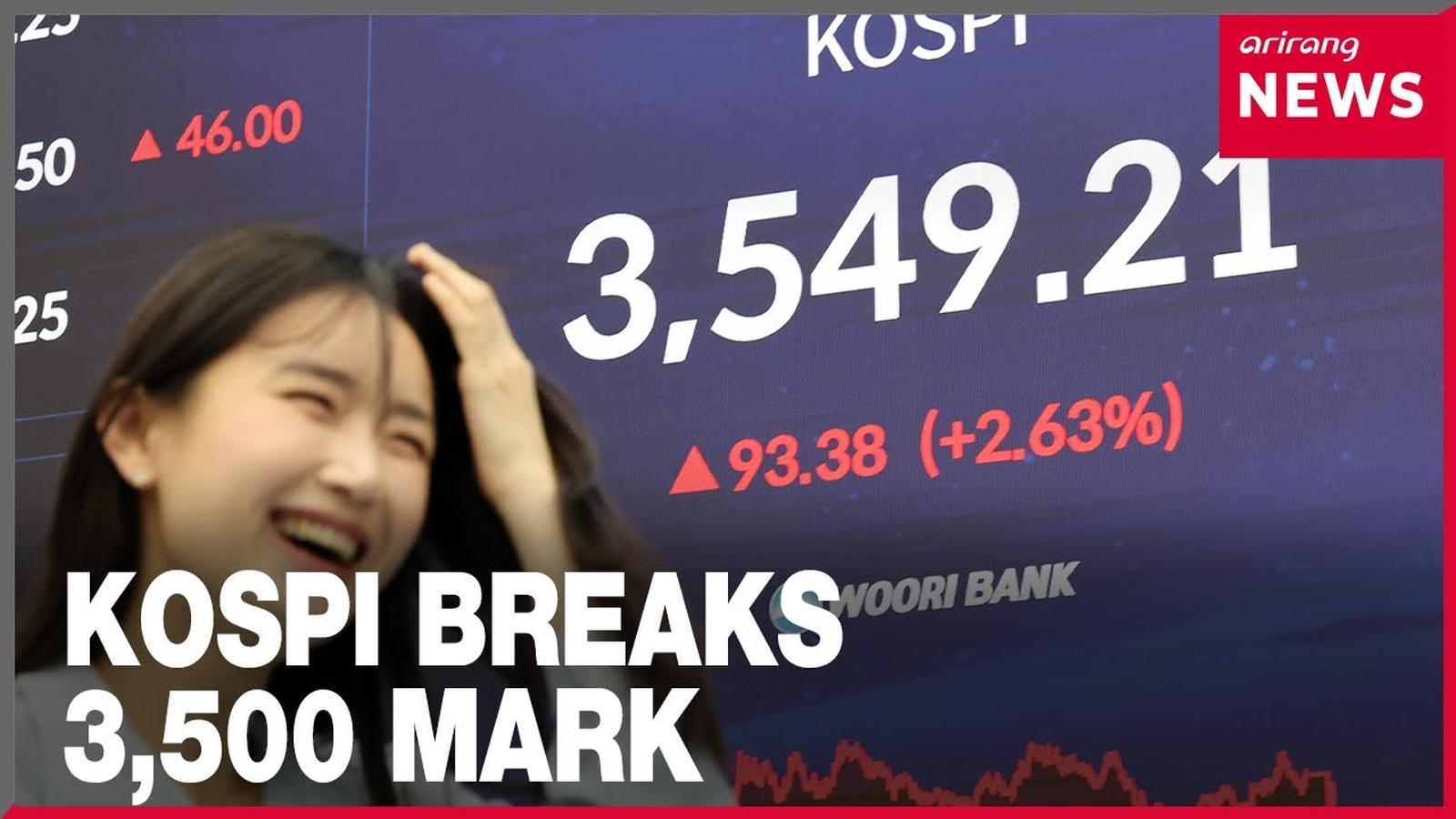
South Korea’s benchmark Kospi index staged an unprecedented turnaround on Friday, July 31, 2026, soaring 17.9% to close at 6,695.45. The historic rally represents the largest single-day percentage gain in the index’s history, completely reversing a brutal three-day sell-off that had wiped out more than 17% of its value earlier in the week.
According to reports from the Associated Press, the massive rebound was catalyzed by a dramatic recovery on Wall Street, which was ignited by Microsoft’s stronger-than-expected quarterly earnings report on Thursday. Microsoft’s shares surged 15.5%—marking its best trading day in nearly 18 years—reassuring global investors that heavy corporate spending on artificial intelligence (AI) infrastructure is successfully translating into concrete corporate profits. This positive signal prompted traders to flood back into tech stocks, reversing days of panic over a potential AI valuation bubble and intensifying competition from Chinese rivals.
Record-Breaking Surge for Semiconductor Giants
The rally was heavily concentrated in South Korea’s vital semiconductor sector. Shares of technology giant Samsung Electronics skyrocketed by 28%, while memory chipmaker SK Hynix soared by 30%. The sheer scale of the buying pressure broke the Kospi’s previous single-day growth record of nearly 12%, which was set in October 2008 during the depths of the global financial crisis.
Market analysts noted that the scale of the rebound reflects how quickly sentiment can shift in the current high-stakes technology cycle. “The market went from throwing AI stocks overboard to fighting for the remaining seats before most traders had finished writing the obituary,” said Stephen Innes of SPI Asset Management. However, despite the historic single-day jump, the Kospi remains well below its June peak of over 9,000 points, highlighting the high volatility that has characterized the market throughout 2026.
Regional Market Reactions and Economic Divergences
The bullish sentiment quickly spread across other major Asian markets. In Tokyo, the Nikkei 225 index climbed 4% to close at 64,362.02. SoftBank Group, a prominent multinational investment firm and major investor in OpenAI, jumped 14.2%, while semiconductor equipment manufacturer Tokyo Electron rose 6.3%. In Taiwan, the Taiex index surged 8%, bolstered by a maximum 10% daily limit jump for Taiwan Semiconductor Manufacturing Co. (TSMC).
In contrast, Chinese markets showed a more subdued performance. Hong Kong’s Hang Seng index slipped 0.3% to 25,797.28, while the Shanghai Composite index managed a modest 0.9% gain to 3,837.36. The muted reaction followed official survey data showing that China’s manufacturing activity contracted in July for the first time in five months. The Chinese economy grew at an annual pace of 4.3% in the April-June quarter—its slowest rate in over three years—dampened by weak domestic demand and recent disruptive typhoons. A high-level meeting of China’s Politburo on Thursday yielded no major policy adjustments, leaving investors without immediate catalysts for growth.
Suspected Currency Interventions and Central Bank Policies
Beyond equity markets, significant volatility shook currency and commodity trading. Regulators in Japan and the United States were suspected of conducting a coordinated intervention in foreign exchange markets after the U.S. dollar traded above 160 yen, hovering near 40-year highs. Japan’s Nikkei financial newspaper reported that the Federal Reserve Bank of New York conducted a “rate check,” asking commercial banks for active exchange-rate quotes—a classic precursor to direct market intervention.
While official spokespersons from both the U.S. and Japan declined to comment, the dollar fell sharply overnight before clawing back 0.6% to trade at 160.53 yen on Friday. The market movements coincided with the Bank of Japan’s decision on Friday to keep its benchmark interest rates unchanged. This decision came shortly after the U.S. Federal Reserve also chose to hold its rates steady, maintaining a wide interest rate differential that continues to exert downward pressure on the Japanese currency.
Meanwhile, international oil markets experienced a slight easing of supply pressures. Brent crude dropped 2.2% to $85.00 per barrel, down from highs near $72 before geopolitical conflicts began in late February. Commodity analysts from ING indicated that ship-tracking data showed a minor increase in tanker crossings through the Strait of Hormuz, offering a temporary reprieve to energy markets despite ongoing regional tensions.