


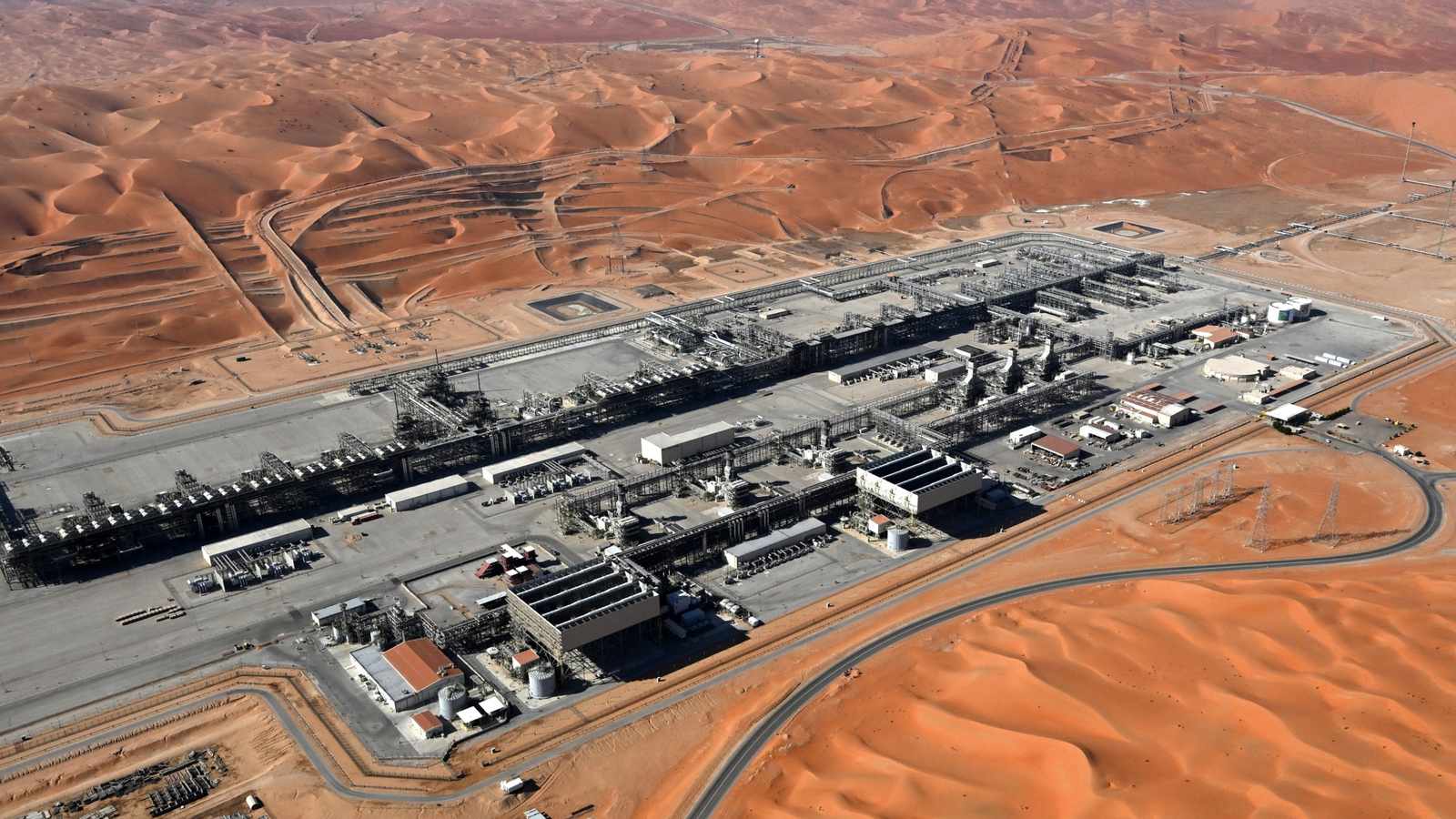
Yemen’s Iran-backed Houthi movement launched coordinated missile and drone strikes before dawn on Saturday against Saudi Aramco’s refinery in Jizan and the crude export terminal at Yanbu, escalating tensions across Middle Eastern energy corridors. The strike on Jizan ignited major fires in the industrial complex, confirmed by NASA’s FIRMS satellite detection system at 01:17 UTC, while air defense systems in Yanbu, operated by Greek military personnel, successfully intercepted two incoming ballistic missiles. The attacks immediately reverberated through global energy markets, sending Brent crude trading above $100 per barrel once again.
Houthi military spokesman Brigadier General Yahya Saree formally announced the double operation, stating that the group targeted ‘sensitive Aramco-affiliated facilities’ in both Jizan and Yanbu with ballistic missiles, cruise missiles, and drones. Regional media reported at least five massive explosions near Jizan, forcing commercial flights to divert or enter holding patterns. Emergency warnings issued by Saudi Civil Defense urged residents in both coastal cities to seek shelter before authorities lifted restrictions in Yanbu following the successful missile interceptions. Neither Saudi Aramco nor Saudi government officials immediately issued a detailed public damage assessment, though Asian crude traders reported preliminary indications of facility damage at Jizan.
The Yanbu Export Dilemma and Architectural Vulnerability
While the 400,000-barrel-per-day Jizan refinery represents substantial downstream oil processing infrastructure, market analysts emphasize that the strategic focus of the attack lies further north at Yanbu. Following Iran’s effective blockade of the Strait of Hormuz earlier in 2026, Saudi Arabia expanded its 1,201-kilometer (746-mile) East-West Pipeline, known as the Petroline. By converting parallel natural gas liquids pipelines to crude transportation, Aramco pushed pipeline throughput to an unprecedented 7 million barrels per day in March, directing vast volumes of Abqaiq crude away from the Persian Gulf toward the Red Sea.
Kpler shipping data reported by AFP showed that Yanbu accounted for approximately 92% of Saudi Arabia’s total seaborne crude exports in June 2026, with ship loadings reaching 4.7 million barrels per day in mid-July. However, this strategic bypass created a critical structural vulnerability. Every barrel loaded onto tankers at Yanbu’s terminals must transit south through the 29-kilometer (18-mile) wide Bab al-Mandeb strait to reach Asian or European markets. On July 20, the Houthis declared a full naval blockade zone covering the strait. By forcing exports through the Red Sea, Saudi Arabia shifted its trade route from an Iran-controlled maritime bottleneck to a Houthi-controlled chokepoint.
Five Days of Rapid Military Escalation
Saturday’s strikes represent the culmination of an escalating cycle that unfolded throughout the preceding week. On July 20, the Houthi leadership formally declared an embargo on Saudi ports and warned that ships servicing Kingdom terminals would be targeted. On July 22 and 23, Houthi anti-ship missiles struck the Saudi-flagged oil tankers Encelia and Layla in the Red Sea, triggering an immediate market reaction that drove Brent crude past $100 per barrel.
In response, US President Donald Trump announced on Truth Social on July 23 that Washington would hold Tehran directly responsible for Houthi naval strikes, threatening major military countermeasures and proposing to fund maritime damage claims using frozen Iranian assets. Iranian Foreign Minister Abbas Araghchi condemned the US statement as an dangerous escalation. By July 24, the Saudi-led military coalition conducted airstrikes against Houthi installations in Hodeidah and Kamaran Island, which the Houthis vowed to answer with direct retaliatory operations against Kingdom infrastructure.
Energy Market Shock and Broader Supply Risks
The simultaneous targeting of Saudi Arabia’s Red Sea energy nodes has compounded systemic anxiety across global supply chains. Beyond the Middle East, global supply buffer capacity has been further constrained by the Caspian Pipeline Consortium’s suspension of crude loadings near Novorossiysk, Russia, following Ukrainian drone strikes on maritime tankers. UBS strategists highlighted that benchmark crude has surged nearly $28 per barrel over three weeks due to multi-theater supply disruptions.
With US national retail gasoline prices already averaging $4.09 per gallon prior to Saturday’s strikes, energy economists warn that prolonged impairment at Yanbu or Jizan could push Brent toward $120 per barrel. As US Central Command maintains campaign airstrikes against Iranian infrastructure and regional ceasefire negotiations remain stalled, energy markets face an unprecedented scenario where the world’s largest oil exporter is constrained across both of its primary sea lanes.