


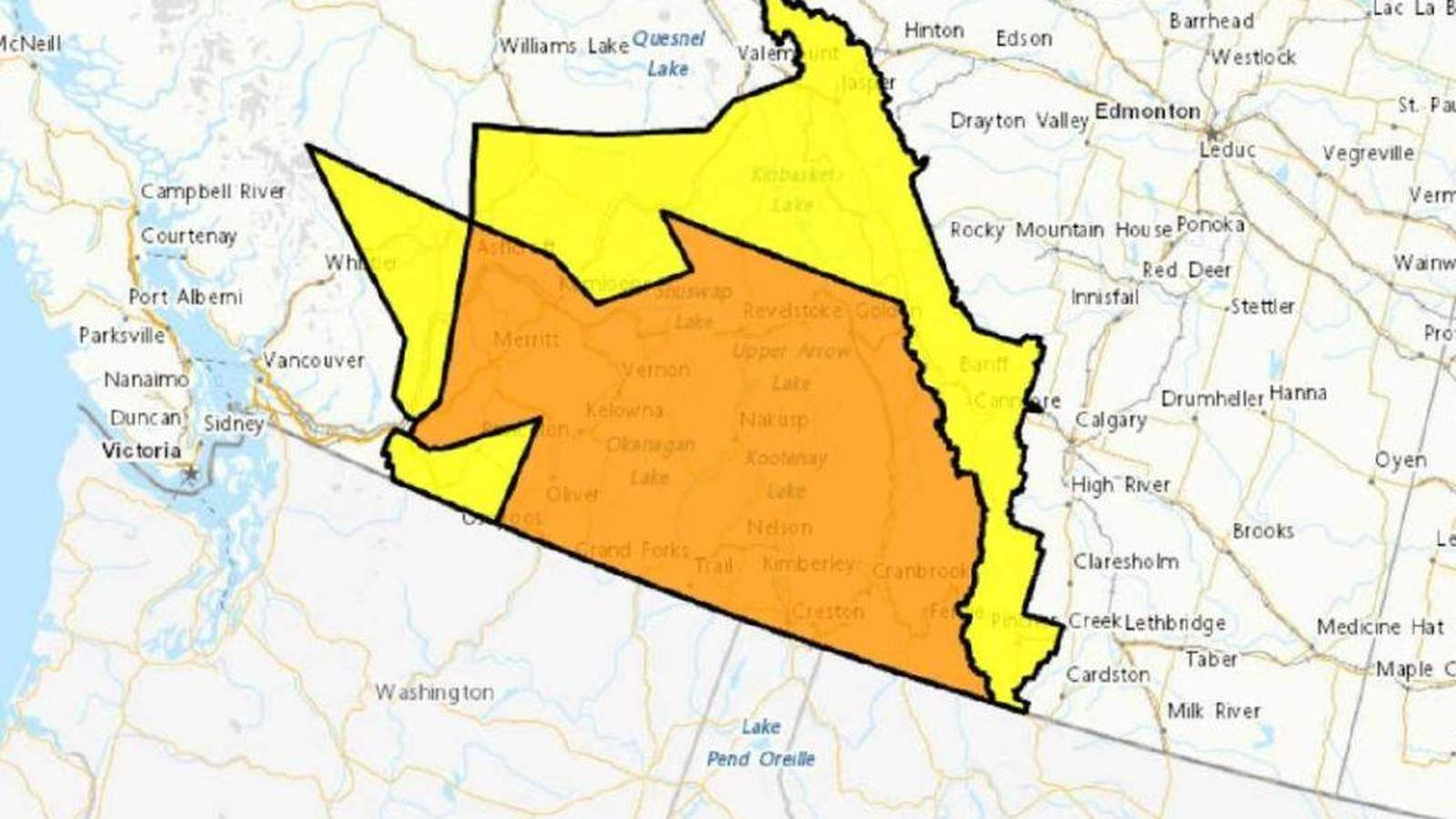
An orange air quality warning has been issued for a significant portion of southeastern British Columbia due to heavy wildfire smoke, Environment Canada confirmed on August 9, 2026. The meteorology and climate agency stated that poor air quality conditions are expected to persist throughout the region, prompting local authorities to issue immediate health advisories and urge residents to implement protective measures.
Geographical Scope of the Smoke Corridor
The geographic reach of the orange air quality alert is extensive, stretching from the communities of Ashcroft and Merritt in the west to Fernie and the British Columbia-Alberta border in the east. This vast corridor encompasses dozens of municipalities, rural districts, and indigenous communities that are currently experiencing varying densities of wildfire smoke. In addition to the primary orange warning in British Columbia, Environment Canada has also issued a yellow air quality alert extending eastward into neighboring Alberta, indicating that the atmospheric impact of the wildfires is crossing provincial boundaries.
Health Risks and Vulnerable Populations
Public health officials have emphasized that exposure to elevated levels of wildfire smoke, which contains fine particulate matter (PM2.5), poses a direct risk to human health regardless of age or physical condition. However, certain demographic groups are facing significantly heightened risks. These vulnerable populations include individuals with pre-existing respiratory or cardiovascular conditions (such as asthma, COPD, or heart disease), pregnant women, infants, young children, seniors aged 65 and older, and individuals managing chronic illnesses.
Environment Canada strongly advises residents in the affected zones to limit strenuous outdoor activities and seek indoor environments with filtered, clean air. Health authorities have detailed the spectrum of symptoms that residents might experience. Mild symptoms, which are common and typically subside once the air clears, include eye, nose, and throat irritation, headaches, a runny nose, or a mild cough. Conversely, severe symptoms such as wheezing, chest pain, shortness of breath, or a severe, persistent cough require immediate medical evaluation.
Mitigation Protocols and Indoor Safety
To reduce personal exposure to toxic particulates, environmental and health agencies have outlined several practical mitigation strategies for residents:
- Indoor Air Management: Keep residential windows and doors closed to prevent smoke infiltration, provided that indoor temperatures do not become excessively high. If extreme heat becomes an issue, prioritizing cooling is essential.
- Air Filtration: Use high-quality air filters in home ventilation systems or certified portable HEPA air purifiers. In the absence of commercial filtration systems, residents can construct temporary do-it-yourself air cleaners using box fans and MERV-rated filters, following safety guidelines provided by the BC Centre for Disease Control.
- Community Shelters: For individuals whose homes cannot be adequately sealed or cooled, municipal authorities recommend seeking temporary shelter in air-conditioned public spaces such as libraries, shopping malls, or designated community centers.
- Personal Protective Equipment: If outdoor exposure is unavoidable, wearing a properly fitted, high-quality respirator mask (such as a NIOSH-certified N95 mask) can significantly reduce the inhalation of fine particulates.
- Vehicle Safety: When operating a vehicle, drivers should keep windows closed and set the climate control system to recirculate air rather than drawing in outside air.
Institutional Support and Emergency Response
To assist residents navigating the prolonged air quality crisis, provincial resources have been activated. Individuals who are uncertain about their health symptoms or require non-emergency medical guidance are encouraged to contact HealthLink BC by dialing 8-1-1 to speak with healthcare professionals. For acute medical emergencies, including severe breathing difficulties or chest pain, residents must contact emergency services immediately or proceed to the nearest hospital emergency department.
Environment Canada and local health authorities will continue to monitor atmospheric data and particulate concentrations to provide real-time updates. Residents are urged to monitor official channels and adhere strictly to directives issued by local emergency management agencies as weather patterns and fire behaviors evolve.